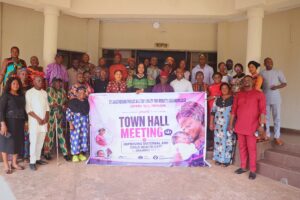
Group trains journalists on GBV reporting, seeks increased collaboration
Lawrence Ndubeze, Awka
Gender Perspective and Social Development Centre (GPSDC) with support of Women Aid Collective (WACOL), and other partners, have trained journalists on reporting gender-based violence (GBV) in Anambra state.
The workshop, held in Nibo, Awka South Local Government Area on Thursday, drew no fewer than 30 journalists practicing in the state from different media houses.
Declaring the workshop open, Executive Director of GPSDC, Eucharia Anekwe, explained that the training was to equip journalists with the skills and knowledge needed to effectively report cases of gender-based violence, promote awareness, and advocate for the rights of survivors.
According to her, “As part of the project’s capacity-strengthening component, we are organizing a one-day intensive media training for selected journalists and media practitioners in Anambra State.
“The training aims to strengthen media capacity in sensitive/survivor-centred GBV reportage, accurate framing of gender issues, developing GBV-focused content, and amplifying the voices of survivors and vulnerable groups.”
She further stated that the training was to reinforce collaboration between the media and implementing partners toward advancing advocacy for a safer and more gender-responsive society.

One of the facilitators from Nnamdi Azikiwe University (UNIZIK), Dr Julius Nwosu, during presentation, noted that about 30 percent of women aged 15 – 49 have experienced physical or sexual violence, stressing journalists’ role in promoting accountability and justice delivery through sensitive reporting.
During his session on “Legal and Ethical Frameworks for GBV Reporting in Nigeria/Sensitive Reporting of GBV Stories”, Nwosu urged journalists to ensure that their reports does not compromise survivors’ safety, dignity and rights. Discussing “Media as an Advocate,” he charged journalists to drive social change through content development and media strategies for amplifying voices.
“In an era where gender based violence has evolved into a pervasive societal malaise, it is incumbent upon journalists to galvanize their collective efforts and amplify the marginalised voices of survivors.

“The media plays a vital role in driving social change by promoting a just and equitable society, through appropriate content development and clear media strategies.
“By harnessing this power, they can shape narratives that challenge stereotypes, amplify voices that have been silenced, and drive meaningful change.
“Similarly, by prioritizing survivor-centered storytelling, in-depth reporting, and diverse representation, the media can create a powerful narrative that promotes not only empathy , but understanding and understanding and social change.”
Another resource person from UNIZIK, Dr Odogwu Emeka Odogwu, emphasized the importance of accurate and sensitive reporting of gender-based violence cases, saying it can help reduce stigma and promote support for survivors.

“Every piece of content must prioritize the survivors’ safety and empowerment. Consent, anonymity and cultural awareness are non-negotiable.
“Storytelling should inspire hope, show solutions, and responsible use of visuals. Combining survivor narrative with expert insights strengthens credibility and impact,” Odogwu said.
Earlier, GPSDC’s Program Manager, Oge Ozoemena, explained the event was part of the project to empower christian women and women leaders of culture for the prevention and response to gender-based violence in Nigeria through the strengthening of grassroots organisations.
She urged the participants to take advantage of the training to improve the quality of GBV stories, deploy survivor centered language and create positive social change awareness.
Journalists who participated in the training expressed their appreciation for the initiative, stating that it had enhanced their understanding of gender-based violence reporting.
They, however, appealed to the organizing body to consider extending the duration of future trainings beyond a single day, citing the need for more comprehensive coverage of the complex issues surrounding GBV reporting.