
Nri: As a People, A Place, A Religion, A Spiritual Power, A Political Superstructure
—
By Oba Emelie Okika
Introduction: Nri—More Than Just a Town.
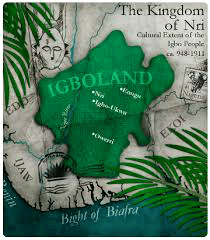
Nri isn’t just a name on a map in southeastern Nigeria. It is a people, a belief system, a spiritual force, and one of the most important pieces of the Igbo historical puzzle. Long before modern states and borders were drawn, the people of Nri had built something remarkable—a kingdom where power was not measured by armies or weapons, but by ritual, wisdom, and peace. Founded as early as the 10th century, the Nri Kingdom shaped how the Igbo saw the world, how they governed themselves, and how they connected with the spiritual realm.
Where It All Began: The Birth of a Kingdom
The story of Nri begins with a legendary figure named Eri, said to have been sent by Chukwu, the supreme God, to bring order and spiritual leadership to the Igbo. Eri’s arrival wasn’t about conquest—it was about connection. He laid the foundation for a kingdom where leadership came from moral strength and sacred duty.
From Eri’s lineage came the Eze Nri—a kind of priest-king, whose role was more spiritual than political. He didn’t rule through force, but through respect, ritual, and a reputation for justice and peace. Other communities recognized Nri’s spiritual weight and chose to align with it—not out of fear, but out of reverence.
Nri: The Heart of Igbo Spiritual Life
If you wanted to understand the soul of the Igbo people, you’d look to Nri. It was the place where spiritual matters were taken seriously, where the ancestors were honored, and where the rhythm of life was guided by sacred festivals and rituals.
One of the most important festivals, Ifejioku, asked the gods for fertility and a good harvest. Another key symbol was Ikenga—a personal shrine representing a person’s inner strength and success. The Eze Nri wasn’t just a religious figure—he was a bridge between the living and the ancestors, helping keep the spiritual balance in people’s lives.
Nri also created the respected Ozo title system, a kind of honor society that recognized individuals who lived with integrity and contributed to the well-being of the community.
⸻
A Kingdom Without Armies, But Not Without Influence
Nri may not have raised armies or gone to war, but it was far from powerless. Its influence stretched across Igbo land through mbùríchi—envoys who traveled from town to town spreading Nri customs, settling disputes, and helping communities cleanse themselves of spiritual wrongdoing.
If a person committed a taboo—say, murder or theft—they wouldn’t be thrown into a dungeon. Instead, they would travel to Nri for spiritual cleansing. This process was deeply respected and showed that Nri wasn’t just a place, but a moral compass for the Igbo world.
⸻
Decline: When the World Changed Around Nri
Like many ancient societies, Nri’s golden age didn’t last forever. By the 18th and 19th centuries, everything started to shift. The Atlantic slave trade, the arrival of European colonial powers, and the spread of Christianity began to chip away at traditional systems. Western powers valued force and territory, not spiritual authority—and so Nri’s influence began to fade.
People were pulled in different directions. Some embraced the new religion, others resisted. But either way, the spiritual centrality of Nri was no longer what it used to be.
⸻
Nri Today: The Spirit Still Lives
Today, Nri is a peaceful town in Anambra State, Nigeria. While it no longer rules, it still holds a sacred place in the heart of the Igbo people. The Eze Nri remains a respected figure, continuing rituals and traditions passed down for centuries.
You won’t find palaces or armies there, but what you will find is a deep sense of heritage, identity, and pride. Nri is a reminder that leadership can come from wisdom, not weapons, and that tradition still has a role in shaping modern life.
⸻
Conclusion: Why Nri Still Matters
The story of Nri isn’t just about the past—it’s about what’s possible when a people choose peace over war, spirituality over dominance, and community over chaos. As a people, a place, a religion, and a political superstructure, Nri continues to inspire conversations about culture, history, and identity.
Its quiet strength lives on—not in laws or empires, but in the hearts and minds of those who still look to it as a beacon of what it means to lead with spirit, not just power.