WORLD BLIND UNION MARKS WHITE CANE DAY 2026 WITH CALL TO SEE ABILITY, NOT DISABILITY
By Felix Oti
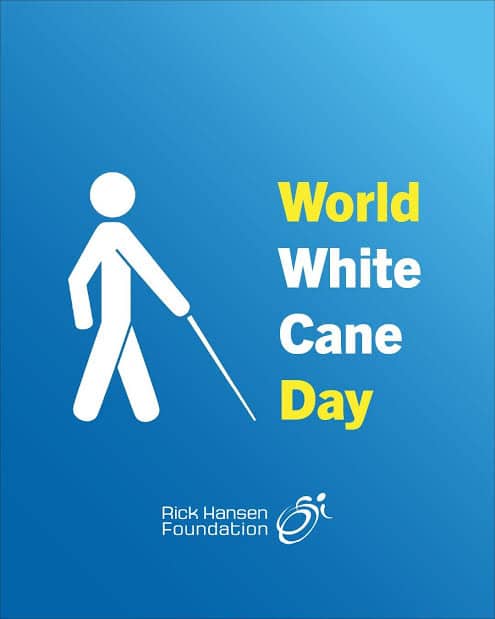
The World Blind Union (WBU) has marked the 2026 International White Cane Day with a global call for inclusion, dignity and equal opportunities for blind and partially sighted people, under the theme “See the person. Not the limitation.”
In a statement to commemorate the day, the WBU said the annual event celebrates the independence, confidence and contributions of millions of blind and partially sighted persons worldwide, noting that the white cane is far more than a mobility aid.
According to the Union, the white cane remains a powerful symbol of freedom, autonomy and the right of blind persons to navigate the world on their own terms.
The WBU said this year’s theme is a direct challenge to society to look beyond disability and focus on individuality, abilities and aspirations, stressing that blindness should never define a person or limit opportunities.
Speaking on the significance of the cane, the General Secretary of the WBU, Moises Bauer, said: “For us, blind people, the white cane represents autonomy, freedom and dignity. With it, we take our place in the world, write our own stories and exercise our rights as citizens. It symbolizes our right to freedom of movement and to participate fully in society.”
The Union however lamented that many blind and partially sighted persons still face barriers that restrict independence, including inaccessible infrastructure and transportation, limited access to information and technology, discriminatory attitudes, and unequal access to education and employment.
It noted that such barriers are not caused by blindness itself, but by systems and environments that fail to accommodate everyone.
Also speaking, the Immediate Past-President of WBU, Martine Abel-Williamson, recalled her university experience, saying people often saw only her cane and not her personality.
“I often reflect on when I was in university, I wanted my fellow students to see me for who I was. I often felt that people just saw my cane and not the person using it. Don’t see me and my cane and see impossible. The word ‘impossible’ itself spells out ‘I am possible,’” she said.
To address these challenges, the WBU called on governments, policymakers, businesses and communities to ensure accessible and inclusive public spaces, transport, information and digital technologies.
It also called for equal access to education, employment and leadership opportunities for blind and partially sighted persons, an end to stereotypes and discriminatory attitudes, and protection of the rights of persons with disabilities.
The Union further urged stakeholders to ensure meaningful participation of blind persons in decisions affecting their lives and to engage them in developing policies and services, recognizing their lived experience and expertise.
The World Blind Union represents over 338 million blind and partially sighted people through more than 190 member organizations in over 100 countries, advocating for a world where blindness is never a reason to deny dignity, independence or participation in society.