The Eucharist: Flesh Eaters, not Cannibals; Blooders, not Vampires
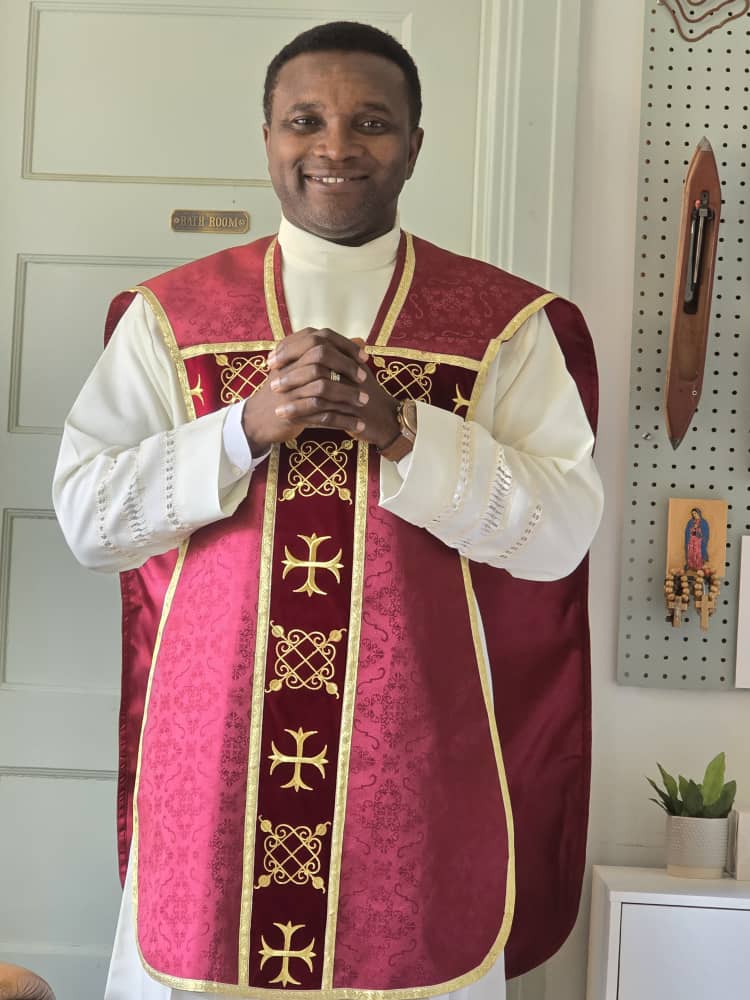
Fr George Adimike
Wrestling with the reality of Christian witnessing as the manifestation of world transformers interrogates their identity and self-awareness of the mission. Indeed, Christians—blooders and brothers—are meant to be united by blood, yet paradoxically, they are often divided by that very same blood. The mystery of flesh and blood in Christian life, deeply existential, shapes both personal and communal identity. Where unity is intended, division too often emerges, revealing the ongoing challenge of embodying the sacred meaning signified in the Eucharist within the complexities of human relationships.
We are commensals at the Eucharistic table, sharing in a sacred blood that both unites and transforms us. Our semblance is blood—our origin; our resemblance is blood—our re-creation in Christ. The blood we receive at birth grants us natural life. However, the redemptive blood of Christ elevates it and imbues our existence with deeper meaning and purpose. Redemption by the blood of the Lamb is not a mere metaphor: it is the infusion of divine life into our very being. The blood poured out by the Son of Man becomes, through its union with water, the living water that flows from the altar of the cross to the altar of the Eucharist. This stream continues into the liturgy of daily life—permeating culture, commerce, leisure, politics, and technology—sanctifying all aspects of human activity. Baptismal water, made potent by the blood of Christ, cleanses us more deeply than any earthly water, purifying us from within and restoring us to our true dignity. This prepares us for the banquet of flesh—a participation in the divine life that is not only ritual but transformative, drawing us ever deeper into communion with the source of life itself.
We partake of flesh, yet we are not cannibals; we drink blood, yet we are not vampires. Washed in the blood-made water of baptism, we are prepared for the Eucharist—a sacred feast of flesh and blood. In this act, we participate in the blood of the Lamb and make the flesh of the Son of Man our sacramental food. The Eucharist, as a sacrament, is both reality and sign: it is an efficacious sign, not merely a symbol, containing and conferring the very grace it signifies. This mystery transcends a purely physical interpretation; the Eucharist embodies the redeeming presence of Christ in his body and blood—present to us in ways more profound than we can fathom, yet always sacramental, safeguarding the singular sacrifice of Calvary. Jesus’ self-offering is once and for all, yet he perpetuates his self-gift to his people through sacramental presence. He remains with us in the elements and in the community of believers, both of which constitute his body in its real and mystical presences. Thus, the Eucharist is a profound reality and a sign pointing toward a greater reality: it makes Calvary present and anticipates the ultimate fulfilment of Christ’s eternal presence on the eschaton (last day), when the sacramental will give way to the fullness of vision.
When we are fully incorporated into the body of Christ—becoming one with him for eternity in the glory of the Father through the working of the Holy Spirit—we enter a new and conscious participation in the blood relationship that constitutes the renewed household of God in Christ. Our faith is thus steeped in blood: we are blood brothers, bound not by biology but by the redemptive blood of Christ, which penetrates to the depths of our being and shapes our identity, vocation, and destiny. As Christians—blooders and brothers—we eat flesh and drink blood, yet we transcend its literal physical implication. Instead, we share in a sacramental manner in the sacred body and blood of Christ. This participation transforms us and binds us in communion with the triune God and with one another. This sacramental bond is not only a sign of unity but the very means by which the Church is constituted in the power of the Holy Spirit, as the body of Christ, called to manifest his life in the world.
It is precisely because the water of baptism is blood-made-water that it becomes thicker and more profound than the blood of origin—penetrating the most intimate depths of our being. Baptism forges a living connection between our individual lives and the universal identity, mission, and destiny of the redeemed humanity. The blood of one’s birth, which ties us to Adam and to our heritage, wells up and merges with the living current of the redemptive blood of Christ. This universal blood of redemption flows back into each individual, sanctifying and renewing them from within. In this mysterious transformation in the blood, a supernatural exchange takes effect. The new blood conferred in baptism purifies; it elevates the blood of birth, making each person a unique and irreplaceable participant in the kinship of the children of God.
This blood of baptism is the blood of the new Adam—Jesus the Christ—through whom all the children of Adam receive, renew, and transform their lives. Christ is the true original human person, the fulfilment and perfection of what Adam was meant to be. His blood is the blood of the original man, while the blood of Adam, inherited by all at birth, is the blood of humanity at its origin—a beginning characterised by both promise and fracture. The coming of Christ as the new Adam does not abolish the first but redeems and perfects it. In sharing in his blood, we are invited into a fraternity that transcends natural kinship—a brotherhood forged in grace, calling us to recognise and accept every human being as a true sibling in the household of God. Recognising this sacramental bond of the reconstituted household of God compels us to live out the implications of this new identity, seeking reconciliation, justice, and unity in a world often divided by blood, yet redeemed by the blood of Christ.
Fr George Adimike
[email protected]