Nothing Must Happen To Peter Obi – Ejiofor Urges President Tinubu
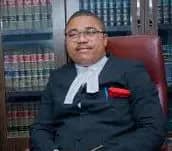
By Chukwudi Ebele
Human Rights Lawyer and Social Critic Sir Ifeanyichukwu Ejiofor has urged President Bola Tinubu to ensure that no harm befalls Nigeria’ Democratic Congress NDC Party 2027 Presidential Candidate, Mr. Peter Obi or any other contestant in the political space.
In his recent article titled ‘NOTHING MUST HAPPEN TO PETER OBI:
PRESIDENT TINUBU MUST ACT NOW; PROTECT PETER OBI , PROTECT THE DEMOCRATIC SPACE,-NIGERIA MUST NOT WAIT FOR TRAGEDY BEFORE IT ACTS’ Ejiofor urged the President to be proactive about the security of lives of citizens and those seeking political offices.
According to Ejiofor, as I attentively listened to Peter Obi, presidential candidate of the Nigeria Democratic Congress (NDC) in the 2027 presidential election, speak during a prime-time interview on Arise TV a night ago, I was deeply struck by the gravity of his expressed apprehension about his personal safety and whether he would remain alive until the 2027 election.
“That statement ought not to be dismissed as ordinary campaign rhetoric. It should trouble every discerning Nigerian, regardless of political party, ethnic affiliation, religious persuasion or preferred candidate.
Indeed, when a presidential candidate publicly expresses uncertainty about his own safety in the period leading to a national election, the appropriate response from every responsible institution should be vigilance, sober inquiry and preventive action, not political mockery, partisan dismissal or the dangerous assumption that nothing serious could possibly happen.
Recent developments have already created a troubling atmosphere around the 2027 political season. Obi has publicly complained about difficulties faced by opposition politicians seeking to campaign in certain states, while the Benue incident involving the obstruction of his convoy generated competing accounts from him and the state government. The police confirmed that the visit was known and that security personnel were providing protection, although the precise responsibility for the obstruction remained disputed.
If this were 2023, when the democratic contest enjoyed a considerably broader atmosphere of political mobilisation across the country, perhaps some of these developments might have been treated as the usual rough edges of Nigerian politics. But the present circumstances demand greater sobriety.
Reports of inflammatory political rhetoric, threats and obstruction of opposition activities have already generated concern among civil-society organisations and observers of the electoral process.
And herein lies the danger.
Politics is a contest for the consent of the people; it is not a licence to barricade the people from hearing the alternatives before them.
A governor may support whichever presidential candidate he or she chooses. A political party may mobilise its supporters for its candidate. Political competition is constitutionally contemplated and democratically legitimate. But the authority of public office cannot, without lawful justification, become an instrument for denying political opponents access to the electorate.
The Constitution does not contemplate a Nigeria in which citizens must obtain political permission from the incumbent political establishment before they may hear an opposition candidate.
The constitutional architecture protecting freedom of association, expression and movement exists precisely because democracy cannot survive where political participation becomes a privilege granted by those already occupying public office.
The point is elementary: the political space belongs to the Nigerian people; it does not belong to any governor, political party or presidential candidate. The emerging pattern therefore deserves careful scrutiny, not because every allegation against a governor should automatically be believed, but because repeated incidents of intimidation, obstruction or inflammatory rhetoric, can gradually normalise a political culture in which opposition becomes something to be physically prevented rather than democratically defeated.
When the wind begins to bend the palm fronds, the wise man does not wait for the tree to fall before asking where the storm came from.
Nigeria must not wait for a preventable tragedy before beginning to ask the questions that ought to be asked now.
The reports of ethnic baiting and inflammatory rhetoric are equally concerning. Where such rhetoric originates from persons connected with public institutions or security structures, it becomes even more important that appropriate authorities establish the facts and, apply the law without fear or favour.
A nation as diverse as Nigeria cannot afford to turn political disagreement into ethnic suspicion and ethnic suspicion into political hostility.
We have seen enough of history to know that words can become weapons long before weapons are fired.
It is therefore incumbent upon the Federal Government, security agencies, INEC, political parties and state authorities to ensure that every presidential candidate enjoys the minimum conditions necessary to participate in a peaceful democratic contest, while simultaneously protecting citizens who wish to listen to, support or question such candidates.
President Bola Ahmed Tinubu, as President and Commander-in-Chief, occupies a constitutionally consequential position in this national conversation. The issue should therefore transcend the politics of APC, NDC, ADC, or any other platform. The question is whether the Nigerian state can guarantee a political environment in which no candidate is prevented from reaching voters by intimidation, violence or unlawful obstruction, and no voter is prevented from freely hearing the political alternatives available to the nation.
For those who may be tempted to think that intimidating an opposition candidate is merely another clever manoeuvre in the game of politics, there is an old lesson: the hand that strikes the drum today may not know whose house the sound will summon tomorrow.
And let nobody underestimate the consequences of political violence.
If anything should happen to Peter Obi-God forbid! the consequences would extend far beyond the individual concerned. It could be disastrous and devastating, never to imagined. It could destabilise an already delicate electoral environment and impose consequences upon the Nigerian state that no political calculation can adequately contain.
That is precisely why the objective should not be to wait until danger becomes certainty. Prevention is wiser than mourning; and restraint is cheaper than reconstruction;.
The real test is whether the Nigerian Republic can conduct a political contest in which every legitimate contestant can campaign, every citizen can listen, every party can organise peacefully, and every disagreement is ultimately settled by the ballot and the law rather than by intimidation, coercion or violence.
May Nigeria never arrive at the tragic point where we ask, after the damage has been done: “Who could have prevented this?”
The answer must be that we saw the warning signs, heard the alarms, understood the history, and chose, while there was still time, to protect the Republic.
Nigeria must not wait for blood before rediscovering the value of peace”, Ejiofor warned.