Uganda’s Internet Shutdown: How Governments Cut Connectivity and What it Reveals About Digital Control in Africa
By Epiphanus Obia
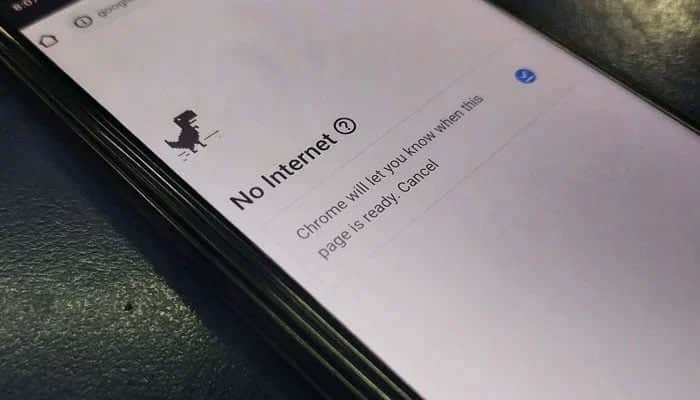
A few days before the general election, many Ugandans woke up to a familiar frustration. WhatsApp would not send messages. Mobile banking apps refused to load. Ride-hailing services like InDrive stalled. Sighs and hisses filled the air.
Within hours, it became clear that this was an internet shutdown powered by the government.
Uganda’s authorities had announced restrictions on internet access until “further notice” ahead of the general election. Officials claimed the move was necessary to stop misinformation, prevent electoral fraud, and reduce the risk of violence. It sounded like a security measure, but to many citizens, activists, and journalists, it felt like something else: control.
Uganda is not alone in this. Across Africa, internet shutdowns are becoming more common during elections, protests, and moments of political tension. What governments describe as protection is increasingly viewed by critics as a digital tool for silencing opposition and managing public narrative.
This growing trend raises a serious question for a continent trying to build digital economies: how can societies move forward when access to the internet can be switched off at will?
A FAMILIAR PATTERN ACROSS THE CONTINENT
Uganda’s decision follows a pattern that has repeated itself in several African countries over the past decade.
In 2021, Uganda shut down the internet during elections, citing national security concerns. In October 2025, Tanzania cut off internet access for several days during its general election. Ethiopia has repeatedly imposed regional blackouts during periods of conflict. Sudan restricted connectivity during protests. Zimbabwe has also used shutdowns during politically tense moments.
These shutdowns tend to happen around the same events: elections, mass protests, or periods of political instability. The official explanation is often the same as well. Governments claim they are trying to prevent misinformation, hate speech, and violence.
But digital rights advocates on X argue that shutdowns often achieve the opposite. Instead of protecting citizens, they restrict access to reliable information, limit free reporting, and make it harder for the public to hold leaders accountable.
There is also a trust problem. When governments with long records of suppressing opposition suddenly claim they are acting in the interest of the public, people struggle to believe them.
Uganda’s political situation adds to the skepticism. President Yoweri Museveni has been in power since 1986. Over the years, he had removed term limits and age limits in the constitution, which could have forced him to step aside.
WHO ACTUALLY HAS THE POWER TO SHUT DOWN THE INTERNET?
One common misconception is that shutting down the internet is chaotic or accidental. In reality, it is usually organized, deliberate, and bureaucratic.
Internet shutdowns typically begin with a directive from government authorities. This could come from a ministry, a regulator, a security agency, or the executive arm of government. That directive is then passed to telecom companies, who are instructed to restrict or disable services.
Telecom operators are often placed in a difficult position. In many countries, their operating licenses require them to comply with lawful government orders, especially when those orders are framed as national security issues. Refusal can lead to fines, license suspension, or even loss of operating rights.
In Nigeria, for example, telecom operators are regulated by the Nigerian Communications Commission (NCC). The law grants the regulator broad powers to issue binding directives to operators in the interest of national security. While Nigeria has not implemented a full internet shutdown in recent years, the 2021 Twitter (now X) ban showed how government pressure can shape access to digital platforms.
HOW GOVERNMENTS TECHNICALLY RESTRICT INTERNET ACCESS
Despite the phrase “switching off the internet”, there is rarely a single switch. Governments and telecom operators use different methods depending on how far they want to go.
Sometimes, access to specific platforms is blocked. Users might find they can no longer open X, Facebook, WhatsApp, or Telegram. This method was used in Nigeria during the Twitter ban, where users could still access the wider internet but could not legally reach one particular platform.
Another method is throttling. This happens when internet speeds are deliberately slowed down. Websites take longer to load. Videos buffer endlessly. Voice calls over the internet fail. To the average user, it feels like a bad network day. But in reality, the slowdown is intentional.
The most extreme option is a full blackout. This is when mobile data and broadband services are disabled across major networks. Calls may still work, but most online services become inaccessible. Mobile banking, e-commerce, digital news platforms, and social media all stop functioning.
THE EVERYDAY COST OF GOING OFFLINE
Internet shutdowns are often discussed in political terms, but their impact goes far beyond politics. For small business owners, the internet is a marketplace. Many rely on WhatsApp and Instagram to sell goods. Mobile banking and digital transfers are essential for receiving payments. When the network disappears, so does the income.
For students, online platforms are now a key part of education. Assignments, research materials, and communication with teachers often depend on internet access. A shutdown can cut students off from learning entirely.
Journalists are also heavily affected. Reporting today depends on access to sources, real-time updates, fact-checking tools, and publishing platforms. During shutdowns, verifying information becomes harder. Publishing becomes slower.
The idea that shutdowns only affect “troublemakers online” ignores the reality of how deeply digital tools are woven into everyday life.

DO SHUTDOWNS ACTUALLY STOP MISINFORMATION?
Governments often justify internet shutdowns as a way to fight misinformation. The logic seems simple: if false information spreads online, then cutting off the internet should stop the spread.
In practice, the outcome is rarely that straightforward.
When access to credible news sources is blocked, people do not stop talking. Instead, communication often shifts to offline channels, phone calls, SMS, and word of mouth. These channels are harder to monitor and easier for rumours to grow around.
Shutdowns can also increase fear. When people cannot access reliable information, they often assume the worst. Panic spreads quickly.
There is also the issue of accountability. When journalists and fact-checkers lose access to their tools, it becomes easier for false narratives to circulate without challenge.
This creates a troubling contradiction. A policy meant to fight misinformation can end up weakening the very systems that help fight it.
THE CONTRADICTION IN AFRICA’S DIGITAL AMBITIONS
Across the continent, governments speak proudly and loudly about digital transformation. There are national broadband plans, startup hubs, fintech innovation, digital ID systems, and e-government platforms. African leaders attend global tech summits and promote their countries as attractive destinations for investment in technology.
At the same time, many of these same governments continue to treat internet access as something that can be suspended when it becomes inconvenient.
This contradiction is becoming harder to ignore. You cannot build investor confidence in a startup ecosystem if connectivity can be disrupted overnight. You cannot promote digital inclusion while cutting off access during moments of political tension. You cannot tell young people to build careers online while treating the internet as a privilege rather than essential infrastructure.
The digital economy relies on trust. Trust from users, trust from businesses, and trust from investors. Shutdowns weaken that trust.
A FUTURE SHAPED BY ACCESS OR CONTROL
Internet shutdowns raise deeper questions than technology alone. They speak to the kind of societies African countries want to become.
Do governments see the internet as a public good that supports education, business, and civic participation? Or do they see it as a threat that must be tightly controlled?
The answer to that question will shape the future of democracy, innovation, and freedom of expression on the continent.
Uganda’s latest restriction may be framed as temporary. But its impact fits into a longer trend. One where access to information is increasingly treated as something conditional, something that can be withdrawn when it becomes politically inconvenient.
The real issue is no longer whether governments have the power to shut down the internet. That power clearly exists. The more urgent question is whether citizens, institutions, and societies will continue to accept the normalization of digital blackouts as the price of political control.