Beyond The Headlines: When Truth Becomes a Calling, Not Just a Profession.
Sitting among senior colleagues and veteran editors at Anabelle Event Centre on Thursday, it was easy to get caught up in the celebration.
The Nigeria Union of Journalists (NUJ), Anambra State Council, was marking 35 years, a major milestone for a union that has shaped public discourse across the state for decades
By Ede Favour, Awka.
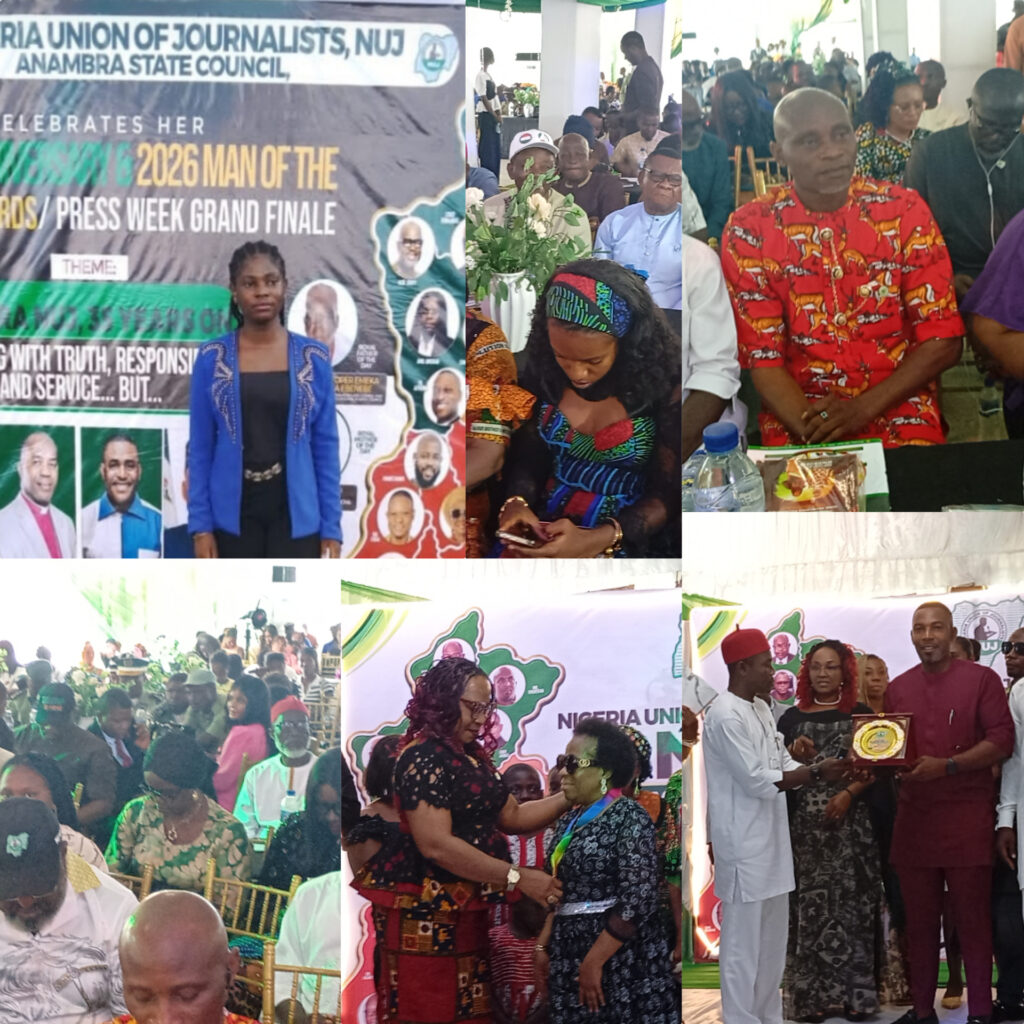
Sitting among senior colleagues and veteran editors at Anabelle Event Centre on Thursday, it was easy to get caught up in the celebration.
The Nigeria Union of Journalists (NUJ), Anambra State Council, was marking 35 years, a major milestone for a union that has shaped public discourse across the state for decades.
Plaque presentations and exchanges of pleasantries filled the hall. But for me, as a young journalist still finding my footing in this industry, the most defining moment of the grand finale came when the keynote speaker took the microphone.
Rt. Rev’d Ephraim Okechukwu Ikeakor, the Anglican Bishop of Amichi Diocese, did not give a typical congratulatory speech. Instead, he looked directly at the room and delivered a statement that made everyone pause:
“Journalism is a calling and not just a profession.
If journalists cannot report the truth, then they have no business being journalists.
The best article is not the one well written, but the one well coloured with truth.”
Hearing those words inside a hall filled with reporters hit differently. We are practicing at a time when speed often beats verification, when economic hardship makes compromise tempting, and when press releases are too easily copied without question.
Bishop Ikeakor’s message was a sharp reminder that our primary loyalty as journalists must always be to the truth, no matter how uncomfortable it gets.
The charge continued with Comrade Victor Agusiobo, who told the gathering that the old formula of journalism is no longer enough for 2026. He challenged the audience on the future of the union, asking what Journalists must do next to uphold those standards in a changing media landscape.
“It is because of these difficulties that the profession handed us a formula that once you get five Ws and H – who, what, when, where, why and how , you can jump up and say you are accurate, you are objective, you are responsible.”
“Distinguished ladies and gentlemen, permit me on this occasion to submit that in 2026, 5 Ws and H can no longer define responsibility. You can be accurate and still be idiotic to merely place a tape recorder in the mouth of a news source and call it journalism.”
It was at that point in time that I said to myself that I have not started doing Journalism because I do think that once I make use of the inverted pyramid of news writing that’s the 5w’s and H that am a good reporter but Comrade victor made it look like Journalism is beyond the pyramid.
“In 2026, who markets hope for society? If we do not tell the truth, who will?”
Comrade Agusiobo’s point was clear: accuracy without responsibility is empty. Journalism must go beyond recording statements.
It must serve the people with truth.
During his address, our State Chairman, Comrade Odogwu Emeka Odogwu, PhD, reminded us under the theme “Reporting with Truth, Responsibility and Service” that the 35-year legacy of NUJ Anambra was built by people who stood firm for public interest.
The event rightly recognized individuals of impact, such as High Chief Martin Nwabueze, who won the 2026 NUJ Man of the Year Award, and celebrated excellence through the Prof. Chinyere Stella Okunna Ethical Journalism Award.
But beyond the plaques, the biggest takeaway for my generation of reporters was clear:
Journalism is not just a job you do to get by. It is a duty to the public. If we lose the courage to tell the truth, we lose the right to call ourselves journalists.