UNIZIK Conference: Experts Urge SMEs to Leverage Capital Market for Economic Growth

Lawrence Nwimo, Awka
A two-day conference of the UNIZIK Centre for Capital Market Studies (UCCMS) has ended with a call for Small and Medium Enterprise owners to tap into the capital market to access funding, drive growth of their business and Nigeria economy.
The two-day workshop, organized by the Centre, in collaboration with the Securities and Exchange Commission (SEC), Nigeria, was aimed at exploring ways to harness the capital market for SME sustainability.
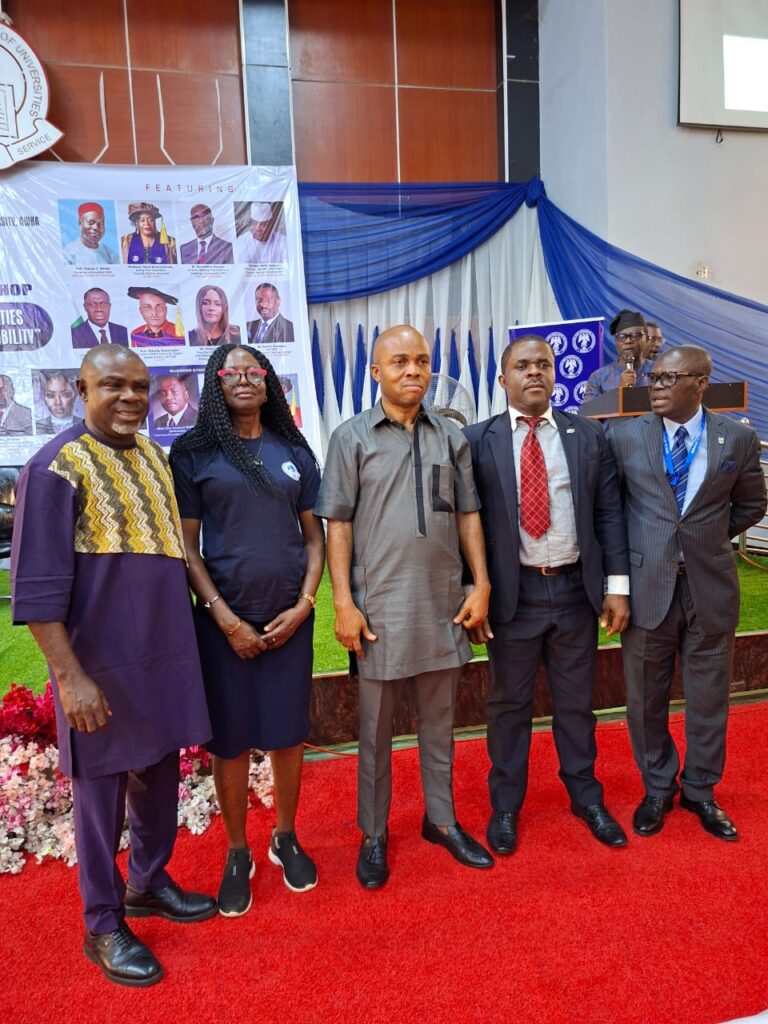
Experts at the conference including Enterprise owners, Capital Market Operators, Technopreneurs, Academia, who made various panel presentations, emphasized the need for SMEs to leverage the capital market to bridge the capital gap in the industry.
They urged SME owners to go beyond just establishing businesses to creating simple structures and a corporate governance system that enables growth and sustainability of their enterprise.


Speaking at the event, Chimene Chinah, CEO of Dantown Assets Ltd, stressed the importance of creating a user experience that allows SMEs to raise funds easily. He noted that most SMEs lack data and understanding of compliance and auditing, and recommended a one-stop solution to address these issues.
“Regarding SME growth, it is very important for us to create a user experience that allows SMEs to raise funds however they want to. The SME industry has an over N42 trillion capital gap, and to bridge this gap, we need simple structures.

“Most SMEs lack data and understanding of compliance and auditing, so a one-stop solution is needed. They require knowledge of compliance, data management, auditing, and legal windows to access capital markets.
“Book-keeping is also an issue; SMEs should consider affordable bookkeeping software, around 7,000 to 10,000 monthly, to get requisite data and approach the capital market,” he said.
Emeka Ezike, a director at Rootzlabs Ltd, disclosed that investors prioritize structure, corporate governance, and accountability, and urged SMEs to build these structures to attract investment. He also highlighted the potential of blockchain technology in enabling SMEs to raise funds through tokenization and crowdfunding.
“Generally, investors respect structure, governance, and accountability before investing their money. SMEs are lacking in these areas, so we recommend they build these structures. Whether it is, crowdfunding or capital market funding, there are basic fundamentals expected. SME operators must restructure their businesses to attract investment.
“Again, Blockchain technology enables tokenization of assets, allowing localized SMEs to raise funds through tokenization and crowdfunding. Business owners can tokenize their businesses, put it on the Blockchain, and raise funds online,” he said.
Another speaker, Dare Adejumo encouraged SMEs to take advantage of the capital market, stating that the requirements have been made easier. He also emphasized the importance of continuity planning, citing examples of successful businesses that have failed to exist after their owners’ demise.

He said, “SMEs are the engine of growth of any economy. People should take the courage and meet their brokers and find out how they can get listed on the exchange, because the requirements have been made easier.
“Most companies in Nigeria lack a continuity plan, like Ojukwu Transport Service, Ekenedilichukwu Motors, and the likes, which ceased to exist after their owners died. SME owners should bring in people to join them in running the business and list on the exchange so the company can continue to live on.”
Onyekachi Edeh from the Securities and Exchange Commission (SEC) emphasized the need for SMEs to restructure their businesses to attract funding, noting that most businesses in the southeast are private or family-owned.

“Owners of SMEs need to restructure their businesses to attract funding. The prevalent structure in the southeast is mostly private or family-owned, which is a hindrance.
“Most people are not comfortable investing in one-man businesses. To attract funds, we need to liberate our minds, structure our businesses properly, and work with experts, as lack of knowledge is often the problem. We need to put in place structures to enable businesses to thrive.”
Professor Christopher Kalu, a stockbroker, refuted claim that the capital market is a scam and urged entrepreneurs to simply understand their environment to succeed. He cited examples of successful Nigerian entrepreneurs and emphasized the need for government policies to promote entrepreneurship and curb inflation.

Prof. Christopher Kalu, a stockbroker, refuted a notion that the capital market is a scam, but to succeed, one must understand their environment. Noting that SMEs and entrepreneurs are risk-takers, Kalu regretted that multinationals often leave Nigeria due to poor infrastructure and other challenges. He stressed that the government needs to intervene, close the gaps and provide solutions.
“Nigeria has entrepreneurs like Dangote, Otedola, Elumelu, and Innoson, and doesn’t lack consumers or capital. What we lack is policy consistency to promote entrepreneurship and wealth creation.
“Inflation is a major challenge, and the government needs to curb it. The government also needs to safeguard the exchange rate, crucial for business development.”
Owners of Small and Medium Enterprises (SMEs) in Southeast and beyond were during the opening ceremony of the workshop reminded of the Federal Government’s plan to prioritize Small and Medium Enterprises (SMEs) to boost the country’s economy.

According to the Senior Special Assistant to the President on Entrepreneurship Development, Chalya Shagaya, President Tinubu has identified SME as a cornerstone for achieving a 1 trillion-dollar economy, noting that the target will be actualized by enterprise, productivity, and innovation.
Director, UNIZIK Centre for Capital Market Studies (UCCMS), Prof Chinedu Onyeizugbe, said the UNIZIK Centre for Capital Market Studies, in collaboration with its partners, will continue to dedicate efforts towards advancing capital market education, policy research, innovation and capacity development in Nigeria.

“To achieve this, we have developed programmes that reflect the growing needs of the financial and entrepreneurial ecosystem,” he said