Open Letter to Seun Okinbaloye: Major Kaduna Nzeogwu Was a Northerner
Dear Seun,
Watching your now widely discussed interview with Mr Peter Obi on Channels Television last Sunday, 26th July, I found myself asking whether I was listening to a fresh interview or a replay of several previous encounters. Many of the questions had been asked before. The repeated interruptions, the persistence on certain themes, and the manner in which you pursued some answers created an impression that the interview was intended to achieve something beyond informing or educating Nigerians.
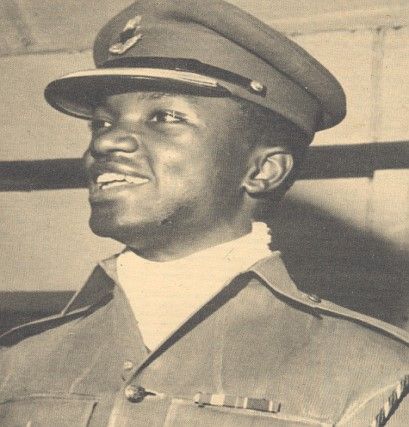
That impression became even stronger when you raised the January 1966 coup and specifically invoked the name of Major Kaduna Chukwuma Nzeogwu. The line of questioning left the unmistakable impression that the events of 1966 should continue to cast suspicion on the suitability of an Igbo man to lead Nigeria today. At that moment, I could not help wondering why an event that occurred when Peter Obi was barely five years old should become a point of interrogation for a presidential candidate in 2026.
More importantly, why should the identity of one military officer from 60 years ago be used, directly or indirectly, to reinforce an ethnic narrative against a man whose only connection to him is that both bear Igbo names?
For decades, some have insisted on describing the January 1966 coup as an “Igbo coup.” Yet, history is far more complex than that convenient political slogan. The young officers, most of them in their twenties and led by the 28-year-old Major Nzeogwu, reportedly intended to release Chief Obafemi Awolowo from prison and install him as Nigeria’s leader. That objective alone challenges the simplistic ethnic interpretation that has dominated public discourse.
Former President Olusegun Obasanjo, who knew Nzeogwu perhaps better than most of his contemporaries, wrote that the young officer was a committed nationalist and not someone driven by ethnic ambition. Whether one agrees with every aspect of that assessment or not, it reminds us that history deserves careful examination rather than selective recollection.
It is equally significant that one of the officers whose actions contributed most to frustrating Nzeogwu’s operation was Lieutenant Colonel Chukwuemeka Odumegwu Ojukwu. As commander of the Fifth Infantry Battalion in Kano, Ojukwu protected the Emir of Kano, Ado Bayero, and his household until the coup collapsed. Ojukwu himself was from present-day Anambra State, the same state from which Peter Obi hails. History, therefore, refuses to fit neatly into ethnic stereotypes.
Now let us consider Nzeogwu himself.
He was born in Kaduna. He was raised in Kaduna. He attended his primary and secondary education in Kaduna. His military career in Nigeria was rooted in Kaduna. His closest associates were largely Northerners. He spoke fluent Hausa and became so identified with the city that “Kaduna” became part of his name. By most accounts, he rarely visited his ancestral home at Okpanam, in present-day Delta State, before his death at the age of 30.
Students of human development have long recognised that while ancestry gives a person roots, environment shapes their personality, worldview, relationships, and, very often, identity itself.
I have no desire to deny Nzeogwu his ancestry. His middle name, Chukwuma, proudly reflects his Igbo heritage. But beyond ancestry, much of his upbringing, socialisation, and military formation took place in Northern Nigeria. When he was killed near Nsukka during the early stages of the Civil War, his body was recovered by Nigerian troops, taken to Kaduna, and buried in the Military Cemetery there in a grave marked Number 9. In many respects, Kaduna was the home he knew best.
Against that background, it becomes difficult to understand why Peter Obi, a man from the South East whose only connection to Nzeogwu is a shared ethnic ancestry, should repeatedly be confronted with the actions of a military officer who died decades before Obi entered public life. Even if Nzeogwu had spent his entire life in his ancestral homeland, that homeland was in present-day Delta State, in Nigeria’s South South, not Anambra State in the South East, where Peter Obi hails from. Geography, history, and chronology all reject the association being implied.
Nigeria has never judged entire regions by the actions of individual military officers.
In 1976, Lieutenant Colonel Buka Suka Dimka led the aborted coup that claimed the life of General Murtala Mohammed. Dimka came from the Middle Belt, yet no serious political leader from that region has since been held responsible for his actions.
Major General Muhammadu Buhari overthrew the democratically elected government of President Shehu Shagari in 1983. Decades later, he returned through democratic elections to become Nigeria’s President.
General Ibrahim Babangida annulled the June 12, 1993 presidential election, an election widely regarded as Nigeria’s freest and fairest. Yet no one has used his actions to stigmatise every politician from Niger State. General Abdulsalami Abubakar, who also hails from the same state, served as Head of State and was judged on his own record, not on Babangida’s.
That is how mature societies behave. Individuals answer for their own decisions. Entire ethnic groups do not inherit guilt across generations.
Seun, as one of Nigeria’s most influential television journalists, you carry enormous responsibility. Millions of Nigerians, especially young people, depend on you, not merely to ask difficult questions but to ask fair questions, historically grounded questions, and questions that unite rather than deepen old divisions.
The wounds of the Civil War have not completely healed. Those with powerful media platforms should resist every temptation, however subtle, to reinforce narratives that continue to divide Nigerians along ethnic lines. Journalism should illuminate history, not selectively weaponise it.
Peter Obi should ultimately be judged by his words, his ideas, his record in public office, and his vision for Nigeria, just as every other presidential candidate should be judged by theirs. To hold him morally accountable for the actions of military officers in 1966 is neither historically sound nor consistent with the standards of fairness that journalism demands.
Nigeria deserves better. Our history deserves better. Journalism, at its noblest, must illuminate rather than inflame, educate rather than divide, and seek truth rather than reinforce inherited prejudice. History should never become a weapon against innocent generations. It should remain a teacher, reminding us where we have been, while guiding us towards where we ought to be.
Yours sincerely,
Tai Emeka Obasi.