
One Health, One Response, One Goal: Zero Human Deaths from Dog-Mediated Rabies
By Livy-Elcon Emereonye
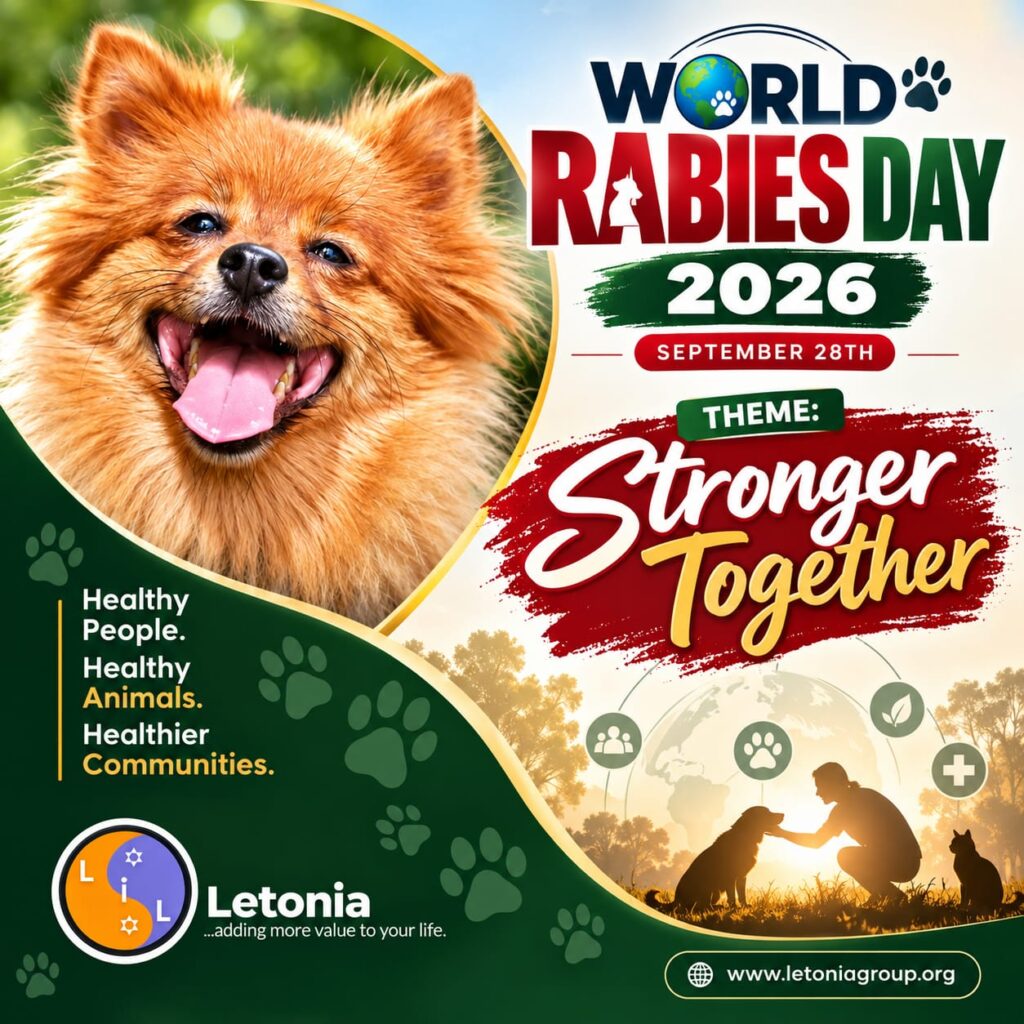
An article to commemorate World Rabies Day 2026 with the theme: “Stronger Together”
INTRODUCTION: A PREVENTABLE KILLER THAT STILL KILLS
Few infectious diseases present such a striking contradiction as rabies.
It is one of the oldest and most feared infectious diseases known to humanity. Once clinical symptoms become established, rabies is almost invariably fatal. Yet, at the same time, rabies is one of the most preventable causes of infectious disease death.
This contradiction should challenge the conscience of global public health.
We possess effective vaccines for animals and humans. We understand how the infection is transmitted. We know how to reduce the viral load immediately after exposure. We have effective post-exposure prophylaxis (PEP). We know that vaccination of dogs can interrupt the principal pathway of transmission to humans.
And yet, people—particularly children in vulnerable communities—continue to die from rabies.
Why?
The answer is not simply a lack of scientific knowledge. It is a problem of access, implementation, awareness, surveillance, vaccination coverage, health-system capacity, responsible animal ownership, poverty, misinformation and fragmented action.
That is why the theme of World Rabies Day 2026—“Stronger Together” is profoundly appropriate.
Rabies cannot be eliminated by the medical profession alone.
It cannot be eliminated by veterinarians alone.
It cannot be eliminated by governments alone.
It cannot be eliminated by communities alone.
It requires all of us working together across the human-animal-environment interface.
Rabies is therefore not merely an infectious disease.
Rabies is a One Health challenge.
WHAT IS RABIES?
Rabies is an acute viral infection of the central nervous system caused by viruses belonging to the genus Lyssavirus, within the family Rhabdoviridae.
The classical rabies virus remains the principal cause of human rabies globally, although other lyssaviruses can also cause rabies-like disease.
The virus is neurotropic—it has a particular capacity to invade and travel through the nervous system.
Transmission occurs primarily when saliva or nervous tissue from an infected animal enters the body through:
- A bite;
- A scratch contaminated with saliva;
- Broken skin; or
- Mucous membranes such as the eyes or mouth.
In terrestrial transmission, dogs remain the dominant source of human rabies deaths globally, particularly in regions where canine vaccination and animal-control systems are inadequate.
Other mammals can also transmit rabies, including certain wild and domestic animals, depending on geographical location.
THE SCIENCE OF RABIES TRANSMISSION
Understanding how rabies moves through the body helps explain why immediate action following exposure is so important.
Following inoculation, the virus initially remains at or near the site of exposure and can enter peripheral nerves. It then travels through the nervous system toward the spinal cord and brain.
This movement toward the central nervous system is known as retrograde axonal transport.
Once the virus reaches the central nervous system, extensive neurological disease can develop.
The virus may subsequently spread through peripheral nerves to other tissues, including the salivary glands, facilitating transmission through saliva.
This biological process provides the scientific rationale for aggressive management immediately after exposure.
Before the virus reaches and establishes infection in the central nervous system, there is an opportunity to intervene.
After clinical neurological disease develops, that opportunity becomes dramatically smaller.
This is the fundamental reason rabies exposure is a medical urgency rather than a condition to “watch and wait.”
THE INCUBATION PERIOD: A WINDOW THAT MUST NOT CREATE COMPLACENCY
The incubation period of rabies is variable.
In many cases it is measured in weeks to months, although shorter or longer periods can occur.
Several factors may influence the interval between exposure and disease, including:
- The site of exposure;
- The severity of the wound;
- The amount of virus introduced;
- The distance between the exposure site and the central nervous system;
- The extent of innervation of the affected area; and
- The immune status and previous vaccination history of the exposed person.
An important public-health message follows:
“The absence of symptoms immediately after a bite does not mean that the person is safe.”
A person can appear perfectly healthy while the virus is progressing through its biological pathway.
This is why PEP should be initiated according to risk assessment rather than waiting for symptoms.
FROM FEVER TO FATAL ENCEPHALITIS
The early symptoms of rabies can be deceptively nonspecific.
They may include:
- Fever;
- Headache;
- Weakness;
- Malaise;
- Anxiety;
- General discomfort; and
- Abnormal sensations at the site of exposure.
Pain, tingling, burning or itching around the bite site can be an important clinical feature.
As infection progresses, severe neurological manifestations may develop.
These may include:
- Agitation;
- Anxiety;
- Confusion;
- Hallucinations;
- Abnormal behaviour;
- Difficulty swallowing;
- Excessive salivation;
- Hydrophobia;
- Aerophobia;
- Seizures;
- Progressive paralysis;
- Coma.
Rabies can manifest in different clinical forms, including the more dramatic furious rabies and the progressively paralytic form known as paralytic rabies.
Once clinical disease is established, the prognosis is extremely poor.
This explains the central principle of rabies control:
Prevention must occur before clinical disease.
WHY “STRONGER TOGETHER” MATTERS
Rabies exposes the limitations of fragmented healthcare.
Imagine a child bitten by a dog.
The child’s parent may first wash the wound.
A neighbour may recommend a traditional remedy.
A community member may advise waiting to see what happens to the dog.
The family may visit a patent medicine outlet.
A pharmacist may recognise the potential risk.
A doctor may subsequently assess the patient.
A veterinary officer may investigate the animal.
A public-health authority may need to initiate surveillance.
A laboratory may eventually confirm infection in the animal.
Every link matters.
If the chain breaks at the wrong point, the consequences can be fatal.
The correct response therefore requires a network of protection rather than a single intervention.
THE ONE HEALTH APPROACH TO RABIES
One Health recognises that the health of humans, animals and ecosystems is interconnected.
Rabies demonstrates this relationship exceptionally well.
The health of a human being may depend upon:
Dog vaccination → responsible animal ownership → veterinary surveillance → community awareness → rapid wound management → timely PEP → appropriate public-health follow-up.
A weakness anywhere along this pathway can increase risk.
The One Health response therefore brings together:
- Human health professionals;
- Veterinary professionals;
- Public-health authorities;
- Environmental and wildlife services;
- Researchers;
- Pharmaceutical and vaccine supply systems;
- Schools;
- Community leaders;
- Civil society organisations;
- Dog owners; and
- The general public.
Stronger together means connected systems rather than isolated interventions.
DOG VACCINATION: THE FRONTLINE OF HUMAN RABIES PREVENTION
If we want to prevent human rabies, we must control rabies at its principal source.
That means vaccinating dogs.
Mass dog vaccination is widely recognised as one of the most effective strategies for preventing human deaths from dog-mediated rabies.
When sufficient numbers of dogs are vaccinated, transmission within dog populations can be interrupted.
The public-health equation is straightforward:
Fewer infected dogs → fewer human exposures → fewer human infections → fewer deaths.
Dog vaccination is therefore not simply an animal-welfare programme.
It is human disease prevention.
Investment in veterinary vaccination can prevent human illness, reduce the demand for PEP and save families and health systems substantial costs.
RESPONSIBLE DOG OWNERSHIP
Dog ownership carries responsibilities.
A responsible owner should:
- Ensure the dog receives appropriate rabies vaccination;
- Maintain vaccination records;
- Prevent uncontrolled roaming;
- Seek veterinary care when the animal becomes ill;
- Report suspicious behaviour;
- Avoid abandoning unwanted animals;
- Cooperate with veterinary/public-health authorities after an exposure.
Dogs should not be allowed to roam freely in ways that increase the likelihood of uncontrolled human-animal contact.
Responsible ownership protects both animals and people.
CHILDREN: THE MOST IMPORTANT AUDIENCE FOR RABIES EDUCATION
Children are disproportionately vulnerable to dog-mediated rabies.
They may be more likely to:
- Approach unfamiliar dogs;
- Play with puppies;
- Touch sick or injured animals;
- Tease or provoke dogs;
- Run from dogs;
- Handle animals without adult supervision;
- Fail to recognise that a scratch or minor bite may be significant.
Education must therefore begin early.
Children should be taught:
DO NOT APPROACH
Do not approach unfamiliar or stray animals.
DO NOT PROVOKE
Do not tease, hit, chase or disturb dogs while they are eating, sleeping or caring for puppies.
DO NOT TOUCH SICK ANIMALS
A strangely behaving animal should be avoided.
REPORT EVERY BITE OR SCRATCH
Tell a parent, teacher or responsible adult immediately.
SEEK MEDICAL ASSESSMENT
Do not hide an exposure because the wound appears small.
A child should never be blamed for an animal bite.
The adult response should be immediate, calm and medically appropriate.
WHAT SHOULD HAPPEN AFTER A POTENTIAL EXPOSURE?
A potentially rabies-exposing event should trigger a simple sequence:
WASH → REPORT → ASSESS → PROTECT
- WASH
Immediately and thoroughly wash and flush the wound with soap and plenty of running water.
This can physically remove and reduce infectious material at the exposure site and is an important first-aid intervention.
Where appropriate, an approved antiseptic may also be used.
- REPORT
The exposure should be reported to the appropriate healthcare and/or veterinary authorities, particularly where the animal is suspected to have rabies.
Information about:
- The animal;
- The type of exposure;
- The location;
- The date and time;
- The animal’s vaccination status; and
- Whether the animal can be safely observed or tested may be important for risk assessment.
- ASSESS
The exposed person should undergo prompt professional assessment.
The decision regarding PEP depends on the nature of the exposure, the animal involved, local epidemiology and relevant clinical/public-health guidance.
- PROTECT
Where indicated, rabies PEP should be administered promptly and completed according to the appropriate protocol.
POST-EXPOSURE PROPHYLAXIS: PREVENTING THE UNPREVENTABLE
Rabies PEP is one of the great successes of preventive medicine.
For an appropriately assessed exposed individual, PEP may include:
- Immediate wound cleansing;
- Rabies vaccine; and
- Rabies immunoglobulin for qualifying exposures in previously unvaccinated individuals.
People previously vaccinated against rabies generally require a different PEP regimen than people who have never received rabies vaccination.
Therefore, previous vaccination history must be communicated to the healthcare professional.
PEP is not something to improvise.
It should follow current national and international guidelines and should be administered through appropriate healthcare services.
The critical message is:
PEP is intended to prevent rabies before the disease becomes clinically established.
PRE-EXPOSURE VACCINATION
Vaccination is also available for people whose occupations or circumstances place them at increased risk.
Such groups may include certain:
- Veterinarians;
- Veterinary workers;
- Laboratory personnel;
- Animal handlers;
- Wildlife workers;
- Rabies researchers; and
- Others with substantial occupational exposure.
Pre-exposure vaccination does not eliminate the need for medical assessment after an exposure, but it changes the subsequent management and provides an additional layer of protection.
RABIES IS NOT A DISEASE TO TREAT WITH SELF-MEDICATION
One of the dangerous misconceptions surrounding animal bites is the belief that conventional medical assessment can be replaced by home remedies, herbal preparations, scarification, topical substances or other unproven interventions.
Such approaches can create dangerous delays.
There is no scientifically established herbal preparation, traditional remedy or household treatment that can replace appropriate rabies PEP following a significant exposure.
This is not an argument against traditional medicine as a field of healthcare research.
It is a recognition of the specific biological reality of rabies.
When a potentially rabid animal exposes a person, time matters.
THE PHARMACIST’S ROLE
Pharmacists can play a significant role in rabies prevention because of their accessibility within communities.
A person may walk into a pharmacy before reaching a hospital.
The pharmacist can therefore become a critical point of intervention by:
- Asking what happened;
- Determining whether an animal exposure occurred;
- Asking when and where it happened;
- Identifying whether the skin was broken;
- Advising immediate wound washing;
- Recognising potentially significant exposure;
- Urgently referring the individual for appropriate medical assessment;
- Educating the patient about the importance of PEP;
- Discouraging reliance on unproven remedies;
- Reinforcing adherence to recommended vaccination schedules.
Pharmacists can also participate in public-health campaigns, professional education, surveillance networks and community awareness programmes.
The pharmacist’s role therefore extends beyond the medicine counter.
The pharmacist can be a public-health sentinel.
THE PHYSICIAN AND NURSING TEAM
Doctors, nurses and other healthcare professionals must maintain a high index of suspicion when evaluating animal exposures.
A good clinical history should explore:
- Species of animal;
- Ownership status;
- Vaccination status;
- Circumstances of exposure;
- Bite versus scratch;
- Whether saliva contacted broken skin or mucosa;
- Anatomical location;
- Number and severity of wounds;
- Time since exposure;
- Previous rabies vaccination;
- Availability and health status of the animal;
- Local epidemiological circumstances.
The clinical objective is not merely to treat the wound.
It is to prevent a neurological disease that may otherwise be fatal.
THE VETERINARIAN’S ROLE: PROTECTING HUMANS BY PROTECTING ANIMALS
Veterinarians are indispensable to rabies elimination.
Their work includes:
- Mass dog vaccination;
- Animal examination;
- Rabies surveillance;
- Investigation of suspected cases;
- Guidance on animal observation;
- Laboratory diagnosis and sample collection where appropriate;
- Animal population management;
- Community education;
- Collaboration with public-health authorities.
A strong veterinary system is therefore an essential component of human health protection.
SURVEILLANCE: YOU CANNOT CONTROL WHAT YOU CANNOT SEE
Reliable surveillance is fundamental to disease elimination.
Authorities need to know:
- Where suspected rabies cases are occurring;
- Which animal species are involved;
- Where dog vaccination coverage is low;
- Where human exposures are concentrated;
- Where PEP access is inadequate;
- Which communities have recurring outbreaks;
- How rapidly cases are being reported and investigated.
Without good surveillance, health authorities are effectively navigating in the dark.
Modern surveillance can incorporate:
- Geographic information systems;
- Digital reporting;
- Laboratory confirmation;
- Veterinary databases;
- Health-facility reporting;
- Community-based reporting;
- Molecular epidemiology.
Better information allows better allocation of vaccines, personnel and other resources.
THE AFRICAN CONTEXT
Rabies remains an important public-health challenge in many African settings.
Several factors may contribute to continued transmission:
- Inadequate dog vaccination coverage
Where large numbers of dogs remain unvaccinated, sustained transmission can occur.
- Free-roaming dog populations
Uncontrolled movement of dogs can facilitate transmission and complicate vaccination and surveillance.
- Limited access to PEP
Even where vaccines exist nationally, people in remote communities may face major barriers to timely access.
- Cost
The economic burden of treatment can discourage or delay care, particularly for households with limited resources.
- Geographic barriers
Distance to health facilities can be critical when timely intervention is required.
- Knowledge gaps
People may not recognise that a scratch, apparently minor bite or saliva exposure can require professional assessment.
- Fragmented surveillance
Weak integration between animal-health and human-health reporting systems can delay recognition of transmission.
- Misinformation
Traditional beliefs and inaccurate advice circulating through communities can result in dangerous delays.
These are systems problems.
They require systems solutions.
NIGERIA: THE NEED FOR INTEGRATED ACTION
For Nigeria, rabies prevention should be approached as a coordinated national and subnational public-health priority.
The country has a large and diverse dog population, extensive urban and rural communities, varying access to veterinary services and significant differences in healthcare accessibility.
An effective Nigerian rabies strategy should therefore strengthen collaboration among:
- Federal and state health authorities;
- Veterinary authorities;
- Local government structures;
- Teaching hospitals;
- Primary healthcare facilities;
- Veterinary clinics;
- Pharmacists;
- Professional health associations;
- Universities and research institutions;
- Schools;
- Traditional and community leaders;
- Civil society organisations; and
- Dog owners.
The objective should be to build a seamless chain from animal vaccination to human exposure management.
A person bitten by a potentially rabid animal should not have to navigate an uncertain maze to discover where to obtain lifesaving care.
THE ECONOMICS OF PREVENTION
Rabies is not only a medical tragedy.
It can also be an economic tragedy.
A family affected by rabies may face:
- Emergency transportation costs;
- Consultation costs;
- Vaccine costs;
- Immunoglobulin costs where indicated;
- Loss of working days;
- School absence;
- Psychological distress;
- Animal-management expenses;
- Potential catastrophic healthcare expenditure if disease develops.
From a health-system perspective, preventing rabies at the animal source can be more efficient than repeatedly responding to human exposures.
Therefore:
Investment in dog vaccination is an investment in human health.
MYTHS THAT MUST BE DEFEATED
MYTH: “The bite is too small to matter.”
FACT: Wound size alone does not determine rabies risk.
MYTH: “I feel fine, so I don’t need treatment.”
FACT: Rabies can have a prolonged incubation period. The absence of symptoms immediately after exposure does not exclude infection.
MYTH: “Let’s wait to see if the dog dies.”
FACT: Exposure should be professionally assessed promptly rather than relying on informal observation.
MYTH: “Only stray dogs carry rabies.”
FACT: Owned dogs can also become infected if inadequately protected.
MYTH: “A traditional remedy can neutralise the virus.”
FACT: Unproven remedies must never replace evidence-based wound management and PEP.
MYTH: “Vaccination is only necessary after a bite.”
FACT: Dog vaccination is one of the most important strategies for preventing human rabies before exposure occurs.
SCIENCE MUST CONFRONT MISINFORMATION
Modern public health faces a second epidemic alongside infectious disease:
the epidemic of misinformation.
A scientifically correct intervention can fail when people receive contradictory information from social media, informal networks or unqualified sources.
Rabies education must therefore be:
- Simple;
- Repeated;
- culturally appropriate;
- locally accessible;
- scientifically accurate;
- available in relevant languages; and
- delivered by trusted community and healthcare professionals.
A successful campaign should not merely say:
“Rabies is dangerous.”
It should tell people exactly what to do.
Wash the wound.
Seek professional assessment.
Do not wait for symptoms.
Follow recommended PEP.
Vaccinate dogs.
Report suspected rabies.
That is actionable public-health communication.
RESEARCH PRIORITIES
The global fight against rabies also requires sustained scientific research.
Important areas include:
- Improved animal surveillance;
- More efficient mass dog-vaccination strategies;
- Better understanding of dog population dynamics;
- Rapid diagnostic technologies;
- Molecular epidemiology;
- Improved vaccine delivery systems;
- More accessible rabies biologicals;
- Health-economic research;
- Community behavioural research;
- Digital surveillance;
- Innovative approaches to reaching underserved populations.
Research should increasingly focus on translating scientific knowledge into real-world implementation.
The question is no longer simply:
“Do we know how to prevent rabies?”
We largely do.
The more difficult question is:
“How do we ensure that every vulnerable community can benefit from what science already knows?”
THE PATH TOWARD ZERO BY 30
The global goal of ending human deaths from dog-mediated rabies by 2030, often referred to as Zero by 30, provides a framework for coordinated action.
Achieving this goal requires simultaneous progress in several areas:
- Vaccinate dogs.
- Educate communities.
- Improve surveillance.
- Ensure timely access to PEP.
- Strengthen laboratory capacity.
- Integrate animal and human health systems.
- Train healthcare and veterinary professionals.
- Address inequities in access to prevention.
- Combat misinformation.
- Sustain political and financial commitment.
No single intervention will eliminate rabies.
The solution is the combination.
WORLD RABIES DAY 2026: FROM AWARENESS TO ACTION
World Rabies Day should not become another date on the public-health calendar that generates posters and speeches for one day and disappears the next.
It should be an opportunity to ask difficult questions:
How many dogs in our communities are vaccinated?
How easily can an exposed person obtain PEP?
Do healthcare workers know the current rabies-exposure protocols?
Do veterinary and human-health surveillance systems communicate effectively?
Do communities know what to do immediately after a bite?
Are children being taught animal-safety skills?
Are vaccine supplies reliable?
Are rural communities receiving the same preventive opportunities as urban communities?
Are we measuring progress?
These are the questions that convert awareness into public-health action.
A CALL TO EVERY SECTOR
GOVERNMENTS
Invest in sustainable dog vaccination, surveillance, laboratory capacity, PEP availability and public education.
VETERINARY SERVICES
Make animal vaccination and surveillance central components of rabies elimination.
HEALTHCARE FACILITIES
Ensure that animal exposures are promptly assessed and appropriately managed.
PHARMACISTS
Use your accessibility to identify potential exposures, educate communities and facilitate timely referral.
SCHOOLS
Teach children safe interaction with animals and the importance of reporting bites and scratches.
RESEARCHERS
Generate evidence that addresses local epidemiological and implementation challenges.
COMMUNITIES
Report suspected rabies, support responsible animal ownership and reject dangerous misinformation.
DOG OWNERS
Vaccinate your dogs. Control their movement. Seek veterinary care when they become ill.
FAMILIES
Teach children that every unexplained bite or scratch should be reported immediately.
THE DEEPEST LESSON OF RABIES
Rabies teaches us something larger than the biology of a virus.
It teaches us that prevention is a collective enterprise.
A vaccinated dog may prevent a child from being bitten.
A parent who recognises the danger may save a child’s life.
A pharmacist who asks one additional question may prevent a fatal delay.
A nurse who provides correct wound-care advice may reduce risk.
A doctor who recognises the exposure may initiate lifesaving PEP.
A veterinarian who vaccinates a community’s dogs may prevent dozens of future exposures.
A public-health officer who identifies a cluster may prevent an outbreak.
A government that funds vaccination may prevent deaths years into the future.
In rabies prevention, small actions can create enormous public-health consequences.
CONCLUSION
Rabies is deadly—but it is preventable.
It is ancient—but our science is modern.
It remains a major public-health challenge—but we possess many of the tools required to eliminate human deaths from dog-mediated rabies.
The greatest obstacle is therefore not the absence of knowledge.
It is the failure to consistently translate knowledge into accessible action.
We must vaccinate dogs.
We must educate children.
We must empower families.
We must strengthen veterinary services.
We must make PEP accessible.
We must train healthcare professionals.
We must improve surveillance.
We must integrate human and animal health systems.
We must confront misinformation with evidence.
And we must ensure that geography, poverty or ignorance does not determine who survives a potentially preventable exposure.
The future of rabies elimination will not be built by one profession.
It will be built by partnership.
Not by isolated action, but by coordinated action.
Not by responding only after tragedy, but by preventing tragedy before it occurs.
That is the true meaning of “Stronger Together.”
STRONGER TOGETHER.
ONE HEALTH. ONE RESPONSE. ONE GOAL.
ZERO HUMAN DEATHS FROM DOG-MEDIATED RABIES.
On World Rabies Day 2026, let us transform awareness into action, action into prevention, prevention into elimination—and ultimately make human deaths from dog-mediated rabies a thing of the past.
PS: Dr. Emereonye could be reached on: +234 803 392 2445
REFERENCES
- World Health Organization (WHO). Rabies. WHO Fact Sheet. Geneva: World Health Organization. Updated WHO rabies information and technical resources.
- World Health Organization (WHO). Rabies vaccines: WHO position paper. Weekly Epidemiological Record. Geneva: WHO.
- World Health Organization (WHO). WHO Expert Consultation on Rabies: Third Report. WHO Technical Report Series. Geneva: World Health Organization.
- World Health Organization (WHO). Ending the neglect to attain the Sustainable Development Goals: A road map for neglected tropical diseases 2021–2030. Geneva: WHO.
- World Health Organization, Food and Agriculture Organization of the United Nations, World Organisation for Animal Health & United Nations Environment Programme. One Health Joint Plan of Action (2022–2026). Rome/Geneva/Paris/Nairobi.
- World Health Organization, Food and Agriculture Organization, World Organisation for Animal Health & Global Alliance for Rabies Control. Zero by 30: The Global Strategic Plan to End Human Deaths from Dog-Mediated Rabies by 2030.
- World Organisation for Animal Health (WOAH). Rabies. WOAH Terrestrial Animal Health Code and technical disease resources. Paris: WOAH.
- Food and Agriculture Organization of the United Nations (FAO). Global Framework for the Progressive Control of Transboundary Animal Diseases and One Health resources. Rome: FAO.
- Global Alliance for Rabies Control (GARC). Global Rabies Framework and rabies elimination resources. GARC.
- Hampson K, Coudeville L, Lembo T, et al. Estimating the global burden of endemic canine rabies. PLoS Neglected Tropical Diseases. 2015;9(4):e0003709.
- Fooks AR, Cliquet F, Finke S, et al. Rabies. Nature Reviews Disease Primers. 2017;3:17091.
- Jackson AC. Human rabies: a 2016 update. Current Infectious Disease Reports. 2016;18:38.
- Hemachudha T, Laothamatas J, Rupprecht CE. Human rabies: a disease of complex neuropathogenetic mechanisms and diagnostic challenges. The Lancet Neurology. 2002;1(2):101–109.
- Rupprecht CE, Briggs D, Brown CM, et al. Use of a reduced (4-dose) vaccine schedule for postexposure prophylaxis to prevent human rabies. Recommendations of the Advisory Committee on Immunization Practices. MMWR Recommendations and Reports. 2010;59(RR-02):1–9.
- Centers for Disease Control and Prevention (CDC). Rabies: Post-exposure prophylaxis and prevention. Atlanta: U.S. Centers for Disease Control and Prevention.
- World Health Organization (WHO). Rabies: epidemiology, prevention and control resources. Geneva: WHO.
- World Organisation for Animal Health (WOAH). Terrestrial Manual: Rabies (Infection with Rabies Virus and Other Lyssaviruses). Paris: WOAH.
- Dodet B, Adjogoua EV, Alhassan A, et al. Human rabies deaths in Africa: breaking the cycle of dog transmission. Relevant regional rabies-control literature and African rabies elimination initiatives.
- Lembo T, Hampson K, Kaare MT, et al. Exploring reservoir dynamics: a case study of canine rabies in Africa. Research literature on dog-mediated rabies epidemiology and control.
- Cleaveland S, Kaare M, Knobel D, Laurenson MK. Canine vaccination—providing broader benefits for disease control. Research on canine rabies vaccination and human health protection in Africa.
- Nigeria Centre for Disease Control and Prevention (NCDC). National infectious disease surveillance and public-health guidance relevant to rabies and zoonotic disease prevention.
- Federal Ministry of Health, Nigeria. National policies and guidelines relating to zoonotic disease surveillance, prevention and control.
- National Veterinary Research Institute (NVRI), Nigeria. Veterinary diagnostic, surveillance and rabies-related resources.
- National Primary Health Care Development Agency (NPHCDA), Nigeria. Primary healthcare and immunisation-system resources relevant to infectious disease prevention.
- Sustainable Development Goals (SDGs). United Nations. SDG 3: Ensure healthy lives and promote well-being for all at all ages.