
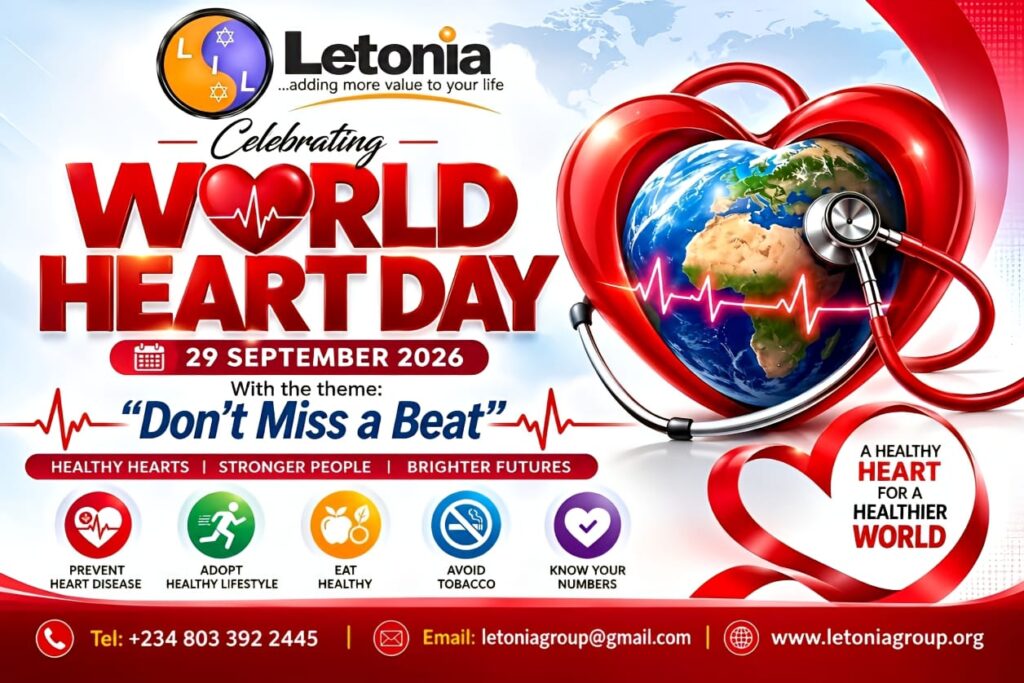
DON’T MISS A BEAT: Every Beat Counts; Every Action Matters A World Heart Day 2026 Message
By Livy-Elcon Emereonye
INTRODUCTION: THE HEART NEVER STOPS WORKING
Every heartbeat is a declaration that life continues.
From the moment of conception through birth, childhood, adulthood and old age, the heart performs one of the most remarkable tasks in human biology. It contracts rhythmically, pumping blood through an extraordinary network of blood vessels to deliver oxygen and nutrients to virtually every cell of the body.
It does this while we sleep.
It does it while we work.
It does it when we are exercising, celebrating, worrying or resting.
It does not take weekends off.
It does not go on annual leave.
It simply keeps beating.
That is why the 2026 World Heart Day message, “Don’t Miss a Beat,” under the multi-year umbrella mandate “Use Heart for Action,” carries a particularly powerful public-health message.
It calls upon individuals, families, healthcare professionals, communities and policymakers to move beyond merely talking about heart disease.
We must act.
We must identify cardiovascular risks early.
We must know our numbers.
We must adopt healthier lifestyles.
We must treat established disease appropriately.
We must recognise warning signs.
And when an emergency occurs, we must act quickly.
The fundamental message is therefore:
Do not wait for your heart to fail before you start caring for it.
- WHY THE HEART DESERVES OUR ATTENTION
The cardiovascular system consists principally of the heart and an extensive network of blood vessels.
The heart functions as a muscular pump. Its right side receives oxygen-depleted blood from the body and sends it to the lungs, while its left side receives oxygenated blood from the lungs and pumps it throughout the body.
This apparently simple arrangement sustains almost every physiological process.
The brain needs continuous oxygen and glucose delivery.
The kidneys require adequate blood flow to filter the blood.
Muscles need oxygen and nutrients to generate energy.
The liver depends on circulation for metabolic functions.
The immune system depends on blood circulation to transport cells and signalling molecules.
Consequently, when cardiovascular function becomes impaired, the effects can extend far beyond the heart itself.
A cardiovascular problem can become a brain problem, kidney problem, limb problem or whole-body problem.
- CARDIOVASCULAR DISEASE: A GLOBAL PUBLIC-HEALTH CHALLENGE
Cardiovascular diseases (CVDs) remain the leading cause of death globally.
The World Health Organization reports that cardiovascular diseases caused approximately 19.8 million deaths in 2022, accounting for roughly 32% of deaths worldwide. About 85% of these deaths were attributable to heart attack and stroke.
This is not merely a statistical problem.
Behind every number is a human being:
A parent.
A spouse.
A child.
A colleague.
A friend.
A professional.
A community member.
And behind many cardiovascular events are risk factors that could have been detected, modified or treated earlier.
This makes cardiovascular disease particularly important from a preventive-health perspective.
- WHAT EXACTLY ARE CARDIOVASCULAR DISEASES?
Cardiovascular disease is not a single disease.
It is a broad group of disorders affecting the heart and blood vessels.
They include:
- coronary artery disease;
- heart attack;
- cerebrovascular disease and stroke;
- heart failure;
- peripheral arterial disease;
- certain congenital heart diseases;
- rheumatic heart disease;
- cardiomyopathies; and
- disorders affecting the heart rhythm.
Although these conditions differ, many share common underlying pathways.
One of the most important is atherosclerosis.
- ATHEROSCLEROSIS: WHEN THE ARTERIES BEGIN TO AGE PREMATURELY
Atherosclerosis is a chronic disease process in which plaques develop within the walls of arteries.
The process is more complicated than simply saying that “fat blocks the arteries.”
It involves interactions among lipoproteins, the vascular wall, inflammatory processes, immune cells and other biological mechanisms.
Over time, atherosclerotic plaques can narrow arteries and restrict blood flow.
If a plaque becomes unstable and ruptures, a blood clot can form rapidly.
If this occurs in a coronary artery, the result may be a heart attack.
If it occurs in an artery supplying the brain, it can cause an ischaemic stroke.
This explains why controlling cardiovascular risk factors early is so important.
The objective is not merely to prevent symptoms.
It is to reduce the biological processes that eventually produce catastrophic events.
- “DON’T MISS A BEAT” STARTS WITH KNOWING YOUR NUMBERS
One of the most practical interpretations of the theme is:
KNOW YOUR NUMBERS.
Many cardiovascular risk factors can remain silent for years.
A person may feel perfectly well while having:
- elevated blood pressure;
- high LDL cholesterol;
- elevated blood glucose;
- increasing abdominal obesity; or
- other significant cardiovascular risk factors.
Feeling healthy therefore does not necessarily mean being cardiovascularly healthy.
Several measurements deserve attention.
5.1 BLOOD PRESSURE: THE SILENT PRESSURE ON THE VASCULAR SYSTEM
Blood pressure represents the force exerted by circulating blood against the walls of arteries.
When blood pressure remains elevated over time, the cardiovascular system is exposed to excessive mechanical stress.
Persistent hypertension can contribute to:
- coronary artery disease;
- heart failure;
- stroke;
- kidney disease;
- retinal damage; and
- other vascular complications.
The World Health Organization estimates that approximately 1.28 billion adults aged 30–79 years worldwide have hypertension, with many unaware that they have the condition.
This is one reason hypertension has often been called a silent killer.
The term does not mean that hypertension is always completely symptom-free. Rather, it emphasises that significant vascular damage can develop without obvious warning symptoms.
The lesson:
Do not wait for a headache, dizziness or other symptom before checking your blood pressure.
Blood pressure should be measured appropriately and interpreted in clinical context.
- CHOLESTEROL: UNDERSTANDING THE “BAD” AND THE “GOOD”
Cholesterol is not inherently harmful.
The body needs cholesterol for cell membranes, steroid hormones and other biological functions.
The problem arises when certain circulating lipoproteins—particularly low-density lipoprotein (LDL) and other atherogenic particles—are present at levels that contribute to atherosclerosis.
High-density lipoprotein (HDL) has traditionally been called “good cholesterol,” but cardiovascular risk assessment is more sophisticated than simply trying to raise HDL.
The central preventive objective is to identify and manage atherogenic lipid exposure, especially LDL cholesterol, according to an individual’s overall cardiovascular risk.
This is why a lipid profile can be important even when someone feels completely healthy.
- BLOOD GLUCOSE: WHEN METABOLIC HEALTH BECOMES CARDIOVASCULAR HEALTH
Diabetes is both a metabolic and cardiovascular concern.
Persistently elevated blood glucose can damage blood vessels and contribute to abnormalities in vascular function.
People with diabetes have increased risks of:
- coronary heart disease;
- stroke;
- peripheral arterial disease;
- kidney disease; and
- other vascular complications.
Tests such as fasting plasma glucose and HbA1c can help assess glucose regulation.
HbA1c is particularly useful because it reflects average blood glucose exposure over approximately the preceding two to three months rather than representing only one moment in time.
However, the interpretation of any laboratory result must consider the clinical circumstances and appropriate diagnostic criteria.
- BMI AND WAIST CIRCUMFERENCE: WHY BODY FAT DISTRIBUTION MATTERS
Body weight is another important component of cardiovascular risk assessment.
Body mass index (BMI) is calculated from weight relative to height.
It is useful at population level and as one component of individual assessment, but it has limitations.
For example, BMI cannot distinguish muscle from adipose tissue.
This is why waist circumference can provide additional information.
Excess abdominal or visceral fat is associated with insulin resistance, abnormal lipid metabolism, hypertension and other cardiometabolic abnormalities.
The important message is therefore not simply:
“Lose weight.”
It is:
Understand your body composition and metabolic risk, and work toward a healthy, sustainable pattern of nutrition and physical activity.
- HEART RATE: LISTENING TO THE RHYTHM
Heart rate is another basic cardiovascular indicator.
At rest, many healthy adults have a heart rate within approximately 60–100 beats per minute, although normal values vary according to factors such as age, fitness, medications, physiological state and individual characteristics.
An unusually fast, slow or irregular pulse may sometimes indicate an underlying problem, but it does not automatically mean disease.
This distinction is important.
A heart rate measurement should not be interpreted in isolation.
Symptoms, medical history, medications and other clinical findings matter.
Persistent palpitations, fainting, unexplained dizziness, chest discomfort or significant rhythm abnormalities warrant appropriate medical assessment.
- PHYSICAL ACTIVITY: THE HEART BENEFITS FROM MOVEMENT
The human body was not designed for prolonged physical inactivity.
Regular physical activity can:
- improve cardiovascular fitness;
- lower blood pressure;
- improve insulin sensitivity;
- support healthy body weight;
- improve lipid profiles;
- reduce cardiovascular risk; and
- improve overall physical and psychological wellbeing.
WHO recommends that adults undertake 150–300 minutes of moderate-intensity aerobic activity per week, or 75–150 minutes of vigorous-intensity activity, or an equivalent combination, alongside muscle-strengthening activity on at least two days each week.[3]
But there is an important practical point.
Someone who currently does almost no physical activity should not conclude:
“If I cannot achieve the recommended amount immediately, there is no point starting.”
There is.
Start where you are.
Walk.
Climb appropriate stairs.
Dance.
Cycle.
Exercise.
Perform household or occupational activities.
Reduce prolonged sitting.
Gradually increase activity according to individual capacity and medical circumstances.
The goal is to make movement a habit rather than an occasional event.
- FOOD AND THE HEART: EVERY MEAL IS AN OPPORTUNITY
Nutrition has profound implications for cardiovascular health.
A heart-supportive dietary pattern generally emphasises:
- vegetables;
- fruits;
- whole grains;
- legumes;
- nuts and seeds;
- appropriate sources of protein;
- dietary fibre; and
- healthier unsaturated fats.
At the same time, excessive intake of:
- sodium;
- highly processed foods;
- added sugars;
- saturated fats;
- industrial trans fats; and
- excessive calories
should be limited.
Salt deserves particular attention because excessive sodium intake contributes to elevated blood pressure in many people.
However, healthy nutrition should not become an exercise in fear.
The objective is not to classify every food as “good” or “bad.”
It is to establish a balanced, sustainable dietary pattern.
- TOBACCO: A DIRECT ATTACK ON CARDIOVASCULAR HEALTH
Tobacco exposure is one of the major preventable causes of cardiovascular disease.
Smoking can damage the vascular endothelium, promote inflammation, contribute to atherosclerosis and increase the likelihood of thrombosis.
Tobacco exposure is associated with increased risk of coronary heart disease, stroke and peripheral vascular disease.
The good news is equally important:
Stopping tobacco use reduces cardiovascular risk.
Therefore, for someone who smokes, quitting is not merely a lifestyle improvement.
It is a cardiovascular intervention.
- ALCOHOL: MORE IS NOT BETTER
Alcohol consumption is often surrounded by conflicting messages about possible health benefits.
For cardiovascular public health, however, the issue should be approached cautiously.
Alcohol consumption can contribute to hypertension, atrial fibrillation, cardiomyopathy, stroke and other health problems, particularly with heavier consumption.
Therefore, alcohol should not be started or increased for the purpose of protecting the heart.
Where alcohol is consumed, the safest approach is to avoid harmful or excessive consumption and follow evidence-based public-health guidance.
- DIABETES, HYPERTENSION AND CHOLESTEROL: THE DANGEROUS COMBINATION
Cardiovascular risk factors often do not occur independently.
An individual may simultaneously have:
- hypertension;
- diabetes;
- elevated LDL cholesterol;
- abdominal obesity; and
- physical inactivity.
These factors can interact and substantially increase overall cardiovascular risk.
This is why cardiovascular prevention should not focus on a single number.
A person with mildly abnormal blood pressure may have a very different overall risk profile from another person with the same blood pressure but additional diabetes, smoking exposure and established vascular disease.
Modern cardiovascular prevention therefore increasingly uses overall cardiovascular risk assessment rather than isolated measurements.
- KIDNEY HEALTH AND HEART HEALTH: TWO SYSTEMS, ONE CIRCULATION
The kidneys and cardiovascular system are deeply interconnected.
The kidneys regulate fluid balance, electrolytes and blood pressure and contribute to several hormonal processes.
At the same time, the kidneys depend upon healthy circulation.
Chronic kidney disease can increase cardiovascular risk, while cardiovascular disease can adversely affect kidney function.
This relationship demonstrates an important principle:
You cannot always separate heart health from whole-body health.
Appropriate assessment of kidney function can therefore be particularly important in people with hypertension, diabetes or established cardiovascular disease.
- SLEEP AND THE HEART
Sleep is sometimes overlooked in discussions about cardiovascular health.
Yet sleep is an important component of overall health.
Poor sleep quality and certain sleep disorders—including obstructive sleep apnoea—can be associated with hypertension and other cardiovascular problems.
Persistent loud snoring, witnessed breathing interruptions during sleep, excessive daytime sleepiness or unexplained morning headaches may warrant professional assessment.
Again, prevention involves recognising risk before major complications occur.
- STRESS AND THE CARDIOVASCULAR SYSTEM
Human beings cannot eliminate all stress.
Work demands, financial difficulties, family responsibilities, illness, bereavement and social pressures are part of life.
The concern is not that every episode of stress causes heart disease.
Rather, persistent psychosocial stress can influence cardiovascular health indirectly and directly through physiological responses and health behaviours.
People under prolonged stress may:
- sleep poorly;
- eat less healthily;
- become physically inactive;
- smoke;
- consume alcohol excessively; or
- fail to take prescribed medicines consistently.
Therefore, cardiovascular prevention should include practical strategies for healthy coping, social support, adequate sleep and professional assistance where appropriate.
- AIR POLLUTION: THE CARDIOVASCULAR ENVIRONMENT
Heart health is not determined exclusively by personal choices.
Environmental conditions also matter.
Exposure to air pollution—particularly fine particulate matter—has been associated with cardiovascular and respiratory disease.
This is particularly important in rapidly urbanising environments where traffic emissions, industrial activity, household fuel use, waste burning and other sources can contribute to poor air quality.
Therefore, “Use Heart for Action” also has a policy dimension.
Healthy individuals require healthy environments.
- DON’T MISS THE WARNING SIGNS OF A HEART ATTACK
Prevention is essential, but prevention cannot eliminate every cardiovascular emergency.
People should know the possible warning signs of myocardial infarction.
These may include:
- pressure, squeezing, heaviness or pain in the chest;
- discomfort spreading to the arm, shoulder, back, neck or jaw;
- shortness of breath;
- sweating;
- nausea or vomiting;
- unusual weakness;
- light-headedness; or
- unexplained severe discomfort.
Symptoms may vary considerably between individuals.
Women, older adults and people with diabetes may sometimes present with less typical symptoms.
The key principle is:
When a heart attack is suspected, time matters.
Do not spend precious time attempting to determine at home whether the symptoms are “really serious.”
Seek emergency medical assistance.
- RECOGNISING STROKE: THINK FAST
Stroke is another major cardiovascular emergency.
A useful public-health mnemonic is:
F — FACE
Is one side of the face drooping?
A — ARMS
Is there sudden weakness or numbness of one arm?
S — SPEECH
Is speech suddenly unclear, abnormal or difficult to understand?
T — TIME
Time is critical. Seek emergency medical attention immediately.
Other sudden neurological symptoms—such as loss of vision, severe imbalance, confusion or a sudden severe headache—can also indicate stroke and require urgent assessment.
The most important message is:
Never wait for stroke symptoms to “settle down.”
- THE AFRICAN AND NIGERIAN DIMENSION
Africa is experiencing a significant epidemiological transition.
Communities are simultaneously confronting infectious diseases and an expanding burden of non-communicable diseases.
This creates what is often described as a double burden of disease.
Urbanisation, dietary transitions, physical inactivity, tobacco exposure, environmental factors and increasing life expectancy are among the factors influencing the cardiovascular landscape.
Nigeria therefore needs cardiovascular prevention that reaches beyond hospitals.
Primary healthcare centres, pharmacies, workplaces, schools, religious organisations, community organisations and families can all become platforms for health education and early detection.
But screening alone is insufficient.
If someone is found to have elevated blood pressure, there must be a pathway for:
confirmation → risk assessment → treatment where indicated → monitoring → adherence → long-term follow-up.
That is the difference between screening as an event and prevention as a health system.
- THE PHARMACIST: AN UNDERUTILISED FORCE FOR CARDIOVASCULAR PREVENTION
Pharmacists are uniquely positioned within communities.
People often visit pharmacies more frequently than they visit hospitals or specialist clinics.
This gives pharmacists opportunities to contribute to cardiovascular prevention through:
- blood-pressure checks;
- medication reviews;
- adherence counselling;
- identification of possible adverse drug effects;
- identification of drug interactions;
- smoking-cessation support;
- lifestyle education;
- cardiovascular-risk awareness;
- appropriate referral; and
- monitoring support for chronic diseases.
The pharmacist of the future should therefore not be viewed solely as the person who supplies medicines.
The pharmacist can become an important frontline partner in prevention and public health.
- INTEGRATIVE HEALTH: INTEGRATION MUST NOT MEAN ABANDONING EVIDENCE
The increasing public interest in herbal and complementary medicine provides an opportunity for constructive dialogue.
However, cardiovascular disease is an area where unsupported claims can be dangerous.
A product being described as “natural” does not automatically establish that it is:
- effective;
- safe;
- appropriately dosed;
- free of contaminants;
- free of drug interactions; or
- suitable for every patient.
For example, a patient receiving anticoagulant, antiplatelet, antihypertensive, antiarrhythmic or glucose-lowering therapy should not casually add herbal preparations without considering possible interactions.
The appropriate philosophy is therefore:
Integration, not substitution without evidence.
Evidence-based complementary approaches has an important role within comprehensive care, but they should meet appropriate standards of quality, safety, efficacy and regulatory oversight.
- HEART HEALTH BEGINS LONG BEFORE HEART DISEASE
One of the most important lessons of cardiovascular medicine is that prevention should begin long before disease becomes clinically obvious.
Atherosclerotic processes can develop over many years.
Risk factors can accumulate gradually.
A person who develops a heart attack at 55 may have been accumulating cardiovascular risk for decades.
This is why cardiovascular prevention should begin early.
Children should learn healthy habits.
Young adults should understand nutrition, physical activity and tobacco risks.
Adults should monitor cardiovascular risk factors.
Older adults should continue appropriate screening and disease management.
Prevention is not an age-specific activity.
- FROM “KNOW YOUR NUMBERS” TO “ACT ON YOUR NUMBERS”
There is, however, a danger in turning health screening into a collection of numbers.
A blood-pressure reading by itself does not treat hypertension.
A cholesterol result does not prevent a heart attack by itself.
An HbA1c result does not control diabetes.
A BMI calculation does not make someone healthier.
The true sequence is:
Measure → Understand → Act → Monitor → Adjust.
This is the essence of “Use Heart for Action.”
Health information becomes valuable when it leads to an appropriate decision.
- THE FAMILY AS THE FIRST CARDIOVASCULAR HEALTH TEAM
Cardiovascular prevention should not be restricted to individuals.
Families can create healthier environments by:
- preparing healthier meals;
- reducing excessive salt;
- encouraging physical activity;
- avoiding tobacco exposure;
- supporting medication adherence;
- attending health checks;
- recognising emergency symptoms; and
- encouraging vulnerable relatives to seek professional care.
One person’s healthier behaviour can influence an entire household.
A child who grows up in a family where physical activity is normal may be more likely to maintain that habit.
A family that routinely checks blood pressure may identify hypertension earlier.
A household that does not smoke protects both smokers and non-smokers.
Thus:
A heart-healthy family is an investment in a heart-healthy generation.
- THE WORKPLACE AND COMMUNITY HAVE A ROLE
Adults spend substantial portions of their lives at work.
Workplaces can therefore become powerful settings for cardiovascular prevention.
Possible interventions include:
- periodic health screening;
- opportunities for physical activity;
- healthier food choices;
- smoke-free environments;
- health education;
- stress-management resources; and
- appropriate referral pathways.
Community organisations can do similar work.
The more places in which cardiovascular prevention becomes normal, the greater the opportunity to identify risk before disease becomes catastrophic.
- WHAT SHOULD WE DO THIS WORLD HEART DAY?
World Heart Day should not end with a poster, lecture or social-media message.
Let it trigger action.
ACTION 1 — CHECK
Know your blood pressure.
Know your blood glucose when appropriate.
Know your lipid profile when appropriate.
Know your weight and waist circumference.
Discuss your overall cardiovascular risk with a qualified healthcare professional.
ACTION 2 — MOVE
Introduce regular physical activity into your routine.
ACTION 3 — EAT BETTER
Build a dietary pattern rich in minimally processed, nutrient-dense foods.
ACTION 4 — STOP TOBACCO
If you smoke, seek support to quit.
ACTION 5 — TAKE YOUR MEDICINES CORRECTLY
Do not discontinue prescribed cardiovascular medicines simply because you feel better.
ACTION 6 — LEARN THE EMERGENCY SIGNS
Know the warning signs of heart attack and stroke.
ACTION 7 — HELP SOMEBODY ELSE
Encourage a parent, spouse, friend, colleague or neighbour to check their cardiovascular health.
ACTION 8 — DEMAND HEALTHIER ENVIRONMENTS
Support policies and environments that make healthy choices easier.
- THE BIGGER MEANING OF “USE HEART FOR ACTION”
The phrase “Use Heart for Action” can be understood at several levels.
Use your heart for personal action.
Take responsibility for your cardiovascular health.
Use your heart for family action.
Protect the people you love by encouraging healthy habits.
Use your heart for professional action.
Healthcare professionals should make prevention an integral part of their practice.
Use your heart for community action.
Communities should create environments that support healthy living.
Use your heart for policy action.
Governments and institutions should strengthen primary healthcare, cardiovascular prevention, access to essential medicines and emergency care.
In other words:
The heart should not merely be protected by medicine; it should be protected by informed action at every level of society.
- EVERY BEAT IS AN OPPORTUNITY
We often notice the importance of the heart only when something goes wrong.
But perhaps World Heart Day should encourage a different philosophy.
Instead of asking:
“What should I do after my heart develops a problem?”
we should ask:
“What can I do today to reduce the possibility of a problem tomorrow?”
That shift—from reaction to prevention—is fundamental to modern public health.
CONCLUSION: DON’T MISS A BEAT
The heart beats approximately 100,000 times a day.
Every beat delivers life.
Every beat carries oxygen.
Every beat supports the brain.
Every beat supports the kidneys.
Every beat supports the muscles.
Every beat sustains the extraordinary biological machinery that makes human life possible.
Yet cardiovascular disease continues to claim millions of lives every year.
The tragedy is that many of the major cardiovascular risk factors are detectable, and many are modifiable.
That means there is an enormous opportunity for prevention.
We can measure blood pressure.
We can assess cholesterol.
We can screen for diabetes when appropriate.
We can monitor weight and metabolic health.
We can become physically active.
We can improve our diets.
We can stop smoking.
We can manage established diseases.
We can recognise emergency symptoms.
We can seek help early.
We can educate our families.
We can strengthen our communities.
We can build healthier health systems.
That is what “Use Heart for Action” should mean.
Not simply feeling concern.
Doing something about it.
Not simply knowing.
Acting on what we know.
Not simply waiting for disease.
Preventing what can be prevented.
And not simply counting heartbeats.
Making every heartbeat count.
This World Heart Day 2026, don’t merely celebrate the heart. Protect it.
Know it. Check it. Understand it. Protect it. Act on it.
DON’T MISS A BEAT.
PS: Dr. Emereonye could be reached on: +234 803 392 2445
REFERENCES
- World Health Organization. Cardiovascular diseases (CVDs). WHO Fact Sheet. Updated 31 July 2025. https://www.who.int/news-room/fact-sheets/detail/cardiovascular-diseases-(cvds)
- World Health Organization. Hypertension. WHO Fact Sheet. 16 March 2023. https://www.who.int/news-room/fact-sheets/detail/hypertension
- World Health Organization. WHO Guidelines on Physical Activity and Sedentary Behaviour. Geneva: World Health Organization; 2020. https://www.who.int/publications/i/item/9789240015128
- World Health Organization. Global Report on Hypertension: The Race Against a Silent Killer. Geneva: WHO; 2023. https://www.who.int/publications/i/item/9789240081062
- World Health Organization. Global Status Report on Physical Activity 2022. Geneva: WHO; 2022. https://www.who.int/publications/i/item/9789240059153
- World Health Organization. Tobacco. WHO Fact Sheet. https://www.who.int/news-room/fact-sheets/detail/tobacco
- World Health Organization. Diabetes. WHO Fact Sheet. https://www.who.int/news-room/fact-sheets/detail/diabetes
- World Heart Federation. World Heart Day. Official campaign resources. https://world-heart-federation.org/world-heart-day/
- Roth GA, Mensah GA, Johnson CO, et al. Global burden of cardiovascular diseases and risk factors, 1990–2019: update from the GBD 2019 study. Journal of the American College of Cardiology. 2020;76(25):2982–3021. https://doi.org/10.1016/j.jacc.2020.11.010
- Arnett DK, Blumenthal RS, Albert MA, et al. 2019 ACC/AHA Guideline on the Primary Prevention of Cardiovascular Disease. Circulation. 2019;140:e596–e646. https://doi.org/10.1161/CIR.0000000000000678
- Kaptoge S, Pennells L, De Bacquer D, et al. World Health Organization cardiovascular disease risk charts: revised models to estimate risk in 21 global regions. The Lancet Global Health. 2019;7(10):e1332–e1345. https://doi.org/10.1016/S2214-109X(19)30318-3
- Visseren FLJ, Mach F, Smulders YM, et al. 2021 ESC Guidelines on cardiovascular disease prevention in clinical practice. European Heart Journal. 2021;42(34):3227–3337. https://doi.org/10.1093/eurheartj/ehab484
- Virani SS, Newby LK, Arnold SV, et al. 2023 AHA/ACC/ACCP/ASPC/NLA/PCNA Guideline for the Management of Patients With Chronic Coronary Disease. Circulation. 2023;148:e9–e119. https://doi.org/10.1161/CIR.0000000000001168
- World Health Organization. HEARTS: Technical Package for Cardiovascular Disease Management in Primary Health Care. Geneva: WHO. https://www.who.int/teams/noncommunicable-diseases/cardiovascular-diseases/hearts
- World Health Organization. Package of Essential Noncommunicable Disease Interventions for Primary Health Care in Low-Resource Settings (PEN). Geneva: WHO. https://www.who.int/publications/i/item/9789241598996