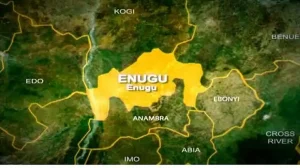
How many of you still know or have seen the tree called Anunuebe in Igbo?
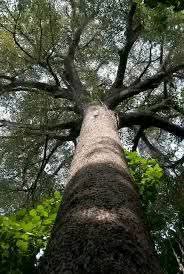
To some it is more or less a fictional story tree…
Anyways, most people have heard the name in passing, some fear it, some respect it, but very few actually understand it from a biological and pharmacological standpoint. That is the problem, we inherit names without understanding function.
Anunuebe is often identified botanically as Okoubaka aubrevillei, a large West African forest tree that has gained attention not just in traditional systems, but also in modern phytomedical discussions.
Some years back, Dede Kelechi Deca mentioned it as one of the most endangered plants in Igboland, and that statement should not be taken lightly.
Once a plant with this level of biological relevance begins to disappear, it means something deeper is being lost.
From a phytochemical standpoint, Okoubaka aubrevillei is not an empty tree. The bark and seeds are known to contain bioactive compounds such as alkaloids, tannins, glycosides, and other secondary metabolites. These compounds interact with detoxification pathways, microbial systems, and metabolic processes in the body.
One of the most recognized traditional uses of Anunuebe is in detoxification.
Clinically interpreted, the above refers to its ability to support the body in handling toxins, whether from microbial origin, food contamination, or environmental exposure. The compounds present may help modulate liver function, enhance elimination pathways, and reduce toxic load in mild to moderate conditions.
- Antimicrobial and detoxifying activity: Traditionally used in suspected poisoning or food-related illness. Pharmacologically, this suggests antimicrobial effects and possible toxin-neutralizing activity through tannins and alkaloids.
- Gastrointestinal support: Used in managing gut disturbances linked to infections or contaminated food. The astringent properties help stabilize the gut lining and reduce irritation.
- Systemic detox support: Supports liver and elimination pathways. Not in a vague sense, but through measurable biochemical interactions that assist in restoring internal balance.
Just as Ogirisi/Ogirishi, and Abusi/Abushi, there are many people today selling all kinds of substances in the name of Anunuebe. Powders, liquids, mixtures, without proper identification, without standardization, and without understanding the plant itself. This is dangerous.
Not everything labeled Anunuebe is Anunuebe.
Not every bark is Okoubaka.
Okwa ka uche gi di ya because people are not even honest this days to sell original ude aki.
This is where people get into trouble, wrong plant, wrong dose, wrong expectation.
Now let us talk about preparation and usage.
This is not a plant for casual use. It is potent and must be handled with precision.
Typical traditional preparation includes:
- Bark decoction
Very small quantity of bark boiled in water
Taken in controlled amounts, not repeatedly
- Powdered bark (specialized use)
Used in very small measured doses
Not for routine consumption
Dosage is critical. This is not something you take daily like tea. It is situational.
Now toxicological care.
- High potency: Overuse can irritate the gut and place stress on the liver due to its active compounds.
- Not for long-term use: It is not a tonic. It is used for acute intervention.
- Pregnancy and chronic conditions: Avoid internal use without proper guidance.
- Identification: Misidentification is a major risk. Proper knowledge is required before use.
- Source: Plants harvested from polluted areas may carry heavy metals or contaminants.
Now step back and think.
A plant with antimicrobial, detoxifying, and gastrointestinal regulatory potential is becoming endangered, while at the same time being misused and misrepresented in the market.
We are losing the real plant and replacing it with guesswork.
Anunuebe is not just a name.
It is a biologically active system.
The problem is not scarcity alone.
The problem is lack of structure, knowledge, and integrity in how it is used today.