Economic Reform Must Lead to Social Development, Not Endless Sacrifice

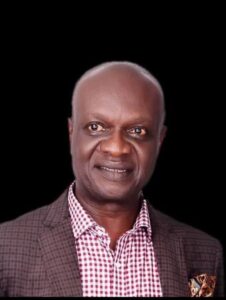
Prince Chris Azor.
There is a growing tendency among government defenders and policy apologists to respond to public criticism with economic theory while ignoring the daily realities facing ordinary Nigerians. Any discussion about deficits, debt and fiscal reforms that fails to address hunger, inflation, unemployment and declining living standards will naturally sound disconnected from the people whose lives are directly affected by these policies.
No serious citizen argues that reforms are unnecessary. Nigeria’s economy has carried structural weaknesses for decades, including fuel subsidy distortions, weak productivity, poor revenue generation and overdependence on imports. Correcting these problems requires difficult decisions. But reforms must ultimately improve social development and human welfare, not simply satisfy macroeconomic theories on paper.
The challenge many Nigerians have today is not with reform itself, but the absence of visible social gains despite the enormous sacrifices demanded from citizens.
The removal of fuel subsidy and the floating of the naira were presented as bold economic corrections that would free resources for infrastructure, healthcare, transportation, education and social protection. Citizens were told the pain would be temporary and that the savings would be invested in improving lives. Yet what millions of Nigerians continue to experience is rising hardship without corresponding social progress.
Food prices have risen sharply. Transportation costs have become unbearable for many families. Electricity tariffs continue to increase while supply remains unstable. Small businesses are struggling to survive under inflation, high operating costs and weak consumer purchasing power. Many young people remain unemployed or underemployed despite repeated promises of economic expansion. Across both urban and rural communities, frustration continues to grow because people are not seeing enough evidence that their sacrifices are translating into improved welfare.
These concerns cannot simply be dismissed as emotional reactions or economic ignorance. They are legitimate questions rooted in lived experience.
Across the world, successful economic reforms are usually accompanied by strong social investment, transparent governance and visible accountability. Citizens are more willing to endure temporary hardship when they can clearly see fairness, discipline and measurable progress. But where hardship rises while trust in institutions declines, public skepticism becomes inevitable.
One major concern is the continued opacity surrounding public finance management. Nigerians still deserve clearer explanations regarding the actual savings realized from subsidy removal, how such funds are being utilized and what measurable projects or social interventions have been achieved. Transparency should not depend on intellectual arguments from government defenders. It should be reflected in open governance, accessible data and visible outcomes that citizens can verify themselves.
There are also growing public concerns about procurement integrity and due process. Reports and perceptions of major contracts being concentrated around politically connected interests, limited competitive bidding and weak transparency in contract awards continue to damage public confidence. In any serious reform programme, procurement accountability is essential because citizens need assurance that public resources are being managed fairly, efficiently and in the national interest.
Global development standards consistently show that countries achieve sustainable growth when public procurement systems are open, competitive and transparent. When citizens begin to perceive favoritism, elite capture or selective access in the award of public contracts, confidence in the reform process weakens significantly.
Questions also remain around budget discipline and implementation. Frequent supplementary budgets, overlapping fiscal frameworks and weak implementation records create uncertainty and reduce accountability. Budgets should serve as clear development roadmaps, not shifting documents that make public monitoring difficult.
Government defenders often point to debt to GDP ratios to argue that Nigeria’s debt level remains manageable compared to advanced economies. But citizens understand that Nigeria cannot simply compare itself to countries with stronger institutions, industrial productivity, stable currencies and effective welfare systems. The more important issue is whether borrowed funds are improving productivity, infrastructure, employment and quality of life.
At a time when debt servicing consumes a troubling significant share of public revenue, citizens naturally expect greater prudence, transparency and measurable impact from government spending. Instead, many Nigerians still perceive a disconnect between the hardship imposed on citizens and the lifestyle of political elites Economic sacrifice becomes difficult to defend when people believe the burden is not being shared fairly.
Another troubling pattern is the tendency of some government defenders to frame criticism as sabotage or propaganda. In every democracy, citizens have the right to question policies that affect their survival and future. Asking questions about inflation, procurement practices, public borrowing, budget implementation and governance priorities is not hostility toward reform. It is part of democratic accountability.
Economic reform cannot succeed through technical explanations alone. It must produce visible improvements in human development and social stability. Citizens need to see better schools, accessible healthcare, affordable transportation, stronger food systems, job opportunities and support for small businesses. Those are the true indicators of meaningful reform.
No nation achieves lasting stability when economic policies continuously weaken the living conditions of ordinary people while asking them to remain patient indefinitely. Social development must remain the centre of every reform agenda. Without that human focus, economic reforms risk becoming exercises in statistics while citizens continue to struggle with worsening realities.
At the end of the day, the true success of any government policy is not measured by intellectual defenses or economic terminology. It is measured by whether ordinary people can live with dignity, security, opportunity and hope for a better future.
Prince Chris Azor is a Citizen advocate, and President, International Peace and Civic Responsibility Centre (IPCRC)
08032102294 (SMS Only)