Dr. Uzoamaka Aguoji: The Woman Building Bridges Between the Igbo Homeland and the Diaspora

By Kasie Abone
When the Centre for Igbo Language and Culture at Chukwuemeka Odumegwu Ojukwu University (COOU), Igbariam, honoured Chief Dr. (Mrs.) Uzoamaka Josephine Aguoji during its maiden Cultural Day Festival, it was more than the presentation of a plaque. It was a recognition of a lifetime devoted to education, selfless leadership, community development and, above all, the preservation of the Igbo identity across continents.
In an era when many indigenous languages are increasingly threatened by globalisation and migration, Dr. Aguoji has remained one of the most consistent voices reminding Igbos that a people without their language and culture gradually lose their identity.
The organisers recognised her “exceptional contribution to humanity, dedication to excellence and significant impact in education as well as the growth and sustenance of Igbo language and culture in Nigeria and the diaspora.”
For more than three decades, Dr. Aguoji has built an enviable career in education. From teaching in Nigeria after graduating from Bayero University, Kano, to earning advanced degrees at Teachers College, Columbia University in New York, and later serving for twenty-five years as a teacher, education supervisor and adjunct professor in the United States, education has remained the foundation upon which she has built her life’s mission.
Yet, despite spending many years abroad, she never allowed distance to weaken her connection with her roots.
Interestingly, she attributes that commitment to the foresight of her late father, Engineer Josiah Ifeacho Ekunno.
Born in Jebba, Kwara State, and raised outside Igboland during her formative years, she could easily have grown up detached from her ancestral language. Instead, her father insisted she study Igbo in secondary school. At the time, it may have appeared an ordinary parental instruction. Today, she considers it one of the greatest gifts she ever received.
That decision now enables her to read the Igbo Bible, confidently promote the language abroad and inspire younger generations of Igbos to embrace their heritage.
She often says that what her father did for her is exactly what today’s parents must do for their children: teach them their language, expose them to their culture early and allow them to grow with pride in their identity.
To Dr. Aguoji, preserving Igbo culture is not merely about speaking the language. It is reflected in dressing, traditional cuisine, music, dance, values, respect for elders, communal living and the dignity of honest labour. These are virtues she believes should never be sacrificed on the altar of modernisation.
Perhaps no achievement illustrates this commitment more vividly than her tenure as the first female President of the Council of Igbo States in the Americas (CISA).
Assuming leadership of an organisation historically led by men was itself a remarkable milestone. But she was determined that her administration would be remembered not for breaking a gender barrier alone, but for producing measurable results.
She approached leadership not as a position of power but as an opportunity to serve.
“I don’t really see myself as a boss,” she once remarked. “I see myself as a servant.”
That philosophy translated into inclusive leadership, teamwork and the deliberate grooming of successors. Rather than seeking personal glory, she focused on strengthening institutions and leaving systems that would outlive her tenure.
Among her enduring legacies was giving CISA a distinct institutional identity through the creation of its official flag and introducing practical innovations that improved the experience of delegates at its annual conventions, traveling to Costa Rica and Antigua with CISA Board Chairman, Dr. Nwachukwu Anakwenze to spread the message of Igbo cultural rebirth.
However, her most historic accomplishment came when she successfully championed the return of the globally acclaimed CISA Festival of Arts and Culture to Nigeria.
For decades, the festival had flourished in the United States as a celebration of Igbo heritage among diaspora communities. Dr. Aguoji believed it was time to reconnect that global celebration with its ancestral source.
Against considerable logistical challenges, she rallied the support of the CISA Board and brought the festival home to her hometown of Abagana, Anambra State.
It was a symbolic homecoming that resonated across the Igbo world.
The festival’s theme, “Oganiru Ifediche: Reconnecting Igbo Global Roots for Cultural Renaissance,” reflected a vision that went beyond celebration. It called for a cultural rebirth anchored on the entrepreneurial spirit, resilience, democratic values and creativity that have always distinguished the Igbo people.
More importantly, she ensured the initiative would not end with her administration.
She proposed a dual-hosting model that allows the festival to rotate between the diaspora and the homeland, thereby strengthening ties between millions of Igbos abroad and their ancestral communities.
Today, several states have already expressed interest in hosting future editions, a clear indication that what began as a bold vision is gradually becoming a lasting tradition.
Her success is perhaps best explained by the philosophy that has guided her throughout her career.
She believes leadership requires clear goals, discipline and unwavering focus on achievable objectives. She has consistently refused to allow gender to define her capabilities.
Having previously become the first female President of the Anambra State Progressive Union (ASPU) in New York, she entered CISA leadership with confidence born from experience rather than symbolism.
Her academic background in educational administration and years of supervising both men and women equipped her with the skills required to lead effectively in environments traditionally dominated by men.
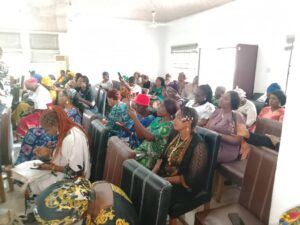
At the Cultural Day Festival at COOU, many speakers echoed the same concern: that the Igbo language faces increasing pressure from migration, urbanisation and the reluctance of many parents to teach their children their mother tongue.
The Director of the Centre for Igbo Language and Culture, Professor Christiana Ngozi Ikegwuonu, reminded parents that language and culture define identity. She urged families to teach their children respect for elders, communal responsibility, honesty, hard work and the customs that have sustained Igbo society for generations.
Former Anambra State Commissioner for Culture and Tourism, Chief Don Onyenji, acknowledged that although fears once existed that Igbo culture was disappearing, a remarkable renaissance is now taking place, particularly among diaspora communities eager to reconnect with their roots.
That growing cultural awakening was reinforced by Pastor Pharm. Ikechukwu Ekunno, who received the award on behalf of his sister. He observed that demand for books and educational materials for teaching Igbo children abroad continues to increase, underscoring a renewed determination among diaspora families to preserve their heritage.
Indeed, the story of Dr. Uzoamaka Aguoji demonstrates that culture is not preserved by rhetoric alone. It survives because individuals choose to protect it, teach it, celebrate it and pass it to the next generation.
The Igbo have a saying: “Omenani bụ ihe eji ama ndị mmadụ”—a people’s culture is what defines them.
Judging by the growing enthusiasm among Igbos both at home and abroad, there is every reason to believe that the Igbo language and culture will not disappear. As long as leaders such as Chief Dr. Uzoamaka Josephine Aguoji continue to inspire others to embrace their roots, the bridge between the homeland and the diaspora will remain strong, ensuring that future generations inherit not only the Igbo name but also the values, traditions and identity that give it meaning.