Dr. Doris Uzoka-Anite is realigning Nigeria’s budget to build a $1Trn economy by 2030.
By Felix Oti Awka
The trajectory of a nation is invariably dictated by the realism of its planning and the courage of its budgeting. For decades, Nigeria, Africa’s largest economy, has been caught in a vexing cycle: drafting brilliant, ambitious economic plans on paper, while simultaneously executing budgets that heavily favored consumption over production.
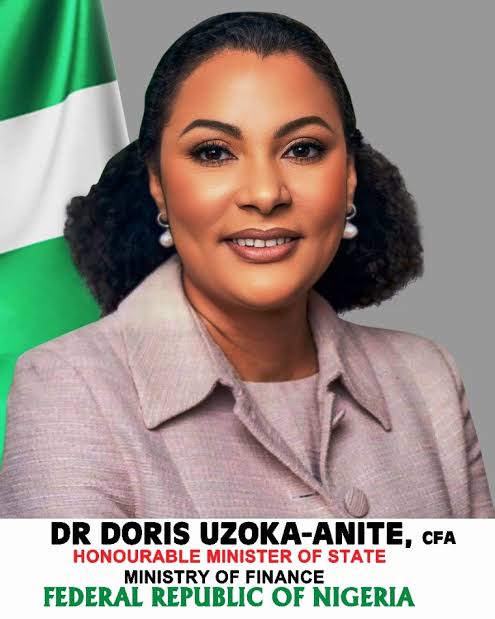
Bridging this chasm between aspiration and fiscal reality is the formidable task of Dr. Doris Nkiruka Uzoka-Anite, the Honourable Minister of State for Budget and Economic Planning
Hailing from the industrious South East and bringing a wealth of experience as a former Commissioner for Finance in Imo State, Dr. Anite is at the vanguard of President Bola Ahmed Tinubu’s “Renewed Hope Agenda.” She is fundamentally changing the narrative of Nigeria’s fiscal architecture, pivoting the country away from a consumption-driven economy toward a production-driven powerhouse capable of competing on the global stage.
Dr. Uzoka-Anite is driving the narrative that Nigeria’s path to a $1 trillion economy by 2030 and its emergence as a more influential global economic player depends less on the size of government spending and more on the quality of investment prioritisation, project preparation, and the mobilisation of private capital at scale.
THE DICHOTOMY: ECONOMIC PLANNING VS. BUDGETING IN NIGERIA
To appreciate the magnitude of Dr. Anite’s ongoing reform, one must understand the historical disconnect in Nigeria’s fiscal space. Historically, Nigeria’s conventional budgets have been dominated by recurrent spending and debt service.
In recent fiscal frameworks, debt service has absorbed roughly 26–29 percent of total expenditure while capital allocations for infrastructure have remained fragmented and insufficient. At previous rates of public infrastructure allocation, closing a multi-hundred-billion-dollar gap would require more than a century.
The narrative Dr. Anite advances is that Nigeria’s future will not be defined solely by the resources it possesses but by how boldly and wisely those resources and the capital they can attract are invested.
She has been explicit about the required shift in mindset:
For the first time, we are treating investment expenditure as a distinct pillar of public finance, separate from recurrent spending. This matters because it disciplines government to ask a different question: not just how much are we spending, but what are we building with what we spend.”_
Government’s role, she argues, must evolve “from being the primary spender to being an enabler of investments that de-risk and unlock private capital.” Strategic public de-risking can mobilise private investment at a multiplier of three to five times public allocation in priority infrastructure.
LEARNING FROM THE GIANTS: DEVELOPED NATIONS
Dr. Anite’s ministry is drawing hard lessons from the fiscal playbooks of developed nations.
The US CHIPS and Science Act strategically directs billions to semiconductor manufacturing. Germany’s federal budget ties massive capital spending to energy policy and infrastructure, viewing long-term industrial survival as a primary state function.
Like these economies, Dr. Anite is shifting Nigeria’s budget from a mere “payroll and maintenance” document to a *strategic instrument of industrial policy aggressively pushing capital expenditure toward *roads, rail corridors, and energy grids
MIRRORING THE TIGERS: EMERGING NATIONS
Singapore uses catalytic public finance through vehicles like the National Productivity Fund and RIE frameworks to attract high-value private investment in AI, semiconductors and green transition.
Vietnam which recently eclipsed Nigeria in FDI, uses its national budget as a precision tool. Its planning and budgeting ministries operate as a single, synchronized unit.
This is the exact synchronization Dr. Anite is bringing to Nigeria — ensuring that the Ministry of Budget and Economic Planning speaks with one voice*, moving away from the fragmented approach of the past.
POSITIONING NIGERIA AS AN EMERGING GLOBAL POWERHOUSE
Changing a nation’s economic narrative is not an event; it is a painstaking process. Under Dr. Uzoka-Anite, the national budget is finally ceasing to be an annual ritual of recurrent spending.
Instead, it is becoming a targeted, data-driven weapon for national transformation — firmly positioning Nigeria on the path to becoming the global powerhouse we know it can be under the Renewed Hope Agenda.