ASUU Threatens Full-blown Indefinite Strike Over Unmet Demands

Lawrence Ndubeze, Awka
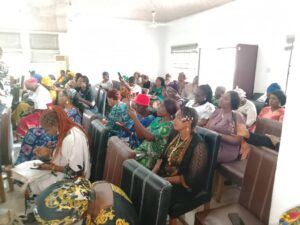
The Academic Staff Union of Universities (ASUU), Owerri Zone, has issued an eight-day ultimatum to the Federal Government to address outstanding issues, warning that it will resume a full-blown industrial action if demands are not met.
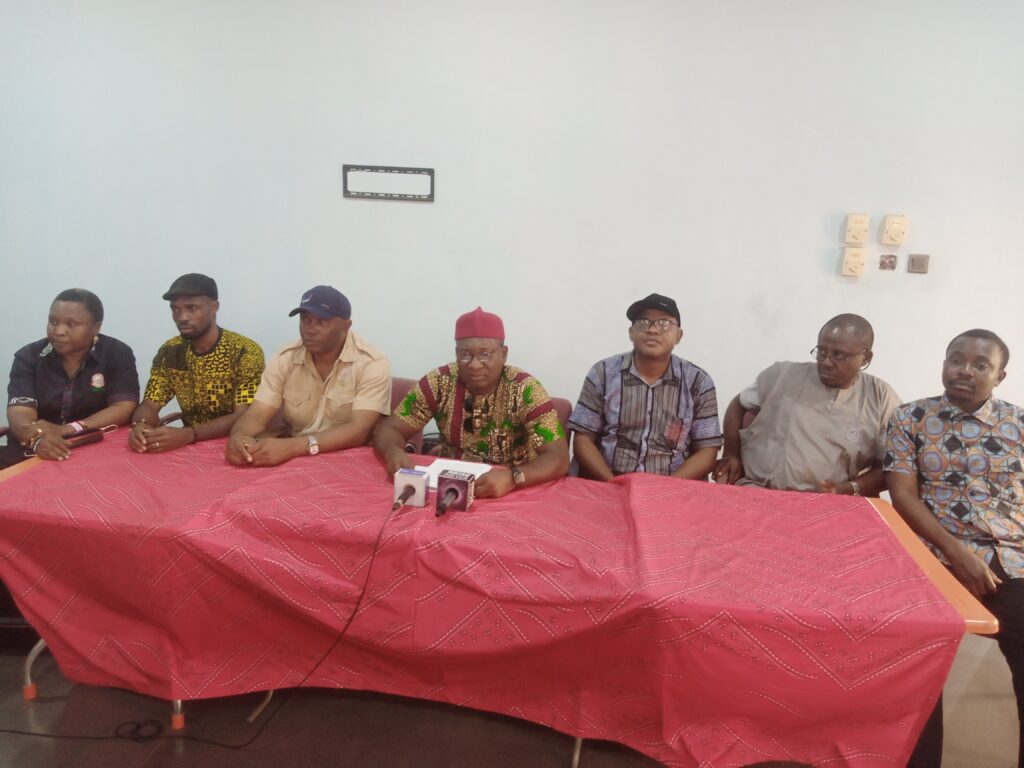
In a press conference held at Nnamdi Azikiwe University (NAU) Awka on Thursday, ASUU Owerri Zone Coordinator, Prof Dennis Aribodor, decried the government’s failure to prioritize education, describing a proposed salary increment as “an insult” inadequate to stem brain drain and motivate lecturers amid 16 years of stagnant wages and rising inflation.
He said “Government’s continuous failure to prioritize education as a social good, not a commercial venture, is pushing universities to a breaking point.
“This press conference was necessitated by the need to alert all the critical stakeholders in the Nigeria University System and, indeed, the general public that time is running out to prevent a full blown industrial action in our public universities.
“Please recall that ASUU out of respect for students and their parents, the media, Nigeria Labour Congress and other well meaning Nigerians reviewed the then ongoing two (2) week warning strike, declared on 13th October, 2025, and resolved to suspend the strike action on 22nd October, 2025, 5 days before the expiration of the two weeks.
“The Union gave a one month window to the government to resolve all issues. Eight days to the end of this one month window period, where are we?
“ASUU Owerri Zone, regrettably, has observed with consternation, the government’s continuous failure to prioritise education as it perceives education as a commercial good that must be self-sustaining instead of a social good that can guarantee peace, progress and national development.
“The Zone further reviewed the progress made in the renegotiation process since the suspension of the warning strike over two weeks ago and rejected the proposed salary increment, which we consider as an insult to Nigerian university academic staff.
“The proposal is not capable of bringing out the best among university lecturers and cannot reverse the perennial brain drain syndrome, which has devastated our universities for decades.
“The salary and conditions of service components of the renegotiation process remain a sore point that needs a radical approach to stem the tide in the system.”
Aribodor accused some government officials of undermining the negotiation process through misrepresentation of offers and selective implementation of agreements, which he said risks derailing talks.
“To us in ASUU Owerri Zone, government functionaries are undermining the negotiation process by the subtle misrepresentation of offers and implementation of agreements just to score cheap political points.
“The part payment of promotion arrears dating as far back to 2017, the release of third party deductions, which are part of members salaries for years are mere confidence measures, and must not be construed as the substantial issues of the negotiation process.
“The framing of government’s implementation is not the true reflection of reality and this strategy portends great danger to the renegotiation as it casts doubt on the sincerity of the government.
“The government’s objective must not be to win the narrative but to solve the real problems. That’s the way forward.”
The zonal coordinator advised the federal government to utilize the remaining days to the expiration of the one month window given to achieve a holistic resolution of the issues, particularly to uplift the take home pay of academics in Nigeria.
He emphasized that investing adequately in education is key to securing the country’s future, describing education as a public good that deserves special attention in Nigeria due to the existing infrastructure deficit.
Citing revenue growth, Federal revenue up 70 percent and states 62 percent from 2022-2024, Aribodor dismissed claims of funding constraints, blaming lack of political will.
“It’s unconscionable for lecturers’ pay to stagnate for 16 years amid devaluation and inflation. Contrary to the claim of paucity of funds and economic downturn, evidence shows that there has been a quantum leap in the revenue profile of both the Federal and State Governments.
“For example, in 2022, according to data from the Federal Accounts Allocation Committee, the states received a total of 3.92 Trillion Naira, while the figure for 2024 was 5.81 Trillion Naira. This is an increase of over 62%. Similarly, the Federal Government received 3.42 Trillion in 2022 and 4.65 Trillion in 2024, representing an increase of over 70%.
“It is the political will or lack of it, and not economic factors that has been undermining the resolution of this renegotiation process, as the revenue profile above clearly supports this claim.”
The union urged stakeholders – traditional leaders, students, Nigeria Labour Congress (NLC), media, and civil society – to pressure the government to act, live up to its responsibility or face total shutdown.