Anambra Urged to Seek Homegrown Strategy in Tackling Corruption
Lawrence Ndubeze, Awka
The Rule of Law and Anti-corruption (RoLAC) alongside other Anticorruption partners in Anambra State have called for a tailored approach to addressing corruption and corrupt practices in the state.
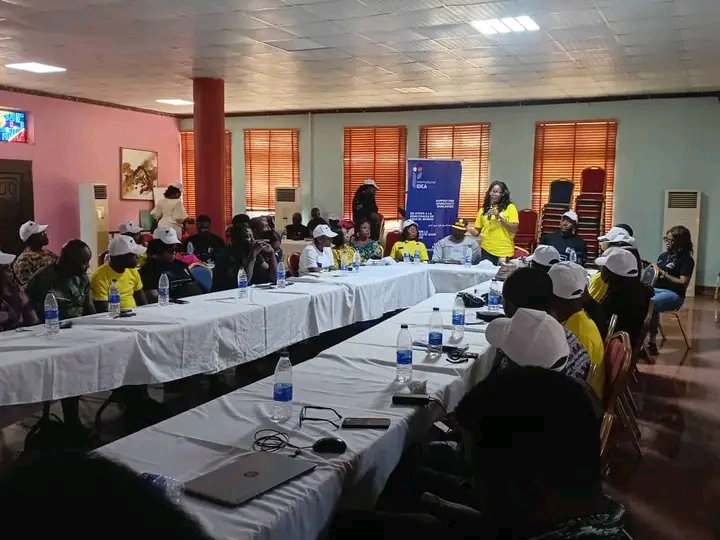
They made the call in Awka during a Town Hall Meeting organized by Anambra State Anti-Corruption Strategy (ANSACS) Steering Committee in partnership with Independent Corrupt Practices and other Related Offences Commission (ICPC) and other partners to commemorate the International Anti- Corruption Day themed “Uniting with Youth Against Corruption — Shaping Tomorrow’s Integrity.”
The event was part of the Rule of Law and Anti-Corruption (RoLAC) Programme, funded by the European Union and implemented by the International Institute for Democracy and Electoral Assistance (IDEA).
It was aimed at sensitizing citizens on the importance of accountability and transparency in governance, and the need for a homegrown approach to addressing corruption in Anambra State.

Speaking at the meeting, Anambra State RoLAC Coordinator, Dr Josephine Onah, stressed the importance of adopting a strategy to tackle corruption and improve service delivery, noting that a tailored approach would enable the state to address its unique challenges and circumstances.
She emphasized that a homegrown strategy would allow for the development of effective mechanisms that are suited to the state’s specific needs, thereby enhancing the fight against corruption.
According to Onah, Anambra State has its own anti-corruption strategy, which outlines mechanisms for addressing corruption and improving service delivery. She explained that the strategy is designed to be implemented across all Ministries, Departments, and Agencies (MDAs) in the state, with the aim of promoting transparency and accountability.
Dr Onah further highlighted the need for the involvement of young people in the fight against corruption, describing it as an intergenerational responsibility. She emphasized that the focus should be on engaging youths to take ownership of the anti-corruption efforts, which would ensure the sustainability of the initiative.

“For us, the anti-corruption strategy is home-grown. Anambra has its own strategy that looks at issues of corruption and outlines the mechanisms that should be carried out.
“We want to see a situation where our youths are empowered to demand accountability and transparency from their leaders. This is why we are working with various stakeholders to develop a homegrown strategy that addresses the specific needs of Anambra State,” she said.
Onah also called on the government to demonstrate political will and provide the necessary resources to support the anti-corruption efforts.
“We want government to exercise political will in fight against corruption. There are so many things that can be done at low cost. It is just for you to identify and release information that are not in the public domain,” Onah said
Anambra Head of Service and Chairman of Anambra State Anti-Corruption Strategy (ANSACS) Steering Committee, Barrister Theodora Okwy Igwegbe, who was represented by the Permanent Secretary, Anambra State Ministry of Health, Dr Obiageli Uchebo, commended RoLAC for the their interventions and drive to eliminate corruption in state’s Ministries, Departments and Agencies (MDAs).
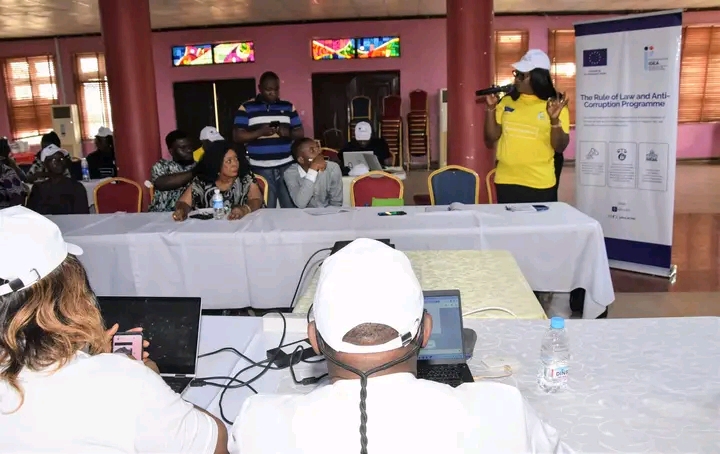
Permanent Secretary, Ministry of Health, Obiageli Uchebo, highlighted the ministry’s interventions in basic health delivery, noting significant progress in primary and secondary healthcare.
However, she acknowledged that combating corruption remains challenging due to entrenched interests, and thus advocated for an Anti-Corruption Commission to enforce policies and impose sanctions, thereby ensuring the success of transparency initiatives.
Secretary of Anambra State Anti-Corruption Strategy (ANSACS) State Secretariat, Lilian Oguchi, Esq, outlined the ANSACS Strategy, stating that the vision is to make Anambra an egalitarian state with ease of doing business.
She noted that Anambra is the second state in Nigeria to domesticate the national Anti-Corruption Strategy, after Adamawa State. Oguchi also highlighted the mission, structure of the State Steering Committee, roles of the ANSACS Committee, strategic objectives, and implementation framework.
Dr. Ifiora Chukwudozie, a member of the ANSACS Secretariat, who during panel discussion, spoke on the challenges faced by ANSACS, stressed the need for government to institutionalize the anti-corruption structures, stating that despite the successes recorded in the fight against corruption, the ability of the state to own the process and not wait for external support is crucial.
“The political will for the state to own up these processes are necessary. Despite the successes recorded so far, there are still some challenges – the ability of the state to own the process. Waiting on RoLAC and other bodies to help us do our own thing, that’s where we are not really getting it right,” Ifiora said.
The Coordinator of CSOs Media Accountability and Anticorruption initiative, CMAAI, Ugochi Freeman, emphasized the importance of efficient and effective delivery of services to citizens, stating that it leads to citizen satisfaction and increased revenue for the state.

“When citizens are satisfied in the services government is rendering, they will effortless pay for services being rendered. But when citizens feel that they are being extorted, they evade tax thereby depriving the state the money meant to develop the state. So citizens satisfaction is key,” Freeman said.
Executive Director of Civil Rights Concern, Okey Onyeka, emphasized the need for the government to clearly define its policies, especially in the education sector. He stated that it is misleading and unacceptable to claim that education is free without providing clear details on what this entails.
“If you say there’s free education, it should be properly defined. Is it only tuition, textbooks etc are important information people need. Government have not made commitments in terms of what they plan to do in education,” Onyeka said.
Inalegwu Shaibu of the Independent Corrupt Practices and Other Related Offences Commission (ICPC), Anambra State presented a paper entitled Corruption and the Place of Youths, Ethics and Integrity in National Development, emphasizing that prevention of corruption is desirable compared to recovery of funds, especially when lives are involved.
“We believe that strong ethics and integrity can help realign our nation on the path of prosperity. Make wealth without undermining the system, integrity ultimately remains a personal choice that every human must consciously make,” he said.