ANAMBRA AND THE URGENCY OF AFFORDABLE HOUSING REFORM
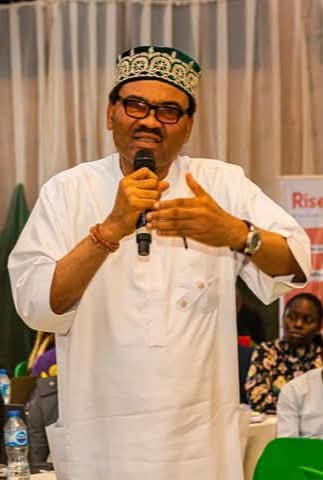
Prince Chris Azor
Anambra’s ambition to be a liveable and prosperous Mega City, a place where doing business is genuinely easy, will ultimately be judged not only by roads, technology or investments, but by something far more basic: whether ordinary people can afford to truly live and enjoy.
Right now, that question is becoming harder to answer with confidence.
Across Awka, Onitsha, Nnewi and other sprouting growth corridors, the pressure is visible. Rent is rising faster than incomes. Land is increasingly priced beyond the reach of average earners. Building costs remain high. What used to be a stretch is now, for many, simply out of reach. And when people cannot live close to where they work, run businesses or access services, the idea of a truly liveable and economically vibrant State begins to weaken.
Housing is not separate from ease of doing business. It sits right at the centre of it.
A state where workers, entrepreneurs and investors struggle to find decent accommodation will quietly lose productivity. Commute times increase, informal settlements expand, workforce stability declines, and businesses begin to factor in hidden social costs. In contrast, cities that get housing right tend to attract talent, retain investment and grow more sustainably.
This is not just a local problem. It is global. Across OECD countries, housing has become the single largest expense for households, often taking a bigger share of income than food, transport or healthcare. The lesson is simple: when housing is not deliberately managed, it quickly becomes the biggest pressure point in the economy.
That is why governments that take housing seriously back it with clear financial commitment. In many developed systems, direct public spending on housing support alone reaches around 1–1.5% of GDP, with broader housing and community infrastructure investments going even higher. At the city level, structured housing allocations in some regions range between about 3% and 6% of total public budgets where housing is treated as a priority sector.
In Anambra, budgets have grown and ambition is evident, but the real poser is whether housing is receiving the level of consistent allocation and, just as importantly, timely releases that match its central role in economic development. Without that, even well designed programmes struggle to move from paper to reality.
Execution, of course, is where everything either works or breaks down.
The Governor’s recent unscheduled visit to Jerome Udoji Secretariat highlighted a concern that cannot be ignored. Issues of absenteeism and weak punctuality within parts of the public service are not abstract problems. They have direct consequences. Housing delivery depends on people showing up, reviewing plans, issuing approvals, inspecting sites and enforcing standards. When that chain is weak, delays become normal, costs rise, and confidence drops.
Fixing housing therefore requires attention not just to policy, but to discipline within the system that implements it.
There is also a practical opportunity sitting in plain sight. Across the State are housing estates initiated by previous administrations that remain incomplete or underutilized. At a time when demand is rising, these should not be left idle. Reviving and completing them offers one of the fastest ways to expand supply, restore value from past investments and demonstrate continuity in governance.
The broader development case is clear and already well captured globally. Housing is central to the Sustainable Development Goals (SDGs), particularly the commitment to safe, inclusive and sustainable cities. But it also directly touches poverty reduction, health outcomes, access to water and sanitation, and economic growth. In simple terms, you cannot build a prosperous State on a weak housing foundation.
This brings the conversation to leadership and the choices ahead.
As the administration continues to shape its cabinet, the housing and urban development space deserves very careful attention. This is not a sector for routine political balancing. It requires individuals with proven competence, technical depth, integrity and the discipline to drive results. The difference between a functioning housing system and a struggling one often comes down to the quality of leadership overseeing land use, planning, finance and regulation.
Anambra does not lack ideas or energy. What is needed is tighter alignment between vision, funding, execution and accountability. A public service that works with urgency and discipline.
A stronger and more visible commitment to housing within budget priorities and releases.
A deliberate effort to complete what has already been started before launching entirely new projects.
A housing strategy that supports not just formal sector workers, but the traders, artisans and informal economy that drive the state.
A regulatory environment that builds trust rather than uncertainty.
The goal of a liveable and prosperous Anambra is achievable. But it needs to be addressed with the seriousness it deserves.
Housing is not just a social need. It is economic infrastructure. Getting it right will strengthen everything else the State is trying to build.
Prince Chris Azor is a Citizen advocate, and President, International Peace and Civic Responsibility Centre (IPCRC)
08032102294 (SMS Only)