WACOL, RoLAC Train Anambra Judicial Officers on Tackling SGBV
Lawrence Nwimo, Awka
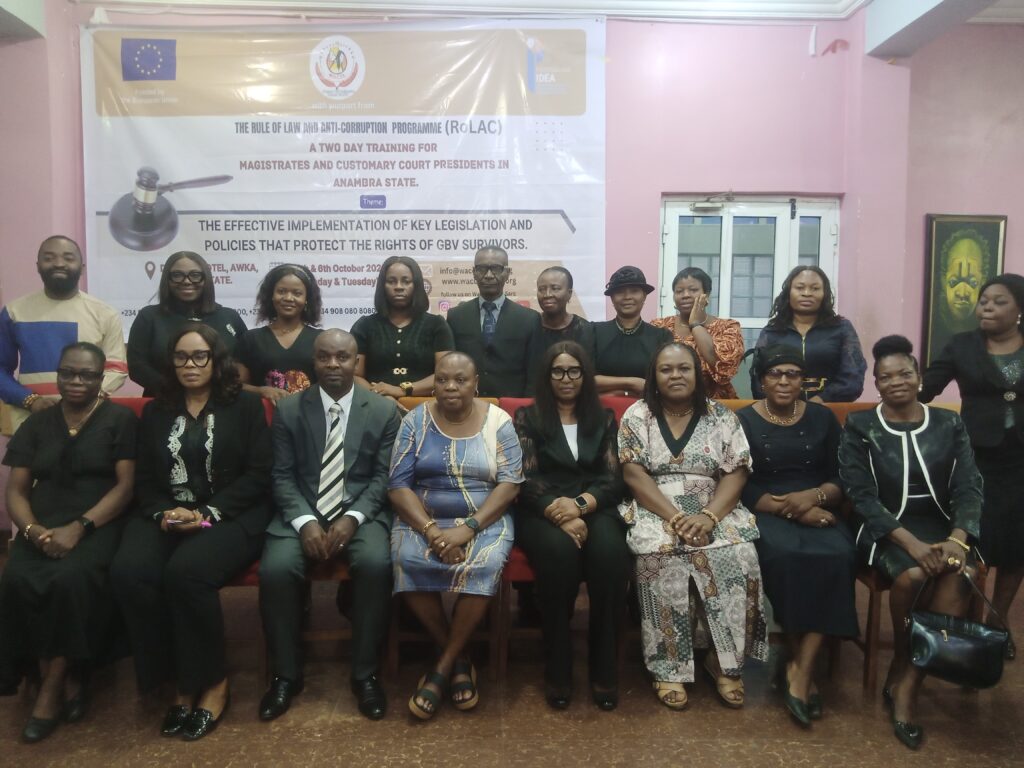
The Women Aid Collective, WACOL, in partnership with the Rule of Law and Anti-Corruption (RoLAC) has trained magistrates and customary court presidents in Anambra State on effective implementation of legislation and policies protecting the rights of survivors of Sexual and Gender-Based Violence, SGBV.
The two-day training, which began on Monday 5th October, 2026, in Awka,was funded by the European Union under the RoLAC Programme and implemented with support from the International Institute for Democracy and Electoral Assistance (International IDEA).
The project, titled “Enhancing access to justice and accountability for marginalized groups: SGBV survivors in Nigeria,” is aimed at strengthening justice delivery for women and girls in the state.
Facilitating the training, Prof. Sylvester Anya, who presented a paper on “Analysing Violence Against Women and Girls – Understanding Roots, Forms, and Impact, Legislation and Policy Making,” said violence against women remains a fundamental human rights violation rooted in historically unequal power relations.
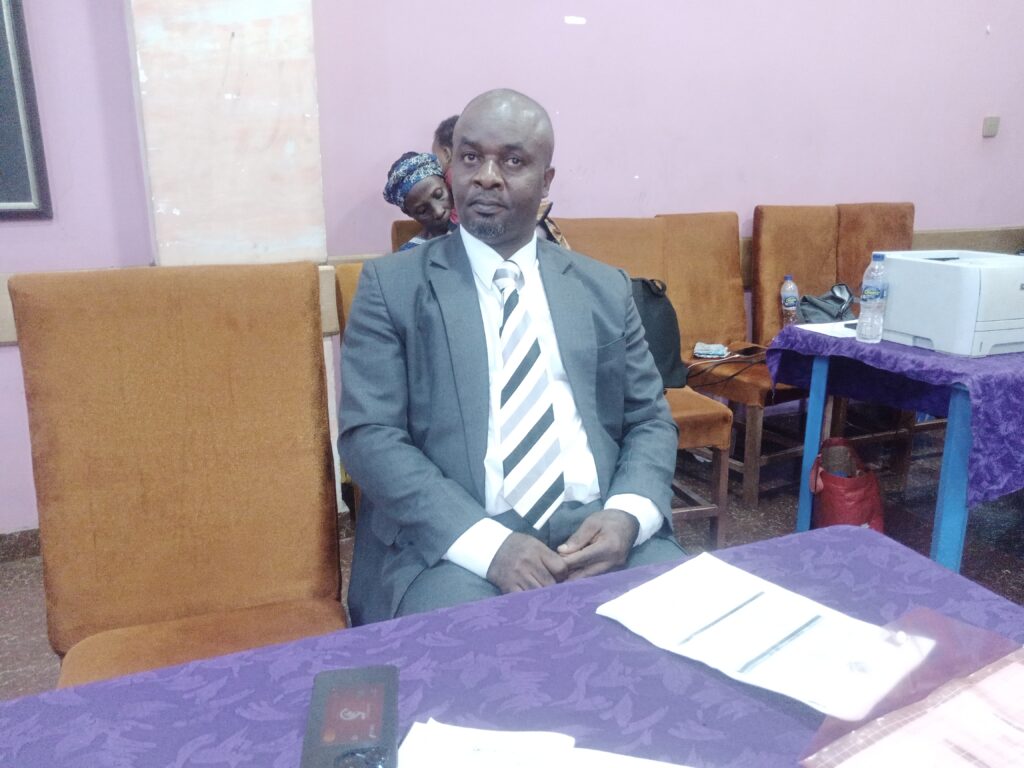
Prof. Anya took participants through the definition of violence against women as captured in the 1993 UN Declaration on the Elimination of Violence Against Women and the 1995 Beijing Platform for Action, noting that it includes physical, sexual and psychological violence occurring in the family, community or perpetrated by the state.
He also led sessions on gender, patriarchy and power dynamics, types of violence including sexual violence, domestic violence, harmful traditional practices, human trafficking, acid attacks, reproductive coercion and technology-facilitated gender-based violence.
According to him, many myths still surround SGBV, including the notion that women provoke rape by their dressing, that rape only happens in dark alleys, or that domestic violence is a private family matter. He described such myths as false and dangerous to justice delivery.
“The goal is to unpack how societal expectations and power dynamics contribute to the perpetuation of violence against women and to equip judicial officers with the right lens to interpret these cases,” he said.
In another presentation on “Access to Justice for Women/Girls and Survivors of SGBV,” Prof. Anya charged magistrates and customary court judges to issue landmark judgments that elevate the rights of women and ensure victim protection.
He listed critical elements of an effective judicial response to include managing risk and victim safety, offender accountability, specialised victim support, information sharing, coordination and use of specialised expertise.
The session also covered safety plans, including the power of courts to issue protection and restraining orders, remove perpetrators from shared residences and prohibit contact with victims.
Participants were also exposed to factors courts should consider when sentencing offenders to prevent future offending, such as history of violence, threats, escalation of abuse, violation of court orders and access to weapons.
Also speaking, Victor Obichukwu lectured participants on existing state laws and policies dealing with SGBV in Anambra State. He highlighted key legal instruments available to judicial officers, including the Violence Against Persons Prohibition (VAPP) Law, the Child Rights Law, the Administration of Criminal Justice Law and other relevant state policies aimed at protecting women and vulnerable groups.
He noted that while the laws exist, gaps in procedural rules and court processes still hinder speedy access to justice for SGBV survivors, particularly those in rural areas.
He therefore called for a comprehensive review of court rules and administrative procedures to streamline filing processes, reduce technical bottlenecks, fast-track SGBV cases and expand access to justice for marginalised groups.
According to him, such reforms would enable magistrates and customary court presidents to respond more effectively to the peculiar needs of survivors and ensure that justice is not only done but seen to be done.
Earlier, Anambra State RoLAC Coordinator, Dr Josephine Onah said the training is expected to enhance the capacity of judicial officers to apply relevant laws, facilitate access to judicial precedents, and promote ground-breaking judgments consistent with emerging jurisprudence on women’s rights.
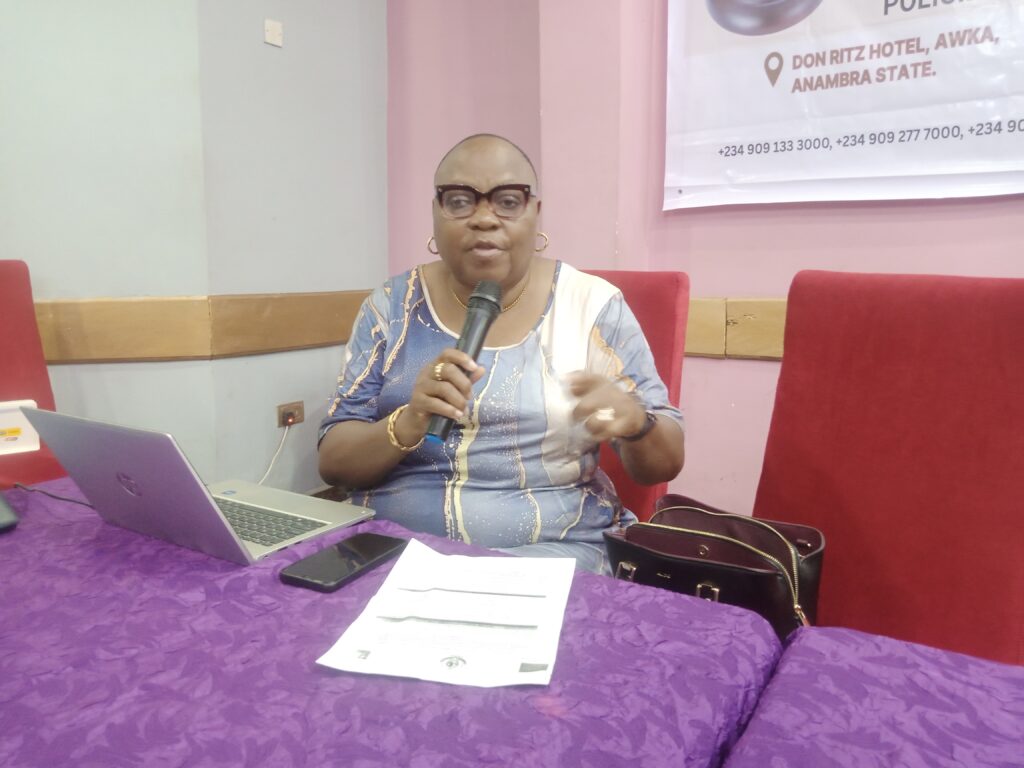
In her remarks, Dr Helen Kalu from WACOL commended RoLAC for its sustained support in the fight against SGBV. She said the training was not entirely new to the judicial officers but was necessary to refresh their knowledge in the face of evolving cases.
“Every day we see new dimensions of abuse. We are trying to strengthen their capacities, refresh their minds and bring new dimensions to what we are saying. The time has come for society to take a stand to say we must end sexual and gender-based violence,” she said.