SOLUDO, OBI AND THE POVERTY OF DEVELOPMENT THINKING
By Valentine Obienyem
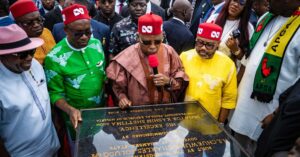
Yesterday, the Vice President was in Ekwulobia to commission the bridge built by Professor Charles Soludo. In a speech written by Soludo, which the Vice President read, he claimed that Obi was governor for eight years, yet it took Soludo only a short time to transform Agulu. What exactly did he do in Agulu?
While making my points, may I congratulate Soludo on the project.
It is particularly unfortunate that the Vice President allowed himself to be used to read a speech that descended into such a partisan portrayal of Mr Peter Obi. The office of the Vice President ought to command a certain dignity and statesmanship. It should not be reduced to lending official prestige to political taunts, especially when the occasion is meant to celebrate a public infrastructure project.
Meanwhile, to understand the thinking of the man, consider this: he left a flyover unused for over a year simply because it had not been commissioned. Is there any law or established principle of public administration that says a completed and safe public infrastructure project must await a commissioning ceremony before it can be put to use? What is the purpose of constructing infrastructure if not to serve the people? Must motorists and other road users continue to suffer the inconvenience of not using a flyover that has long been completed merely because a governor has not found the time or occasion to perform a ceremony, or get somebody to do so, and use the opportunity to vilify Peter Obi? Commissioning should be a celebration of a completed project, not a condition for its utilisation. This, too, tells us something about the priority he attaches to public service and the workings of his mind.
Having seen the Ekwulobia bridge, I also wish, as a concerned Anambra indigene, to raise a safety concern. The bridge appears rather narrow, and I strongly advise that the appropriate authorities consider placing barricades or other effective traffic-control measures to prevent heavy vehicles from using it, pending a proper engineering and safety assessment. Otherwise, the bridge could become a scene of avoidable accidents. Public infrastructure should not merely be constructed and commissioned; it must also be safe for the purpose for which it is intended. Can it accommodate two large vehicles side by side?
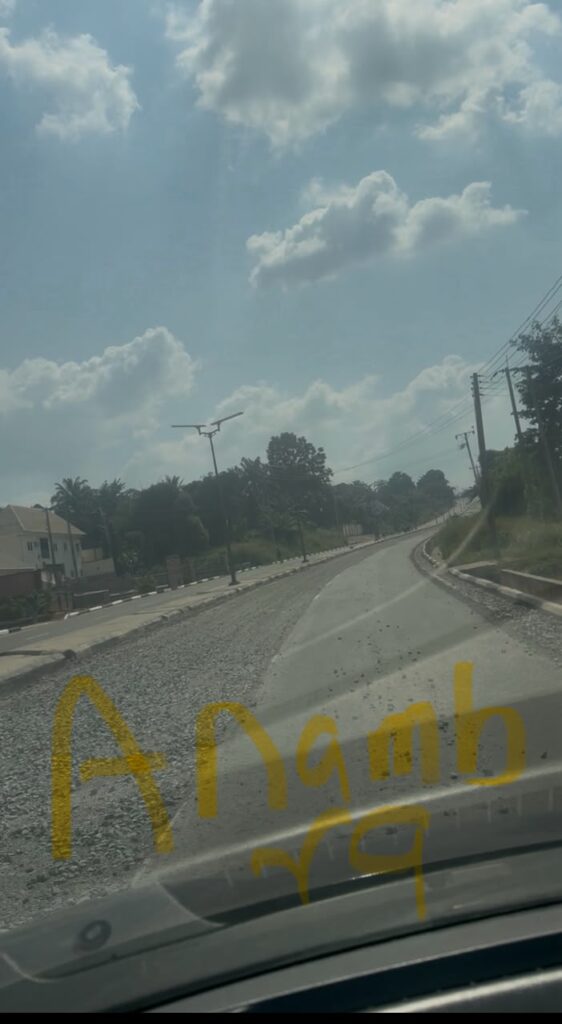
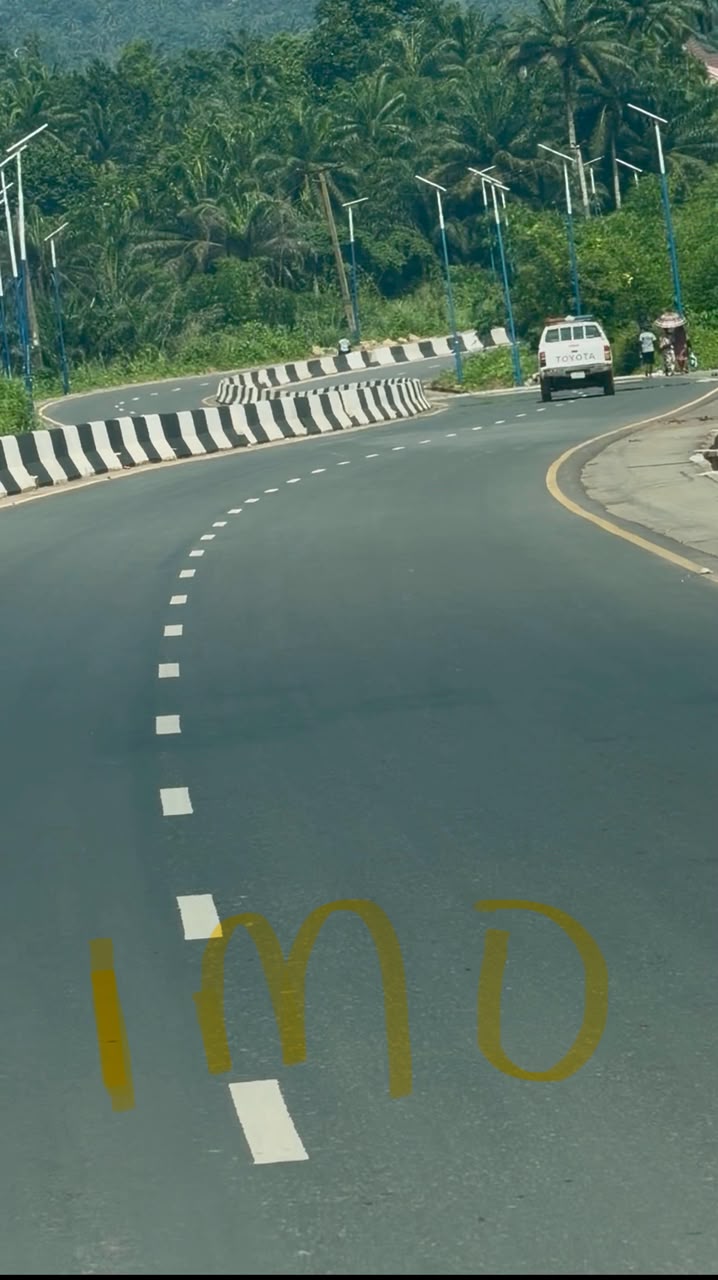
As far as the conspicuous infrastructure project in question is concerned, Soludo’s major contribution to Agulu was the dualisation of the road from Awka to the Imo State border, which passes through the town. But even that raises questions. Have you noticed the striking difference between the portion of the road in Agulu and the continuation of the same road in other parts of the state? Have you also seen the quality of the road in Imo State, where Governor Hope Uzodimma carried on with the project? The accompanying photographs invite a comparison. Why does the Agulu portion appear to have received such inferior treatment? Was it deliberate, mischief or simply poor workmanship? These are legitimate questions that deserve answers.
Every day, Soludo surprises us because his worth, in the estimation of many who once admired him, keeps diminishing. He has begun to puncture the very myth that surrounded him and which many people almost worshipped. That myth was built on the assumption that he was one of those exceptional men of intellectual and political stature whom one encounters only in the pages of Plutarch. Unfortunately, his conduct, public utterances and mediocre understanding of governance have raised serious questions about that image. One is particularly struck by his difficulty with even a fundamental concept such as development.
This brings us to a fundamental question: what constitutes development? Is it merely the construction of roads, bridges and buildings, or should development be holistic, touching every aspect of human life?
Pope Paul VI addressed this question in his 1967 Encyclical, “Populorum Progressio”, when he wrote: “To be authentic, development must be well rounded; it must foster the development of each man and of the whole man.”
That is the essence of integral human development. Development must go beyond physical infrastructure to embrace education, healthcare, human dignity, economic opportunity, social welfare, intellectual advancement and the spiritual well-being of the people. Roads and bridges are important, but they are not ends in themselves; they are instruments for improving human lives. The ultimate purpose of development is the human person.
Judging by his public pronouncements and the emphasis he places on road construction, Soludo has reduced the meaning of governance largely to building roads and campaigning against Mr Peter Obi. This is a narrow conception of development. It is also a dangerous way of measuring governmental performance because it elevates what is immediately visible above what is fundamentally important.
Peter Obi understood this distinction. His administration was guided by the Anambra Integrated Development Strategy (ANIDS), a framework that recognised development as a simultaneous, comprehensive and people-centred process. It was not about concentrating projects in a particular town or measuring achievement by the number of roads constructed. It was about improving the quality of life across the entire state.
The objective was not simply to make Anambra look developed but to improve the lives of the people who lived there.
More importantly, Obi left behind something beyond physical infrastructure: a changed development consciousness and psyche. He encouraged the people to think of government in terms of measurable improvements in education, healthcare, security, economic opportunities and social welfare. He demonstrated that government could be prudent with public resources while still investing in all sectors. It is unfortunate that the culture of accountability and broad-based development he sought to establish is now being undermined by a style of politics that places more emphasis on personal rivalry, which goes unnoticed by the man against whom it is directed, public boasts and the celebration of selected projects than on the overall welfare of the people.
The real test of governance, therefore, is not simply what a governor builds in a particular town, biscuit road or not, but how his policies and programmes transform the lives of people across the state. A road may pass through a community without necessarily transforming the lives of its people. We must learn to distinguish between the construction of infrastructure and the development of human beings.
As Soludo’s argument erroneously suggests, by building a road, he has developed Agulu. But what has happened to the schools in Agulu? What has his administration done to improve their quality and facilities? What about the hospitals and primary healthcare centres in the town and its environs? What has been done for the elderly, particularly those who have no regular means of support? What about farmers, traders, artisans and small-business owners? What measurable interventions have improved their circumstances? These are the questions that a serious assessment of development should address. A governor cannot equate the construction of one major road with the comprehensive development of a community, much less an entire state.
And then there is the road itself. Somebody aptly described it as a biscuit road. If it had been constructed properly, to the standards expected of durable road infrastructure, the resources committed to the present construction, in my estimation, would not have completed 20 per cent of it. The concern is that, given the quality of workmanship on some of these roads, they could develop serious defects and aggravate erosion problems in the years ahead. We are still fortunate that Soludo is governor and can continue undertaking repairs, sometimes almost daily. But for how long can such a pattern be sustained? Is this the most economical way to build infrastructure? Should taxpayers pay repeatedly for the correction of defects that proper initial construction ought to have prevented?
The quality of the roads Soludo has constructed in Anambra should, in itself, make him more circumspect about boasting of his road projects. Infrastructure should be judged not by the fanfare surrounding its commissioning but by its durability, engineering quality, value for money and the lasting benefits it delivers to the people. A road that requires constant repairs is not necessarily evidence of development; it may instead be evidence of waste and poor planning.
But if Soludo leaves roads, what else can he use to boast about? This is where his dilemma intensifies. A proper assessment of governance must go beyond the visible and easily commissioned to examine the less spectacular but more enduring investments in human development. Schools, hospitals, functional institutions, social protection, agricultural productivity and economic empowerment may not always provide the same opportunities for ceremonial commissioning, but they are indispensable to genuine development.
There is also something fundamentally wrong about a governor who repeatedly measures his achievement against that of his distant predecessor. A governor’s responsibility is not to spend his tenure trying to diminish the achievements of the person he does not like. It is to build upon what is good, correct what was deficient and leave the state better than he met it. The people did not elect Soludo to wage a permanent political battle against Peter Obi or impugn the worth of professors. They elected him to govern Anambra State and show that professors have class and not petty.
Ultimately, the difference between Obi’s approach and the conception of development reflected in Soludo’s recent boast is a difference in philosophy. One recognises development as an integrated process of improving human lives; the other appears to place disproportionate emphasis on physical infrastructure, particularly roads, while making political comparisons the centrepiece of public discourse.
The question is not how many roads a governor can commission or how impressive a particular town looks. The question is whether the people are better educated, healthier, more secure, economically empowered and able to live with dignity.
That is what Pope Paul VI meant by developing the whole man. That is the development philosophy Peter Obi pursued in Anambra. And that is the standard by which every government should be judged.