Orsu Ihiteukwa Tragedy: Ejiofor Calls For Cleansing, Healing, Restoration of Truth and Rehabilitation of affected communities
By Chukwudi Ebele
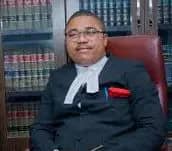
Human Rights Lawyer and Social Critic Sir Ifeanyichukwu Ejiofor Esq has in his recent article titled ‘ORSU IHITEUKWA TRAGEDY: HEINOUS BEYOND THE CRIES WE RAISED — A CALL FOR TRUTH, COMPREHENSIVE CLEANSING, ACCOUNTABILITY AND GENERATIONAL RECKONING’ called For Cleansing, Healing, Restoration of Truth and Rehabilitation of affected communities.
According to Ejiofor, there are moments in the history of a people when words fail, when the vocabulary of ordinary human grief becomes hopelessly inadequate to capture the magnitude of the horror that has been visited upon a community. There are also moments when silence ceases to be neutrality and becomes, by implication, an accomplice of history’s darkest chapters.
The unfolding revelations surrounding the massacre in Orsu Ihiteukwa and its environs, have brought us face to face with one of the most disturbing chapters in the recent history of Ala-Igbo. It is a chapter that demands not merely emotional outrage, but sober reflection, painstaking documentation, uncompromising truth-telling and, above all, a determined search for justice.
During the most profound period of active sacrilege and desecration of Ala-Igbo, perpetrated by enemies of Ndi-Igbo, and reportedly aided, enabled or facilitated by persons within our own communities, some of us who stood almost alone, crying out against the unfolding horrors, could not have fully appreciated the depth, breadth and sheer heinousness of what was taking place.
We spoke. We warned. We cried out. We questioned. Yet, as it now appears, the horrors that unfolded were far deeper and more devastating than many of us could have imagined.
It was only after I summoned the courage to watch some of the deeply disturbing visual materials reportedly compiled by direct victims and survivors of the Orsu tragedy that I began to appreciate, with an even greater sense of anguish, the extraordinary scale of the human suffering involved.
What I saw, and what I have since learned from the accounts emerging from the affected communities, is not something that should be consigned to the dustbin of history or buried beneath the politics of convenience. The suffering of the people of Orsu Ihiteukwa must be properly documented, and preserved as part of the historical memory of Ala-Igbo.
The tragedy before us is not merely about the dead. It is about the living who have been traumatised; families whose histories have been permanently altered; communities whose social fabric has been torn apart; ancestral lands desecrated.
Ala-Igbo cannot simply be expected to move on as though nothing happened.
There must be a comprehensive process of cleansing, healing and restoration of the affected communities. By cleansing, I do not mean vengeance or indiscriminate retaliation. I mean the restoration of truth to a land that has been wounded by violence; the rehabilitation of communities that have suffered devastation; the recovery and dignified burial of victims where necessary; the documentation of the atrocities; and the restoration of the dignity and sanctity of the people whose lives have been irreparably affected.
Our ancestors understood that a land is not merely a geographical expression. It is memory. It is identity. It is heritage. It is the repository of the sacrifices, struggles and aspirations of generations yet unborn. When a land is violated through bloodshed, terror and desecration, the responsibility of the living is not to look away, but to confront the truth and restore the moral balance that has been disturbed.
This is why the call for a thorough cleansing of Orsu and the affected communities, as echoed by the Head of the Directorate of State (HDOS) – Mazi Chika Edoziem, must be understood in its proper historical and moral context. It should be a cleansing founded upon truth, justice, accountability, reconciliation and the restoration of the dignity of the land and its people.
There must also be a solemn reckoning.Those who directly participated in these atrocities, those who instigated them, those who sponsored or enabled them, and those who knowingly shielded the perpetrators must all be brought to account through lawful and transparent processes. No society can heal by pretending that perpetrators do not exist. Neither can a people build a credible future by deliberately forgetting the crimes of the past.
It is particularly disturbing, and indeed profoundly painful, that persons whose involvement in instigating or facilitating aspects of these atrocities is now becoming a matter of public discussion were, by all indications, not strangers to the communities affected by the violence.
There is perhaps no greater betrayal than when a people are wounded by those who should have understood their pain, protected their communities and preserved their dignity.
What a painful paradox.
What a tragic contradiction.
What an uncomfortable chapter for any people who pride themselves on their history, civilisation, communal solidarity and reverence for the Ok of human life.
We cannot loudly demand justice for ourselves while becoming silent when justice is demanded for our own people. We cannot condemn atrocities committed against Ndi-Igbo elsewhere and then suddenly become remarkably philosophical when allegations of comparable horrors emerge from within our own backyard.
To the people of Orsu Ihiteukwa and en)virons, and all those who have suffered directly or indirectly from this terrible tragedy, I say: Do not stop telling your story.
Do not allow your pain to be erased by political expediency.
Do not permit the memory of your loved ones to be sacrificed on the altar of silence.
Do not allow those who may have contributed to your suffering to rewrite the history of your communities.
Let the truth be told—completely, courageously and without fear.
Let every perpetrator be identified.
Let every instigator be exposed.
The people of Ala-Igbo must also summon the courage to undertake a painful but necessary introspection. We must ask ourselves how we arrived at a point where the sanctity of human life could be treated with such contempt, where communities could be consumed by violence, and where the suffering of our own people could remain obscured beneath layers of fear, silence, misinformation, deceit, blackmail , and competing narratives.
The answer may be uncomfortable. It may even be painful. But a people who cannot confront the truth about themselves will eventually become prisoners of their own denial.
Let the truth be documented.
Let the victims be remembered.
Let the survivors be heard.
Let the communities be healed.
Let the land be restored.
Let justice take its full and lawful course.
And let those who are responsible, whether directly or indirectly, understand that history has a very long memory.
For those who deliberately inflicted suffering upon innocent people, and for those who may have aided, encouraged or concealed such acts, the greatest punishment may not be any curse pronounced by man. It may simply be the unrelenting judgment of history—the knowledge that their names, will forever be associated with one of the darkest chapters in the history of their own people.
May the cries of the victims not disappear into the noise of politics.
May the suffering of the survivors not be forgotten.
May the truth, however painful, prevail.
For ultimately, the evil that men do does not simply disappear. It lives in the memories of the victims, it echoes through the generations, and, sooner or later, it stands before the unrelenting tribunal of history.
The Orsu Ihiteukwa tragedy must therefore become a solemn turning point—a moment when Ndi-Igbo decide that never again will the lives of their own people be treated as expendable, and never again will atrocities be hidden beneath the cloak of silence.
Truth must prevail.
Justice must be done.
The land must be healed.
The victims must never be forgotten.
NeverAgainInAlaIgbo
OrsuMustNotBeForgotten
TruthJusticeAndHealing
LetTheLandBeHealed,” Ejiofor added.