May 30: A Day of Remembering The Worst Genocide in Human History – Ejiofor
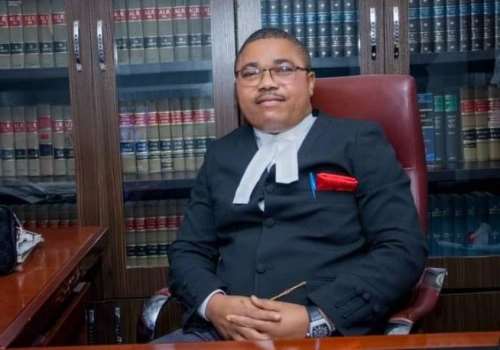
By Chukwudi Ebele
Human Right Lawyer and Lead Counsel to the Indigenous People of Biafra IPOB Sir Ifeanyichukwu Ejiofor has joined other Igbos to mark May 30 – A day of remembering fallen Heroes and Heroines of Biafra describing 1967-1970 civil war as the worst genocide allegedly committed in human history.
According to Ejiofor, MAY 30: A DAY OF REMEMBRANCE, A DAY OF CONSCIENCE
REMEMBERING OUR HEROES AND
HEROINES OF BIAFRA (1967–1970).
REMEMBERING THE WORST GENOCIDE COMMITTED IN HUMAN HISTORY.
“In Memory of the Countless Lives Lost During One of the Darkest Chapters in African History
Today, we stand in solemn remembrance.
We remember the fathers who never returned home.
We remember the mothers whose tears watered the soil of a wounded homeland.
We remember the young men and women whose dreams were extinguished before they had the opportunity to blossom.
We remember the innocent children whose fragile lives were consumed by hunger, disease, displacement and the devastating consequences of war.
“Above all, we remember a people who, despite unimaginable suffering, refused to surrender their dignity, their identity, and their hope.
“May 30 is not merely a date on a calendar. It is a solemn memorial. It is a day upon which history compels us to reflect upon the Nigerian Civil War, fought between 1967 and 1970, and the immense human tragedy that unfolded across Biafra enclaves.
For the Igbo people and many others who endured those turbulent years, the memories remain vivid and painful. Entire communities were uprooted. Families were separated. Villages were destroyed. Countless civilians perished from the direct consequences of warfare, starvation, disease and displacement.
“We remember that, before the outbreak of full-scale hostilities, thousands of Eastern Nigerians, particularly Igbos, had already become victims of violence, consequently massacred, and reprisals in various parts of the country following the political crises and military coups of 1966, which they mischievously classified as “Igbo coup”. Many families fled back to Eastern Nigeria carrying little more than the trauma of survival and the memories of loved ones left behind.
“When war eventually erupted in July 1967, it unleashed one of the gravest humanitarian catastrophes ever witnessed on the African continent. Images of malnourished children with protruding ribs and sunken eyes shocked the conscience of the world. The blockade imposed by the Nigerian Army during the war severely restricted the movement of food and humanitarian supplies into Biafra, contributing to widespread starvation and suffering among civilians.
“History records that millions were displaced. History records that countless lives intonation of over 5 millions, were lost. History records that entire generations were scarred by the horrors of war.
And history must never be forgotten.
“Among the most painful memories remains the Asaba Massacre of October 1967, where numerous civilians were brutally murdered under tragic circumstances. The scars of that event remain etched upon the collective memory of the people of Asaba and indeed the entire Igbo nation.
“The dead cannot speak.
The starving children cannot testify.
The mothers who died in agony cannot return to tell their stories.
“Yet the silence of their graves continues to speak to humanity.
“It asks a simple but profound question:
How much suffering must a people endure before their pain is acknowledged?
“How many generations must carry the burden of remembrance before truth is confronted with honesty and courage?
“The tragedy of Biafra is not merely an Igbo story. It is a human story. It is a reminder of what occurs when political disagreements are allowed to descend into dehumanisation, collective punishment and the abandonment of our common humanity.
“Even after the guns fell silent in January 1970 and the declaration of “No Victor, No Vanquished” was made, many survivors struggled to reconcile those noble words with the realities they encountered in the aftermath of the conflict.
“For countless families, the end of the war did not immediately bring restoration. It brought the painful task of rebuilding shattered lives from the ruins of loss. Homes had been destroyed. Businesses painstakingly built over generations had vanished. Savings were wiped away. Livelihoods disappeared. Many who had once enjoyed stability and prosperity were compelled to begin life anew under extraordinarily difficult circumstances.
“To many survivors, the scars of war did not end on the battlefield. They lingered in the economic hardships that followed, in the properties that were lost, in the opportunities that vanished, and in the enduring perception that an entire people continued to bear the heavy consequences of a conflict they had already paid for with immeasurable sacrifice.
“For many Igbos, the post-war years became a prolonged struggle against not only material deprivation but also against the painful feeling that their suffering had neither been fully acknowledged nor adequately addressed. Generations grew up carrying stories of loss, displacement, sacrifice and resilience, stories passed from parents to children, not as instruments of bitterness, but as solemn reminders of a painful chapter that must never be forgotten.
“History imposes a moral duty upon every nation: the duty to confront painful truths with honesty. A society achieves greatness not by burying its tragedies beneath silence, but by courageously acknowledging them, learning from them, and ensuring that such suffering never again befalls any people.
“For this reason, remembrance remains necessary.
Not because we seek vengeance.
Not because we seek to perpetuate old grievances.
Rather, because remembrance is the foundation of truth, and truth is the foundation of reconciliation.
“A wound that is denied cannot heal.
A tragedy that is forgotten can be repeated.
A people whose suffering is ignored can never experience complete reconciliation.
“True healing requires more than the cessation of hostilities.
It requires acknowledgement.
It requires compassion.
It requires justice.
It requires historical honesty.
And above all, it requires the collective courage to affirm that every human life lost mattered, every child who perished mattered, every mother who wept mattered, and every community devastated by war deserves to be remembered with dignity.
“The war officially ended in 1970.
But the obligation to remember remains.
The obligation to seek truth remains.
The obligation to pursue justice remains.
And the obligation to preserve the memory of the fallen remains eternal.
“Today, therefore, we mourn.
Today, we remember.
Today, we honour.
And today, we reaffirm that the memories of those who perished shall never be erased from the pages of history.
“May their sacrifices never be forgotten.
May their memories continue to inspire future generations.
May justice, truth and peace ultimately prevail.
“Ozo-emezina!, Ejiofor lamented.