From Ceremonies to Community Projects: Udefi Wants Anam Age Grades Back in the Development Business

By Our Reporter
What if an age grade were measured not by the size of its celebrations, but by what it built for its community?
That was the challenge Engr. Samuel Onyewelu Udefi placed before age grades in Anam at the 2026 Oote Anam celebration in Awka.
Udefi, President-General of Igwebuike Anam Age Grade and Chairman of the Umuoba Anam Development Council (UADC), Awka Branch, said the traditional age-grade system could no longer afford to function mainly as a social association when communities still faced pressing needs in water, electricity, education, healthcare and youth empowerment.
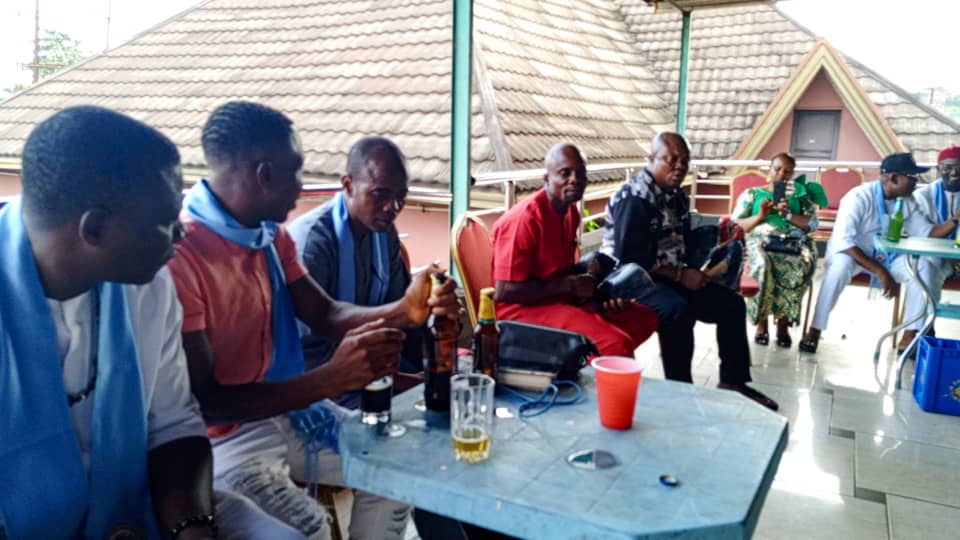
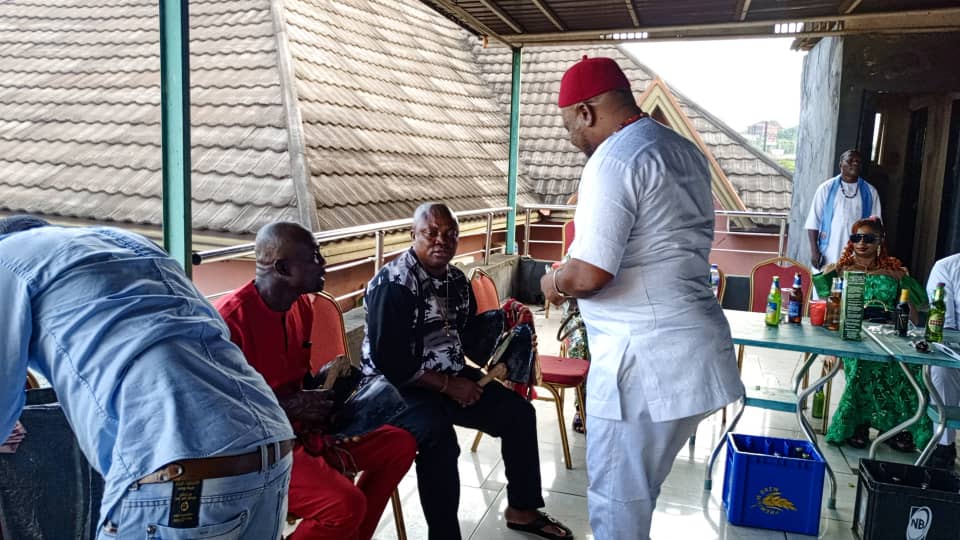
He spoke on Sunday, September 6, 2026, as keynote speaker at the Oote Anam celebration hosted by Mmekoka Age Grade, Umuoba Anam, Awka Branch, at Royal Paradise Hotel, Awka.
“The age-grade system is not old-fashioned. It is timeless,” Udefi said.
“What is old-fashioned is using it only for aso-ebi and birthdays.”
A lost development role
According to Udefi, the Otu Ogbo system once occupied a central position in the administration and development of Anam communities.
Age grades cleared roads, built markets, resolved disputes, provided security and supported families during bereavement.
“Our fathers built basic infrastructure through age grades. They cleared roads, built markets, settled disputes and buried the dead through Otu Ogbo. The age grade was government, welfare, security and family all in one,” he recalled.
But he said the contemporary system had, in some cases, narrowed its focus to meetings, celebrations and levies.
“Today, many of our age grades have become social clubs only. We meet, we dance, we pay levies, and we go home,” he said.
For Udefi, the answer is not to abandon the age-grade system but to modernise it.
Igwebuike as proof of concept
He used Igwebuike Anam as a practical example.
The age grade, he said, has supported education through scholarships and writing materials for primary school pupils across Anam’s eight communities.
Its “Operation Light Up Anam 2023” initiative, he said, delivered solar-powered streetlights across the communities, while the “Water Is Life 2026” project is expected to provide boreholes across the eight communities by December.
Its welfare programmes also provide soft loans to contributing members, empowerment assistance and help with hospital bills.
For Udefi, these interventions demonstrate what happens when an age grade combines social solidarity with institutional planning.
“Igwebuike proved one thing: when an age grade has vision, structure and accountability, it becomes the strongest support structure a community has,” he said.
One platform, one voice
Udefi also highlighted digital mobilisation.
He said a unified WhatsApp platform had brought members from Anam’s eight communities together and created a channel for development discussions and mobilisation.
“By bringing all eight communities under one development umbrella through the WhatsApp platform, Igwebuike Anam killed division and built one Anam voice through the age grade,” he said.
He argued that the same model could connect Anam indigenes living in Lagos, Abuja, the United Kingdom, the United States and other parts of the world with development projects at home.
Four steps to reform
Udefi’s blueprint is built around four transitions.
Age grades must move “from social to strategic” by adopting three-year development plans and committing to at least one flagship project.
They must move “from dues to development fund” by establishing transparent accounts, with Udefi suggesting a possible 60 per cent allocation to development and 40 per cent to welfare, alongside annual financial reporting.
They must move “from village to global” by using digital platforms and structured diaspora chapters.
And they must move “from individuals to institution” by building partnerships with town unions, churches and government institutions.
“Age grade should not compete with the community — it should drive it,” he said.
A direct challenge to Mmekoka
Udefi then turned the blueprint into a specific challenge for Mmekoka’s Awka Branch.
“You are in Awka — the seat of power. You have access, you have brains, you have resources,” he told members.
He urged the branch to sponsor at least 10 students annually, adopt the Umuoba Health Centre and create mentorship programmes for young people.
“When Awka Branch leads, the home Branch will follow. That is leadership,” he said.
He also praised Mmekoka for organising its special New Yam Festival several weeks after the wider Ndi Anam celebration.
Describing Oote Anam as a homecoming rather than merely a festival, he said the celebration should renew unity and collective identity.
“Oote Anam is not just a festival. It is a homecoming, a renewal of our bond of unity and brotherhood, and a reminder of who we are as Ndi Anam,” he said.
The legacy question
Udefi’s strongest challenge was ultimately about legacy.
He urged Mmekoka and other age grades to make 2026 a year in which development takes precedence over consumption.
“Let this 2026 Oote Anam be the year Mmekoka says: ‘We will build more than we consume.’ Let us reposition ourselves from celebrants to builders, from recipients to givers.”
Then came the question he left with the audience:
“Because in the end, our children will not ask how much we spent on clothes. They will ask: What did your age grade build in Anam?”
He ended with the Igwebuike philosophy: “Ike dị na mmadụ — there is strength in unity.”
Mmekoka responds
Earlier, Chairman of Mmekoka Age Grade, Umuoba Anam, Awka Branch, Hon. Uchenna Anizor, said the event brought members and invited guests together to celebrate Oote Anam and consider how age grades could be used for meaningful community service.
Anizor, also President-General of Umuoba Anam Community, commended Udefi’s grassroots development efforts and described Igwebuike Anam’s initiatives as worthy of emulation.
Comrade Samuel Onyeachonam Iveatu, Chairman of Mmekoka Age Grade, Umuoba Anam, thanked Udefi for the address and pledged support for repositioning the association as a development-oriented institution.
The event featured the unveiling of Mmekoka’s official muffler and decoration of members, performances by the Mmekoka Age Grade and Umuoba Anam Ogene Music Group, and solo performances by Ejike Ogara and Nkpeodili Azuanuka.
Guests included former Anambra East LGA Chairman Chief Fidel Okafor; former UADC Awka Branch Chairman Chief Augustine Okafor; Umuoba Anam Youth Council President Comrade Onyebuchi Mmeh; the Chairman and members of Soludo Age Grade, Umuoba Anam, Awka Branch; and other members of Mmekoka Age Grade.