
Autism Spectrum Disorder: Understanding Its Nature, Etiology, and Integrative Management Approach
Abstract
Autism Spectrum Disorder (ASD) is a complex, heterogeneous neurodevelopmental condition characterized by persistent deficits in social communication and interaction alongside restricted and repetitive patterns of behavior. With a steadily increasing global prevalence, ASD represents a significant clinical, social, and public health concern. This paper provides a comprehensive, evidence-based review of autism, including its definition, epidemiology, etiological mechanisms, diagnostic framework, and integrative management strategies. Particular emphasis is placed on the multifactorial nature of ASD, involving genetic susceptibility, neurobiological alterations, environmental exposures, immune dysregulation, and gut–brain axis interactions. The paper further explores integrative approaches that combine conventional behavioral and pharmacological interventions with nutritional therapy, herbal medicine, microbiome modulation, and psychosocial support. Current evidence suggests that while ASD has no cure, early, individualized, and multidisciplinary integrative care significantly improves developmental outcomes and quality of life. The paper concludes by highlighting future directions in precision medicine and the importance of inclusive policies and societal acceptance.
Keywords: Autism Spectrum Disorder, Integrative Medicine, Neurodevelopment, Gut-Brain Axis, Herbal Medicine, Neuroinflammation
Introduction
Autism Spectrum Disorder (ASD) is a lifelong neurodevelopmental condition that affects how individuals perceive, interact with, and respond to their environment. Since its first clinical description by Leo Kanner in 1943, autism has evolved from a narrowly defined disorder to a broad spectrum encompassing diverse phenotypes and functional abilities. According to the World Health Organization (WHO, 2023), approximately 1 in 100 children globally is diagnosed with ASD, although prevalence estimates in some regions, such as the United States, are as high as 1 in 36 (CDC, 2024).
The rising prevalence of ASD has intensified research into its causes and management. While conventional approaches—particularly behavioral therapies—remain foundational, there is growing recognition of the need for integrative models that address biological, psychological, and environmental dimensions of health.
This article written in commemoration of 2026 World Autism Day aims to provide a comprehensive and expanded overview of ASD, with particular attention to its etiology and integrative management. The discussion integrates current scientific evidence with clinical insights relevant to integrative medicine practice.
Definition and Clinical Features of Autism
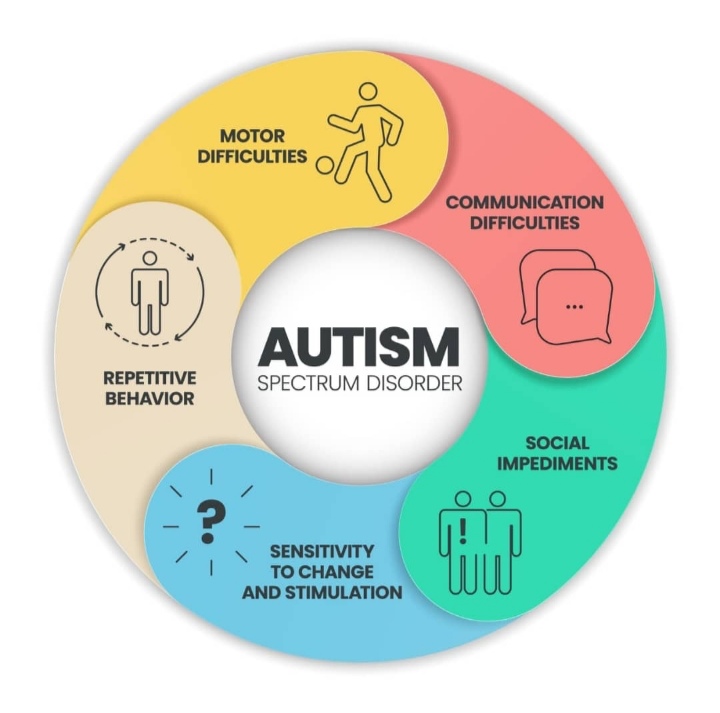
Autism Spectrum Disorder is defined by the Diagnostic and Statistical Manual of Mental Disorders, Fifth Edition (DSM-5) as a condition characterized by two core domains: (1) persistent deficits in social communication and social interaction, and (2) restricted, repetitive patterns of behavior, interests, or activities (American Psychiatric Association [APA], 2013).
Social Communication Deficits
Individuals with ASD often exhibit:
Difficulty initiating or sustaining conversations
Reduced sharing of emotions or interests
Impaired understanding of non-verbal cues such as facial expressions and gestures
Challenges in developing and maintaining relationships
Restricted and Repetitive Behaviors
These may include:
Stereotyped movements (e.g., hand-flapping, rocking)
Insistence on sameness and adherence to routines
Highly restricted or fixated interests
Hyper- or hypo-reactivity to sensory input
Spectrum Nature and Heterogeneity
The term “spectrum” reflects variability in severity, intellectual ability, and functional outcomes. Some individuals demonstrate high cognitive functioning with subtle social impairments, while others require substantial support due to intellectual disability and limited communication.
Early Signs and Developmental Trajectory
Symptoms typically emerge in early childhood, often before age three. Early warning signs include delayed speech, lack of eye contact, limited response to name, and atypical play behaviors (Zwaigenbaum et al., 2015). Early detection is critical for timely intervention.
Epidemiology and Global Burden
The global burden of ASD has increased significantly over the past two decades. Improved awareness, expanded diagnostic criteria, and better screening tools contribute to rising prevalence rates. However, disparities exist in diagnosis and care, particularly in low- and middle-income countries.
ASD imposes substantial economic and social burdens on families and healthcare systems. Costs include therapy, education, healthcare, and lost productivity. These realities underscore the need for scalable, cost-effective, and integrative care models.
Etiology of Autism Spectrum Disorder
ASD is a multifactorial condition resulting from complex interactions between genetic, neurobiological, environmental, and immunological factors.
Genetic Factors
Genetic contributions to ASD are substantial, with heritability estimates ranging from 50% to 90% (Tick et al., 2016). Advances in genomics have identified numerous risk genes involved in synaptic function, neuronal signaling, and brain development.
Copy number variations (CNVs) and mutations in genes such as SHANK3, NRXN1, and MECP2 have been implicated. Syndromic forms of autism include Fragile X syndrome and Rett syndrome (Lord et al., 2020).
Neurobiological Mechanisms
Neuroimaging studies reveal differences in brain structure and connectivity in individuals with ASD. Findings include:
Altered cortical thickness
Abnormal white matter connectivity
Early brain overgrowth followed by atypical pruning
Neurotransmitter systems, particularly serotonin, gamma-aminobutyric acid (GABA), and glutamate, are also implicated (Ecker et al., 2015).
Environmental Risk Factors
Environmental exposures during prenatal and perinatal periods may increase ASD risk. These include:
Maternal infections and immune activation
Exposure to environmental toxins (e.g., heavy metals, air pollution)
Advanced parental age
Preterm birth and low birth weight
These factors likely interact with genetic susceptibility to influence neurodevelopment (Modabbernia et al., 2017).
Immune Dysregulation and Neuroinflammation
Emerging evidence suggests that immune dysfunction plays a role in ASD. Studies have identified:
Elevated pro-inflammatory cytokines
Microglial activation in the brain
Autoimmune processes
Neuroinflammation may disrupt neural connectivity and contribute to behavioral symptoms (Estes & McAllister, 2015).
Gut-Brain Axis and Microbiome
The gut–brain axis has become a major focus in autism research. Many individuals with ASD experience gastrointestinal disturbances, including constipation, diarrhea, and dysbiosis.
Alterations in gut microbiota composition may influence brain function through immune, metabolic, and neural pathways (Cryan et al., 2019). This has important implications for integrative treatment strategies.
Debunking the Vaccine Myth
Extensive epidemiological studies have conclusively shown that vaccines do not cause autism (Taylor et al., 2014). This remains a critical public health message.
Diagnosis of Autism
Diagnosis of ASD is primarily clinical and based on behavioral assessment and developmental history. There is no single biomarker for autism.
Diagnostic Tools
DSM-5 criteria
Autism Diagnostic Observation Schedule (ADOS)
Autism Diagnostic Interview-Revised (ADI-R)
Importance of Early Diagnosis
Early diagnosis allows for early intervention, which significantly improves language, cognitive, and adaptive outcomes (Zwaigenbaum et al., 2015).
Integrative Management of Autism
Given the complexity of ASD, management requires a holistic, multidisciplinary approach that integrates conventional and complementary therapies.
Behavioral and Educational Interventions
Applied Behavior Analysis (ABA) remains one of the most evidence-based interventions for ASD. It focuses on reinforcing positive behaviors and reducing maladaptive ones (Reichow et al., 2018).
Other key interventions include:
Speech and language therapy
Occupational therapy
Social skills training
Individualized education programs (IEPs)
Nutritional Interventions
Nutrition plays a critical role in brain development and function.
Dietary Approaches
Gluten-free, casein-free diets (mixed evidence)
Whole-food, anti-inflammatory diets
Supplementation
Omega-3 fatty acids
Vitamin D
Magnesium
Zinc
Vitamin B6
Some studies report improvements in behavior and cognition, although findings remain heterogeneous (Sathe et al., 2017).
Herbal Medicine
Herbal therapies are increasingly explored within integrative medicine frameworks.
Examples include:
Bacopa monnieri: cognitive enhancement
Ginkgo biloba: improved cerebral circulation
Withania somnifera (Ashwagandha): stress reduction
Curcumin: anti-inflammatory and neuroprotective effects etc.
Some local herbs have been used too.
While promising, these interventions require further clinical validation (Kulkarni et al., 2012; Singh et al., 2014).
Gut-Brain Axis Interventions
Microbiome-targeted therapies include:
Probiotics and prebiotics
Dietary fiber
Microbiota transfer therapy (experimental)
Studies suggest improvements in gastrointestinal and behavioral symptoms (Kang et al., 2017).
Sensory and Physical Therapies
Sensory integration therapy helps individuals manage sensory processing challenges. Physical activity has been shown to improve motor skills, reduce anxiety, and enhance overall well-being.
Psychological and Emotional Support
Mental health support is essential, particularly for individuals with co-occurring anxiety or depression.
Cognitive Behavioral Therapy (CBT)
Family therapy
Mindfulness-based interventions
Pharmacological Management
Medications may be used to manage associated symptoms:
Irritability: risperidone, aripiprazole
ADHD symptoms: stimulants
Sleep disorders: melatonin
These treatments should be individualized and closely monitored.
Discussion
The management of ASD requires a paradigm shift from symptom-based treatment to holistic, patient-centered care. Integrative medicine offers a framework for combining conventional therapies with complementary approaches tailored to individual needs.
However, challenges remain, including variability in treatment response, limited high-quality evidence for some complementary therapies, and disparities in access to care.
Future research should focus on precision medicine, biomarker discovery, and large-scale clinical trials to validate integrative interventions.
Conclusion
Autism Spectrum Disorder is a complex, multifactorial condition requiring comprehensive and individualized care. Integrative approaches that combine behavioral, nutritional, medical, and complementary therapies offer the most promising outcomes.
As global awareness increases, efforts must prioritize early diagnosis, accessible interventions, and societal inclusion. A deeper understanding of autism not only enhances clinical care but also promotes acceptance of neurodiversity.
PS: Dr. Emereonye could be reached on: +234 803 3922 445
References
American Psychiatric Association. (2013). Diagnostic and statistical manual of mental disorders (5th ed.).
Centers for Disease Control and Prevention. (2024). Autism prevalence estimates.
Cryan, J. F., et al. (2019). The microbiota-gut-brain axis. Physiological Reviews, 99(4), 1877–2013.
Ecker, C., Bookheimer, S. Y., & Murphy, D. G. (2015). Neuroimaging in autism. The Lancet Neurology, 14(11), 1121–1134.
Estes, M. L., & McAllister, A. K. (2015). Immune mechanisms in autism. Nature Reviews Neuroscience, 16(8), 469–486.
Kang, D. W., et al. (2017). Microbiota transfer therapy. Microbiome, 5(1), 10.
Kulkarni, S. K., et al. (2012). Bacopa monnieri. Phytotherapy Research, 26(3), 313–323.
Lord, C., et al. (2020). Autism spectrum disorder. The Lancet, 392(10146), 508–520.
Modabbernia, A., et al. (2017). Environmental risk factors. Current Psychiatry Reports, 19(11), 88.
Reichow, B., et al. (2018). Behavioral intervention. Cochrane Database.
Sathe, N., et al. (2017). Nutritional interventions. Pediatrics, 139(6).
Singh, N., et al. (2014). Ashwagandha overview.
Taylor, L. E., et al. (2014). Vaccines and autism. Vaccine, 32(29), 3623–3629.
Tick, B., et al. (2016). Heritability of autism. JAMA Psychiatry, 73(6), 585–593.
Wood, J. J., et al. (2020). CBT in autism. Journal of Child Psychology and Psychiatry, 61(3), 305–315.
World Health Organization. (2023). Autism.
Zwaigenbaum, L., et al. (2015). Early intervention. Pediatrics, 136(S1), S60–S81.