Anambra Validates Draft Menstrual Health Policy, Assigns Roles to Ministries
Lawrence Nwimo, Awka
The Anambra State Government has validated the draft Menstrual Health and Hygiene Management (MHHM) Policy and Implementation Framework, with key Ministries and agencies assigned specific roles to drive its adoption and implementation across the state.
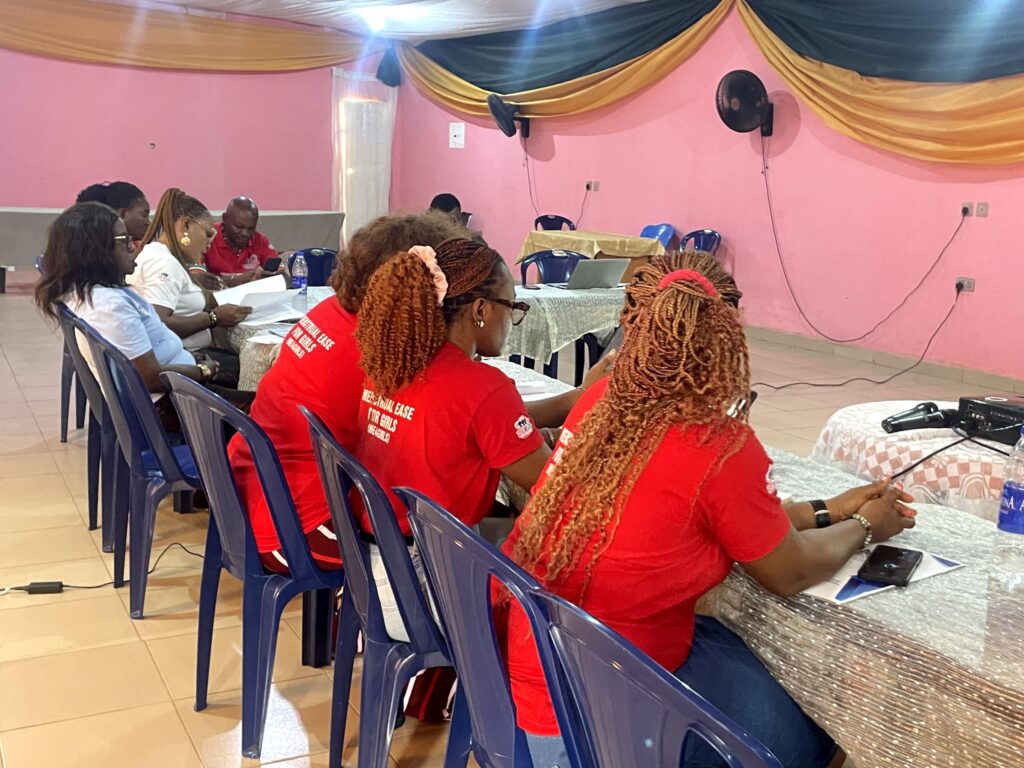
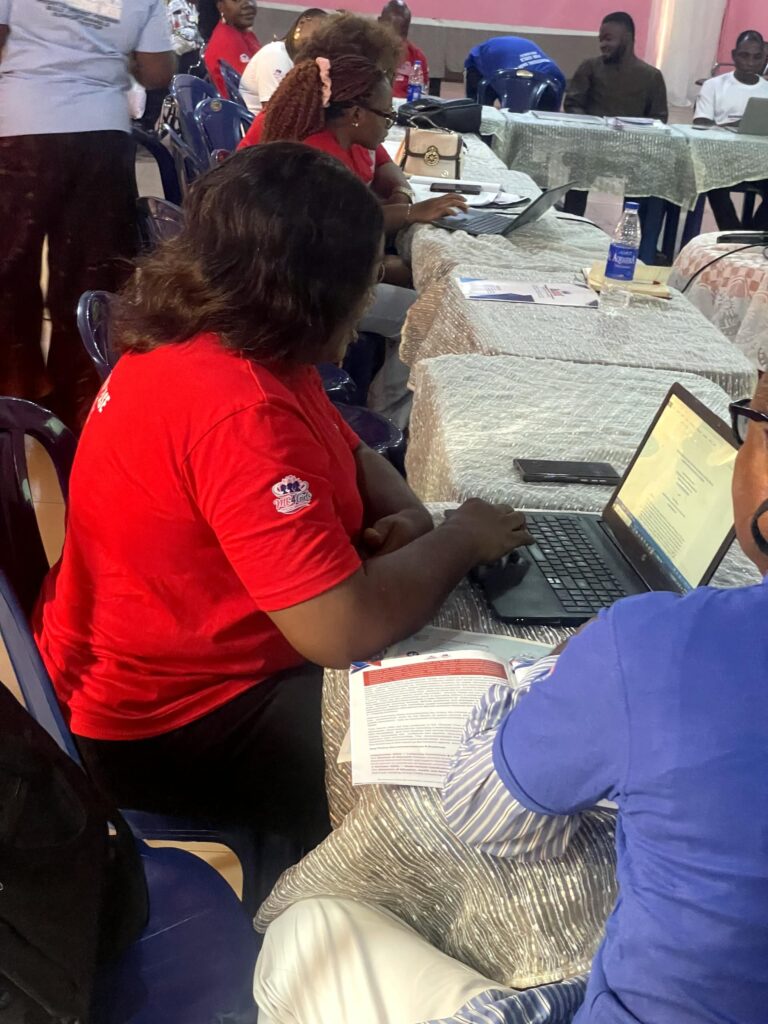
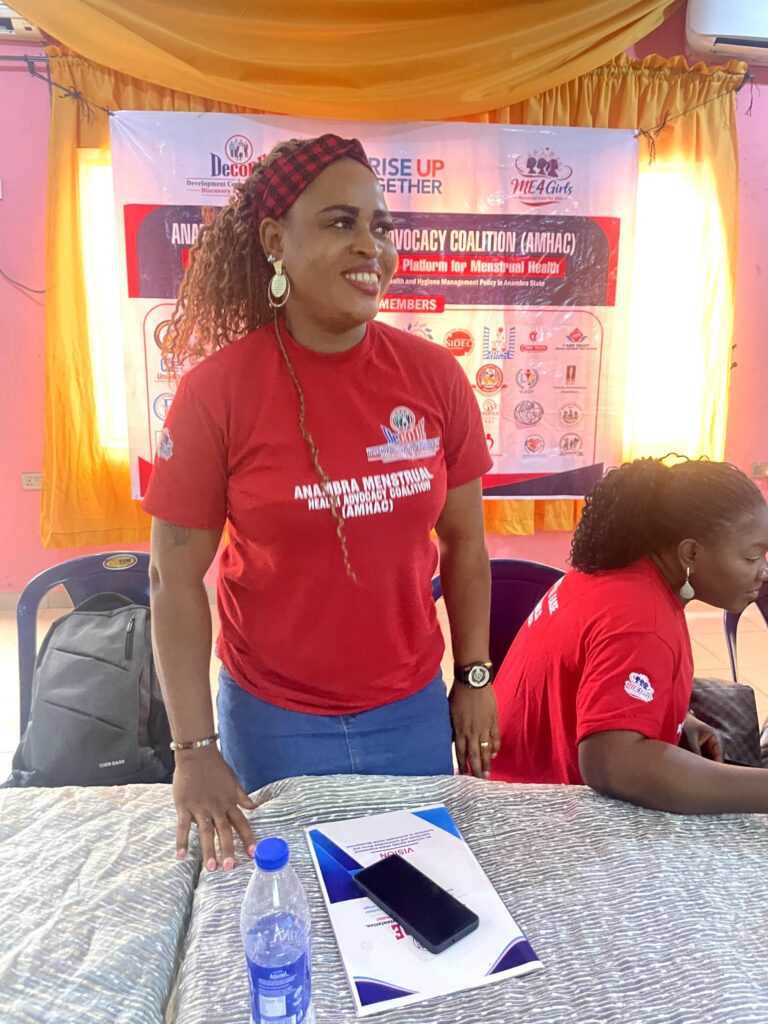
The validation was done on Friday in Awka, during a technical meeting of the Anambra Menstrual Health Advocacy Coalition (AMHAC) Technical Working Group, TWG.
The meeting was convened by the Development Centre for Orientation, Discovery and Empowerment (DeCODE) under the Menstrual Ease for Girls, ME4Girls, Project. It had in attendance representatives of the Ministries of Women Affairs, Education, and Health, Post Primary School Service Commission, PPSSC, ASUBEB, RUWASSA, CSOs, and other stakeholders.
The TWG reviewed findings of the Anambra State Menstrual Health Situation Assessment conducted across six LGAs and 12 public secondary schools, and benchmarked the draft policy against the National MHHM Policy.
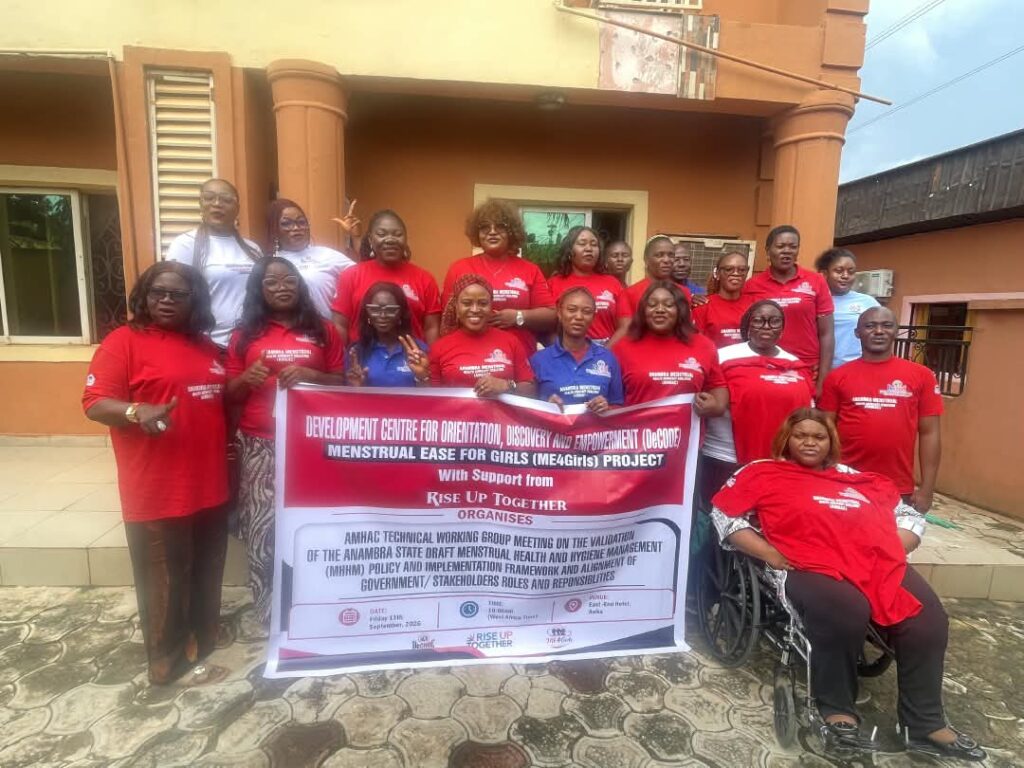
In a communique issued at the end of the meeting, the TWG validated the draft policy and implementation framework, subject to incorporation of technical recommendations.
It also agreed to strengthen institutional responsibilities, coordination mechanisms, financing, phased implementation, monitoring and accountability in the framework.
To ensure effective implementation, the TWG proposed clear roles for government Ministries and agencies. The Ministry of Women Affairs and Social Welfare was designated as the Lead Ministry for policy adoption and overall coordination. Its responsibilities include providing gender-responsive guidance, addressing menstrual stigma and discrimination, promoting community awareness, and supporting vulnerable girls and women.
The Ministry of Education will lead implementation within the education sector in collaboration with Post Primary School Service Commission (PPSSC) and Anambra State Universal Basic Education Board (ASUBEB). It is to provide policy direction for integrating menstrual health into school programmes, develop standards for WASH and menstrual hygiene facilities in schools, and ensure monitoring and accountability.
The Ministry of Health was tasked with providing technical guidance on menstrual health, capacity building for health workers and teachers, and integrating menstrual health into adolescent and reproductive health programmes.
PPSSC is expected to oversee implementation in public post-primary schools, while ASUBEB will cover basic education institutions, especially Basic 4 to 6. Both are to ensure provision and maintenance of menstrual-friendly WASH facilities and report school-level data.
Rural Water Supply and Sanitation Agency (RUWASSA) was assigned the responsibility of providing technical support on water, sanitation and hygiene infrastructure in schools, and identifying WASH gaps, particularly in underserved communities.
The TWG also assigned roles to Civil Society Organisations and the Media to drive advocacy, evidence generation, community engagement and public accountability.
It resolved to establish a clear inter-ministerial coordination mechanism and to advance the formal adoption process by submitting the policy to the Governor and State Executive Council for approval.
The group further committed to using evidence from the state situation assessment to inform policy decisions and implementation planning.
Speaking at the meeting, stakeholders noted that menstrual health and hygiene is a cross-sectoral issue that requires joint action by government, CSOs and communities to improve outcomes for girls and women in Anambra.
With the validation completed, Anambra is now set to become one of the few states in Nigeria with a dedicated policy and framework to address menstrual health and hygiene challenges.