
National Wellness Month 2026: Building Healthy Habits for Lifelong Health and Well-Being
By Livy-Elcon Emereonye
Introduction
Every August, individuals, families, communities, healthcare professionals, and organizations around the world observe National Wellness Month, a dedicated period that promotes healthier lifestyles through intentional self-care, disease prevention, and the adoption of sustainable healthy habits. The 2026 National Wellness Month, observed from August 1 to August 31, reminds us that health is not merely the absence of disease but a dynamic state of complete physical, mental, emotional, and social well-being.
Modern society has witnessed remarkable advances in medicine, yet preventable diseases such as hypertension, diabetes mellitus, obesity, cardiovascular diseases, depression, anxiety disorders, chronic respiratory diseases, and several cancers continue to rise. Most of these illnesses are closely linked to unhealthy lifestyles, poor dietary habits, physical inactivity, chronic stress, inadequate sleep, tobacco use, and excessive alcohol consumption.
The encouraging news is that many of these health problems can be prevented—or significantly delayed—through relatively simple daily lifestyle choices. National Wellness Month therefore serves as an annual reminder that investing in healthy habits today is one of the most effective strategies for improving quality of life and extending healthy lifespan.
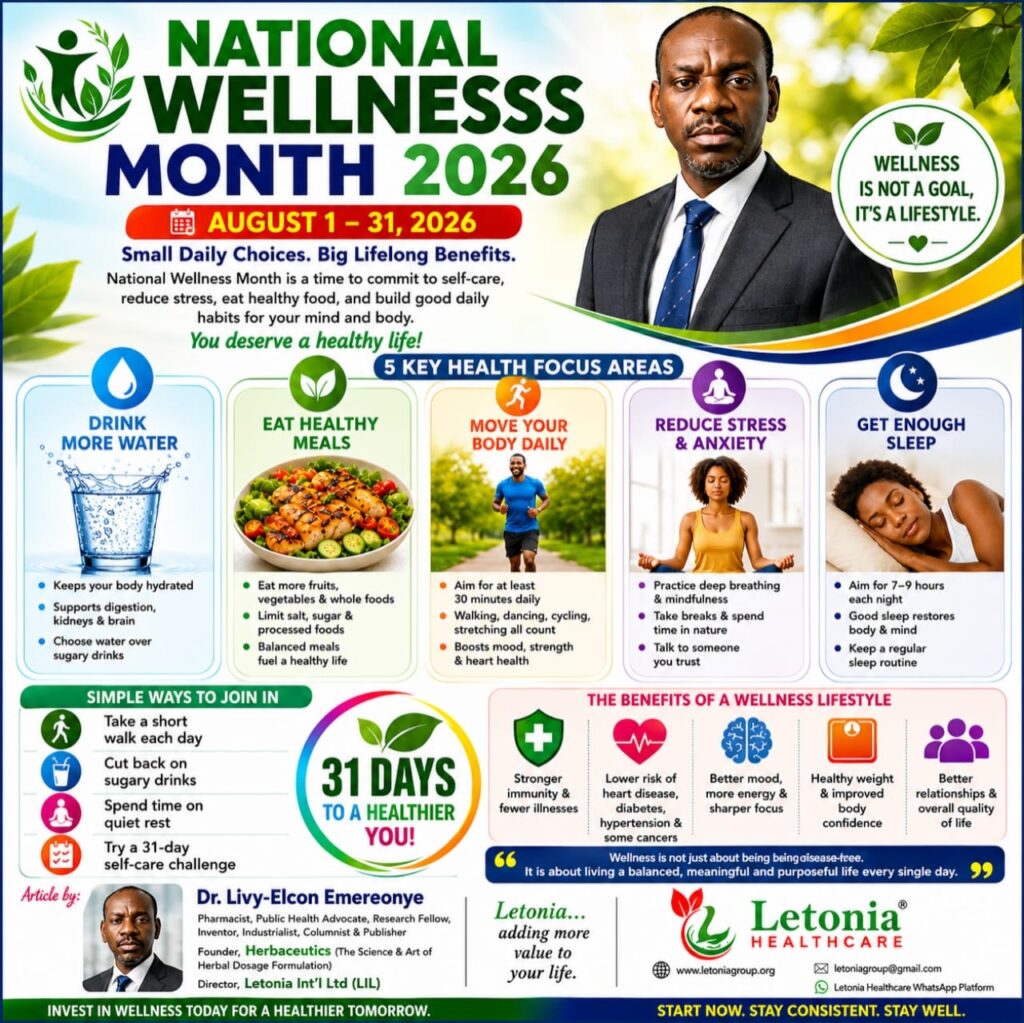
This year’s campaign encourages everyone to prioritize five essential wellness practices:
- Drink more water.
- Eat healthy meals.
- Move your body every day.
- Reduce stress and anxiety.
- Get sufficient quality sleep.
These pillars of wellness are supported by extensive scientific evidence and remain fundamental to public health promotion worldwide.
Understanding Wellness
Wellness is an active process of making choices that lead to a healthier and more fulfilling life. Unlike healthcare, which often focuses on treating illness, wellness emphasizes preventing disease before it occurs.
The World Health Organization (WHO) defines health as “a state of complete physical, mental and social well-being and not merely the absence of disease or infirmity.” This definition recognizes that true health extends beyond physical fitness to include emotional resilience, mental health, healthy relationships, meaningful work, financial stability, and a supportive environment.
Public health experts increasingly advocate a whole-person approach to wellness that integrates:
- Physical wellness
- Mental wellness
- Emotional wellness
- Social wellness
- Occupational wellness
- Environmental wellness
- Spiritual wellness
Improving one area often produces positive effects in the others, creating a cycle of healthier living.
Why Wellness Matters
Non-communicable diseases (NCDs) account for approximately 74% of all global deaths, according to the World Health Organization. Cardiovascular diseases, diabetes, chronic respiratory diseases, and cancers are responsible for the majority of these deaths.
Many risk factors are preventable, including:
- Poor nutrition
- Sedentary lifestyle
- Tobacco smoking
- Harmful alcohol use
- Chronic stress
- Sleep deprivation
- Obesity
Public-health interventions increasingly focus on encouraging healthier lifestyles because prevention is far less expensive and more effective than treating advanced diseases.
Wellness is therefore both a personal responsibility and a public-health priority.
Drink More Water: The Foundation of Good Health
Water is the most essential nutrient for life. Approximately 50–70% of the human body consists of water, making adequate hydration indispensable for normal body functions.
Water supports:
- Regulation of body temperature
- Transportation of nutrients
- Digestion and absorption
- Joint lubrication
- Kidney function
- Brain performance
- Detoxification through urine and sweat
Even mild dehydration may lead to fatigue, headache, dizziness, poor concentration, constipation, and reduced physical performance.
Many people mistakenly replace water with sugary soft drinks, energy drinks, or excessive caffeinated beverages. These drinks contribute significantly to obesity, diabetes, and dental diseases.
Practical hydration tips include:
- Begin the day with a glass of water.
- Carry a reusable water bottle.
- Drink water before feeling thirsty.
- Increase fluid intake during exercise and hot weather.
- Replace sugary beverages with clean drinking water.
For most healthy adults, regular water intake throughout the day is sufficient, although individual needs vary depending on age, climate, health status, and physical activity.
Eat Healthy Meals
Healthy nutrition remains one of the most powerful tools for preventing chronic diseases.
A balanced diet provides:
- Carbohydrates for energy
- Protein for growth and tissue repair
- Healthy fats for hormone production
- Vitamins
- Minerals
- Dietary fibre
- Water
The WHO recommends diets rich in:
- Fruits
- Vegetables
- Whole grains
- Legumes
- Nuts
- Seeds
Individuals should reduce consumption of:
- Salt
- Added sugars
- Saturated fats
- Trans fats
- Highly processed foods
Healthy eating lowers the risk of:
- Hypertension
- Stroke
- Heart disease
- Diabetes
- Certain cancers
- Obesity
Practical Healthy Eating Habits
Simple dietary improvements include:
- Eat more colourful fruits and vegetables.
- Choose whole grains instead of refined grains.
- Eat fish and lean protein sources.
- Limit fried foods.
- Reduce sugary snacks.
- Read nutrition labels.
- Control portion sizes.
- Avoid excessive late-night eating.
Healthy nutrition should become a lifelong habit rather than a temporary diet.
Move Your Body Every Day
The human body is designed for movement.
Unfortunately, technological advances have made modern lifestyles increasingly sedentary. Long hours spent sitting at desks, driving, or using electronic devices have contributed to rising obesity and chronic diseases.
Regular physical activity offers remarkable health benefits:
- Strengthens the heart
- Improves blood circulation
- Controls blood pressure
- Enhances insulin sensitivity
- Maintains healthy weight
- Strengthens bones
- Improves mood
- Reduces anxiety
- Improves sleep quality
- Reduces risk of premature death
The World Health Organization recommends that adults accumulate at least:
- 150–300 minutes of moderate-intensity aerobic activity weekly, or
- 75–150 minutes of vigorous physical activity, together with muscle-strengthening activities on two or more days each week.
Daily movement does not necessarily require expensive gym memberships.
Simple activities include:
- Walking
- Dancing
- Gardening
- Cycling
- Household chores
- Climbing stairs
- Stretching exercises
The key is consistency.
Reduce Stress and Anxiety
Stress is a normal biological response to life’s demands. However, prolonged or poorly managed stress can damage both physical and mental health.
Chronic stress has been associated with:
- Hypertension
- Depression
- Anxiety disorders
- Heart disease
- Poor immunity
- Digestive disorders
- Sleep disturbances
Stress also contributes to unhealthy coping behaviours such as:
- Smoking
- Excessive alcohol intake
- Emotional eating
- Substance abuse
Healthy stress-management techniques include:
- Deep breathing exercises
- Meditation
- Prayer
- Mindfulness
- Spending time in nature
- Listening to music
- Talking with trusted friends
- Seeking professional counselling when needed
Building resilience enables individuals to cope more effectively with life’s inevitable challenges.
Prioritize Healthy Sleep
Sleep is often underestimated, yet it is one of the pillars of good health.
During sleep, the body performs numerous restorative processes including:
- Tissue repair
- Hormonal regulation
- Memory consolidation
- Immune strengthening
- Emotional processing
Adults generally require 7–9 hours of quality sleep each night.
Insufficient sleep has been linked to:
- Obesity
- Diabetes
- Heart disease
- Depression
- Poor work performance
- Reduced immunity
- Increased accident risk
Healthy sleep practices include:
- Maintaining a regular bedtime.
- Limiting screen exposure before bed.
- Avoiding heavy meals late at night.
- Reducing caffeine intake in the evening.
- Creating a quiet sleeping environment.
Sleep should be viewed as an essential investment in health rather than a luxury.
The Importance of Mental Wellness
Mental health is inseparable from physical health.
The increasing burden of depression, anxiety, burnout, loneliness, and emotional exhaustion demonstrates the urgent need to prioritize psychological well-being.
Positive mental wellness includes:
- Emotional resilience
- Healthy relationships
- Self-esteem
- Purpose in life
- Hopefulness
People experiencing persistent sadness, hopelessness, anxiety, or emotional distress should seek professional assistance promptly. Early intervention improves recovery and reduces long-term complications.
Communities also play an important role by reducing stigma surrounding mental illness and encouraging compassionate support.
Building Healthy Habits
Research consistently shows that lasting health improvements result from small, consistent behaviours rather than dramatic short-term changes.
Healthy habits develop through repetition and intentional practice.
Examples include:
- Drinking water before every meal.
- Walking for 30 minutes daily.
- Eating fruits instead of sugary snacks.
- Practising gratitude each evening.
- Sleeping at the same time each night.
- Spending less time on social media.
These seemingly minor actions accumulate over time and produce significant health benefits.
A Simple 31-Day Wellness Challenge
National Wellness Month provides an excellent opportunity to develop healthier routines.
Consider adopting the following habits throughout August:
- Drink adequate water daily.
- Walk for at least 20–30 minutes.
- Eat vegetables with every main meal.
- Replace sugary drinks with water.
- Practise 10 minutes of relaxation or meditation.
- Sleep for at least seven hours.
- Reduce unnecessary screen time.
- Spend quality time with loved ones.
- Read something inspiring each day.
- Perform one act of kindness daily.
The objective is not perfection but gradual, sustainable improvement.
The Role of Families, Workplaces, and Communities
Creating healthier societies requires supportive environments.
Families can:
- Prepare nutritious meals.
- Exercise together.
- Encourage healthy sleep habits.
- Reduce excessive screen time.
Employers can:
- Promote workplace wellness programmes.
- Encourage regular physical activity.
- Support mental health initiatives.
- Provide healthy food options.
Schools can teach children healthy habits early in life, while governments and healthcare institutions should continue investing in health promotion, preventive services, and policies that make healthy choices easier and more accessible.
Conclusion
National Wellness Month 2026 is far more than a symbolic observance. It is a call to action for individuals, families, workplaces, healthcare professionals, and governments to embrace healthier lifestyles that prevent disease and promote lifelong well-being.
The science is clear: drinking more water, eating balanced meals, engaging in regular physical activity, managing stress effectively, and obtaining adequate sleep significantly reduce the risk of many chronic diseases while improving overall quality of life.
Wellness is not achieved through occasional healthy choices but through consistent daily habits that accumulate over time. Every healthy meal, every glass of water, every walk, every hour of restful sleep, and every effort to manage stress contributes to a healthier future.
As we celebrate National Wellness Month this August, let us commit ourselves to making wellness a permanent lifestyle rather than a once-a-year campaign. By strengthening healthy habits today, we build stronger bodies, healthier minds, more resilient communities, and a more productive nation tomorrow.
After all, the journey to lifelong health begins with one healthy choice—and that choice can begin today.
PS: Dr. Emereonye could be reached on: +234 803 3922 445
References
- World Health Organization. Constitution of the World Health Organization. https://www.who.int/about/governance/constitution
- World Health Organization. Noncommunicable Diseases. https://www.who.int/news-room/fact-sheets/detail/noncommunicable-diseases
- World Health Organization. Healthy Diet Fact Sheet. https://www.who.int/news-room/fact-sheets/detail/healthy-diet
- World Health Organization. Physical Activity Fact Sheet. https://www.who.int/news-room/fact-sheets/detail/physical-activity
- World Health Organization. Mental Health. https://www.who.int/health-topics/mental-health
- U.S. Centers for Disease Control and Prevention (CDC). About Sleep. https://www.cdc.gov/sleep/
- U.S. Centers for Disease Control and Prevention (CDC). Healthy Weight, Nutrition, and Physical Activity. https://www.cdc.gov/healthy-weight-growth/
- National Institutes of Health. Nutrition for Health. https://www.nih.gov
- Live Love Spa. National Wellness Month. https://livelovespa.com/pages/wellness-month
- We Are Includability. National Wellness Month 2026. https://www.weareincludability.co.uk/event/national-wellness-month
- Rasmussen University Library. National Wellness Month Resource Guide. https://guides.rasmussen.edu/c.php?g=1539865&p=11543568