
JHPIEGO Enlists Media to Boost Access to Integrated Healthcare in Anambra
By Oguocha Chukwuebuka
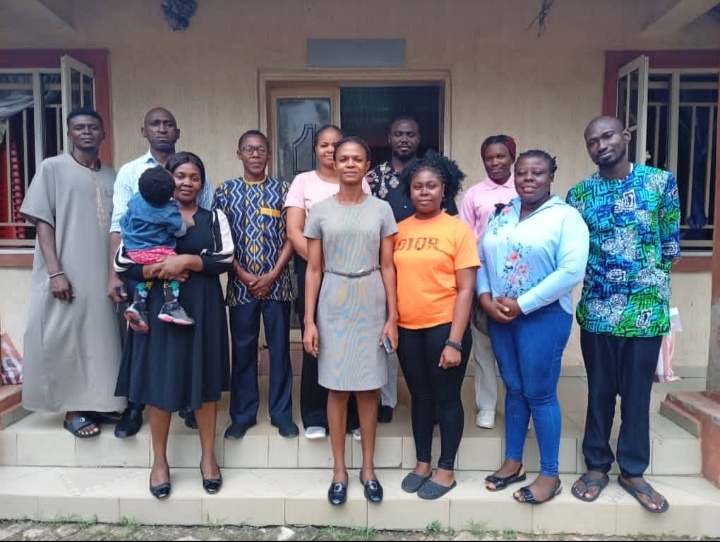
The organisation made the appeal during a media engagement on its Sexual and Reproductive Health Rights and Communicable Diseases (SRHR/CD) Project held at the Legacy Building, Faculty of Mass Communication, Nnamdi Azikiwe University, Awka.
The session brought together journalists, health professionals and development partners to explore strategies for increasing public awareness and utilization of essential healthcare services.
Speaking at the briefing, JHPIEGO’s Community Engagement Officer, Adaobi Eziuzo, explained that the organisation, an affiliate of Johns Hopkins University, United States, has been supporting Nigeria’s health sector since 1978 through programmes aimed at strengthening reproductive healthcare and the country’s healthcare delivery system.
She said the SRHR/CD Project, funded by the Global Fund through the National AIDS and STIs Control Programme (NASCP), is currently being implemented in Anambra, Ebonyi, Kwara and Gombe States.
According to her, JHPIEGO is implementing the project in Anambra in partnership with the Malaria Eradication and Safe Health Initiative of Nigeria (MESHI) across 15 Primary Health Centres and surrounding communities in Aguata, Idemili South and Ogbaru Local Government Areas.
Eziuzo explained that the project promotes integrated healthcare by enabling patients to access multiple health services during a single visit to a Primary Health Centre.
She noted that beyond strengthening the capacity of healthcare workers, the project is focused on creating demand for available services through sustained community engagement and public education.
“Our emphasis is on integrated healthcare,” she said. “A person who visits a health facility for treatment of a minor ailment should also have the opportunity to receive information or services relating to family planning, antenatal care, HIV testing, malaria prevention, HPV vaccination and other preventive healthcare interventions.”
She stressed that Primary Health Centres should no longer be viewed as facilities reserved only for maternity care but as comprehensive healthcare centres serving people of all ages.
Describing the media as a critical partner in achieving the project’s objectives, Eziuzo urged journalists to continue disseminating accurate health information capable of increasing public confidence in Primary Health Centres and encouraging greater utilization of available services.
Chairperson of the Nigeria Union of Journalists (NUJ), Nnamdi Azikiwe University FM Chapel, Dr. Chika Nnabife, commended JHPIEGO and MESHI for engaging journalists in the implementation of the project.
She observed that misconceptions about Primary Health Centres have continued to limit their patronage, noting that many people still believe such facilities are meant only for pregnant women and low-income families.
According to her, integrated healthcare offers a more efficient approach by allowing individuals to access several essential health services under one roof, adding that journalists have a responsibility to educate the public on the benefits of the system.
Also speaking, Programme Manager of MESHI, Chioma Nnagbogu, said the organisation was engaged by JHPIEGO to drive community mobilization and awareness for the project.
She explained that MESHI works with traditional rulers, community leaders and other grassroots stakeholders to encourage residents to take advantage of healthcare services available at participating Primary Health Centres.
Nnagbogu identified the project’s major focus areas as sexual and reproductive health education, family planning, HPV vaccination for cervical cancer prevention, prevention and management of sexually transmitted infections, HIV, tuberculosis and syphilis screening, gender-based violence response, as well as counselling and other preventive health services.
She encouraged residents to embrace preventive healthcare by utilizing the free and affordable services available at Primary Health Centres.
Programme Officer with MESHI, Ogechukwu Onyejedum, also emphasized that Primary Health Centres are designed to serve everyone, including men, women, adolescents and young people, contrary to the common belief that they cater only for pregnant women and children.
She urged members of the public to visit the nearest participating health facility for counselling, screening, referrals and other integrated healthcare services, expressing optimism that stronger collaboration among healthcare providers, community leaders and the media would improve health outcomes and promote healthier communities across Anambra State.