
But I use deodorant to stop sweating. My question is: Does sweating kill?
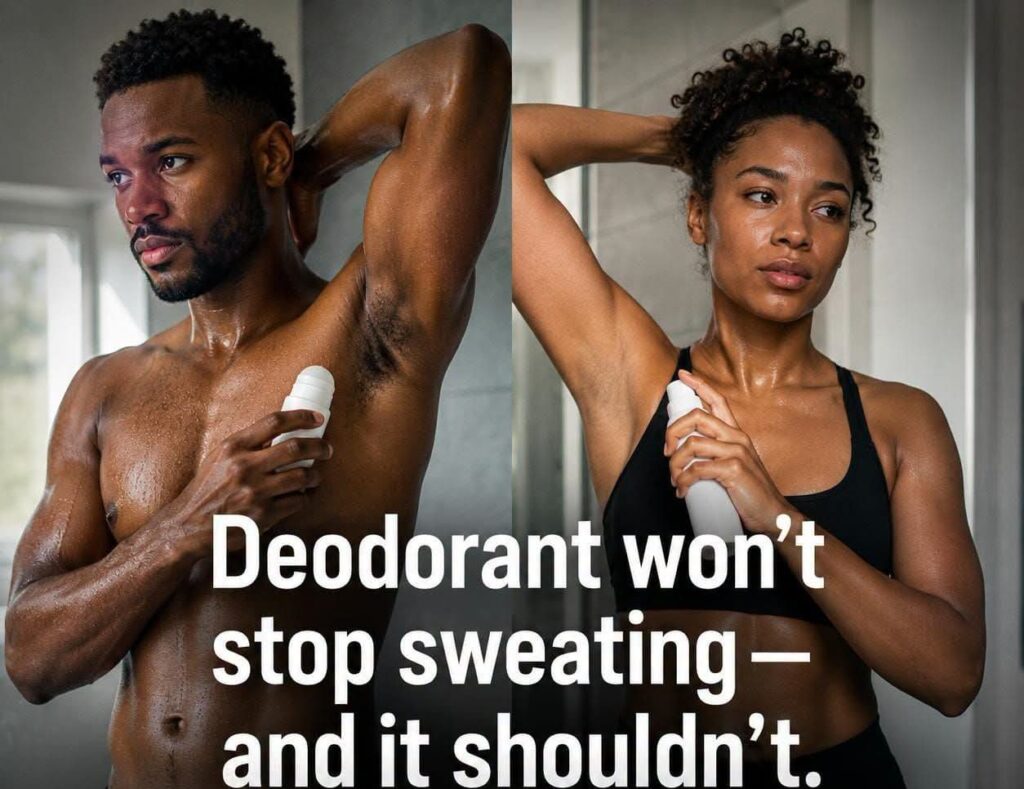
Sweating is one of your body’s natural cooling and temperature-regulating mechanisms. It is not the enemy. The real concern for most people is body odor, not sweat itself.
Rather than trying to shut down a normal biological process every day, why not focus on controlling the odor? Good personal hygiene, regular bathing, breathable clothing, staying well hydrated, and trimming underarm hair when necessary are often enough. If you choose to use deodorants, consider those that neutralize odor rather than those designed to suppress sweating.
The same principle applies to perfumes. Please stop spraying perfumes directly on your skin, especially your neck. Na ibughi mkpi na esi usi. Stop already… Enough of that rough play! The skin is an active organ, and the neck lies over the thyroid gland, which regulates metabolism and many hormonal functions. While spraying perfume on your skin does not automatically cause thyroid disease, many fragrances and personal care products contain chemicals such as phthalates, synthetic musks, and sometimes parabens, some of which have been studied for their potential to interfere with hormone signalling in susceptible individuals. From an upstream prevention perspective, it is wiser to spray perfumes on your clothing rather than directly on your skin, especially around the neck.
If you sweat excessively to the point that it disrupts your daily life, that may be hyperhidrosis, a medical condition that deserves proper evaluation instead of simply masking the symptom.
Preventive health is not about fighting every natural process in the body. It is about understanding what should be supported and what should be treated.
So instead of asking, “How do I stop sweating?” perhaps we should be asking, “How do I control body odor without unnecessarily interfering with a normal physiological process?”
Sometimes, the best health decisions begin by asking better questions.
To learn more about everyday products and lifestyle habits that may influence your health, read our book: How We Poison Ourselves.