PPDC, CATYCOI urge INEC to strengthen enforcement against vote-buying, electoral malpractice
Lawrence Ndubeze, Awka
Non-governmental organizations, Public and Private Development Centre (PPDC) and Catch Them Young Community Initiative (CATYCOI) have called on the Independent National Electoral Commission (INEC) to urgently address alarming voter apathy and vote-buying undermining Nigeria’s electoral integrity.
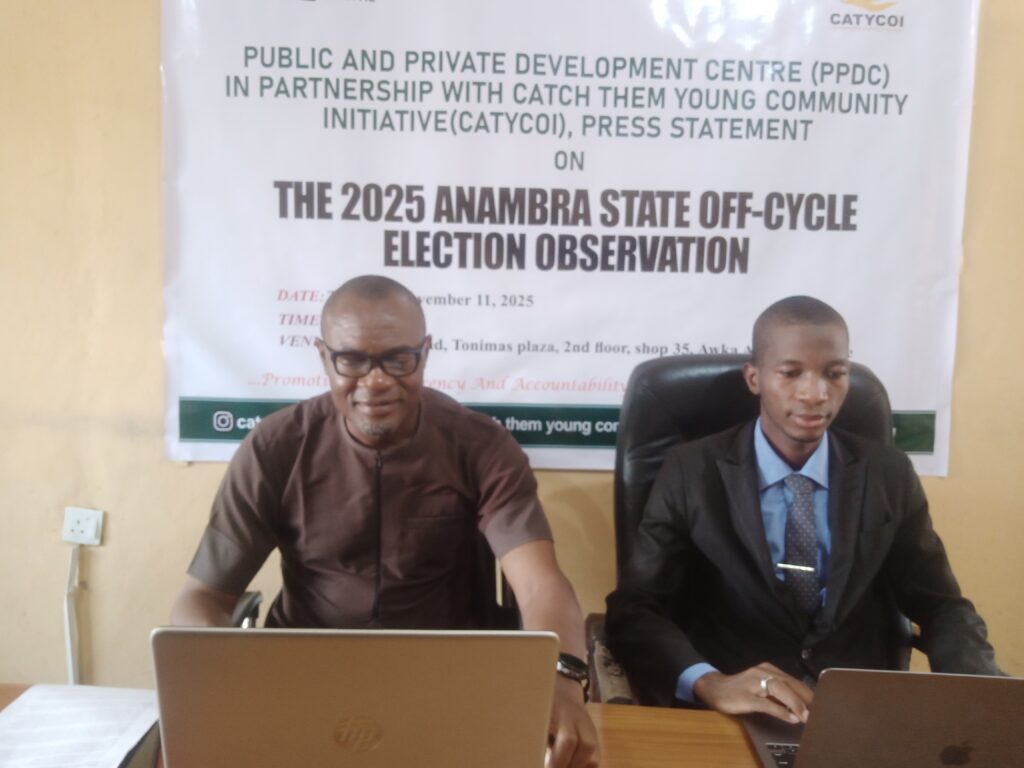
At a post-election press briefing in Awka, they commended INEC and voters for a largely peaceful governorship election but highlighted persisting challenges.
PPDC’s Programme Officer for Access to Justice/ Democratic and Electoral Integrity, Abdullahi Adamu, noted that despite the calm environment across the 21 Local Government Areas, low turnout and vote-buying remain critical threats to credibility and public trust.
He said, “Over the course of five days – from 7th to 11th November – our teams monitored online civic spaces, campaign activities, misinformation trends, and election-day processes. We also engaged communities, listened to citizens, and tracked reactions after the announcement of results.
“From our observation, we can confidently say that the 2025 Anambra off-cycle governorship election was largely peaceful.
“The conduct of INEC officials and security personnel contributed significantly to the calm atmosphere, and citizens who came out to vote were able to exercise their rights without major disruption.”
Adamu urged INEC to act decisively to strengthen transparency and restore faith in the process.
Presenting the group’s findings, Executive Director of CATYCOI, Comrade Nonso Orakwe, noted that in the pre-election period, online discourse was largely peaceful, with 78% of conversations promoting calm participation.
According to him, misinformation was minimal, campaign messages were inclusive, and no major threats were reported, setting a positive tone for polling day.
“On Election Day, INEC officials arrived on time in most areas, though late arrivals in Onitsha South delayed voting. Party agents from major parties including APC, APGA, PDP, LP, YPP, ADC were present at polling units. While BVAS machines functioned well, some newly registered voters could not vote due to name omission issues.
“Security personnel maintained professionalism throughout the process. However, vote-buying was observed in multiple LGAs, and voter turnout was notably low across several areas. On a positive note, results upload to the IReV portal was faster than in previous elections,” he also said.
“Post-election, citizens’ perception of the process was mostly positive or neutral, with community, civil society, and religious leaders urging calm. Online narratives were largely supportive, and there were no reports of post-election violence, underscoring growing acceptance of electoral outcomes in the state,” he added.
Orakwe flagged low voter turnout as a sign of dwindling trust in the electoral process. He also described persistent vote-buying as significant challenges currently undermining the credibility of the mandates.
To address the issues, PPDC and CATYCOI called on INEC, CSOs, development partners, and community leaders to take urgent steps to strengthen logistical planning, empower grassroots organizations and intensify voter education efforts to rebuild public confidence.
They particularly urged INEC to strictly enforce anti-vote-buying laws, improve BVAS sync for new registrants, and curb online misinformation to restore trust and credibility in Nigeria’s electoral process.
PPDC and CATYCOI praised INEC officials, security agencies, and citizens for the peaceful election, noting that voter apathy and money politics now require collective action to strengthen Nigeria’s democratic process.
They reaffirmed their commitment to promoting transparency and accountability in Nigeria’s democracy, thanking citizens, observers, and the media for supporting a violence-free process.