Uzodinma And The Igbo Leadership Question

By Felix Oti, Awka
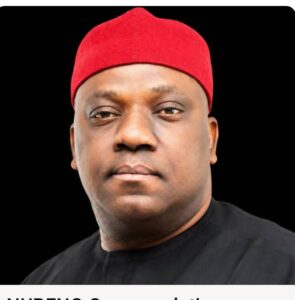
His Excellency Senator Hope Uzodinma’s trajectory illustrates a pragmatic, power-centred approach to advancing Igbo interests within Nigeria’s federal structure rather than through sustained opposition politics.
Nigeria’s political system rewards those who control or closely ally with the centre. For the South-East, post-civil war history, zoning conventions, demographic weight relative to the North and South-West, and a pattern of opposition alignment have often left the region negotiating from relative weakness. The long-running demand for an Igbo president or more equitable federal presence collides with the practical realities of coalition-building, party structures, and resource allocation.
Uzodinma’s Path
His Excellency Senator Hope Odidika Uzodinma moved from business into elective politics. He served two terms as Senator for Imo West (2011-2019), first under the PDP. In 2018 he defected to the APC and contested the 2019 Imo governorship. Although he finished fourth in the declared results, the Supreme Court in January 2020 nullified the election of Emeka Ihedioha and declared Uzodinma winner after including results from previously excluded polling units. He was sworn in on 15 January 2020 and won re-election in 2023.
He has since held concurrent regional and national party roles: Chairman of the South-East Governors’ Forum and Chairman of the Progressive Governors’ Forum. Under President Bola Tinubu he has served as a prominent Renewed Hope Ambassador and Director-General for party outreach and mobilisation. These positions give him unusual access and influence for a South-East governor.
Senator Uzodinma’s consistent public message, reiterated as recently as early November 2026 at a South-East stakeholders’ meeting in Owerri, is that the region cannot continue to specialise in opposition politics while other zones systematically engage the centre.
He urged Igbo leaders to negotiate interests directly with those in power, compile concrete demands, and abandon a posture of permanent complaint. In his framing, results matter more than rhetorical purity: “We need results… We as Igbo people must take bold decisions.”
Engagement, Not Isolation
This stance is not new. In his 2021 book Reflections on the Igbo Question, he argued for strategic engagement and warned against treating “Igbo presidency” as a sectional maxim rather than a Nigerian one. His governance model in Imo emphasising the 3R agenda (Reconstruction, Rehabilitation, Recovery), large-scale road projects, and efforts to improve security and internal revenue is evidence that proximity to federal power can deliver tangible dividends.
As Progressive Governors’ Forum chairman and a trusted APC figure, Uzodinma has positioned Imo and, by extension, parts of the South-East closer to federal decision-making than many predecessors.
Nigeria’s presidential and multi-ethnic federalism rarely reward pure opposition. Regions that maintain continuous engagement (North, South-West at various periods, parts of the South-South) have historically extracted more infrastructure, appointments, and policy concessions.
More fundamentally, engagement with the centre does not automatically produce an Igbo president or structural redress of historical grievances. It can look like co-optation to those who prioritise ideological consistency or mass mobilisation outside the ruling party.
Senator Hope Uzodinma represents one viable answer to the Igbo leadership question in a complex federation: cultivate reliability within the dominant national coalition, deliver visible governance at home, and use the resulting leverage to negotiate.
In a system where control of the centre remains decisive for resources and security, sustained isolation has proven costly. Uzodinma’s example therefore forces a practical choice: continue treating engagement as compromise, or treat it as the necessary condition for any serious advancement of Igbo interests within the existing Nigerian state. His career is an ongoing test of that proposition.