BEFORE NIGERIA BECAME INDEPENDENT, ONITSAH HAD ALREADY BECOME PART OF THE STORY
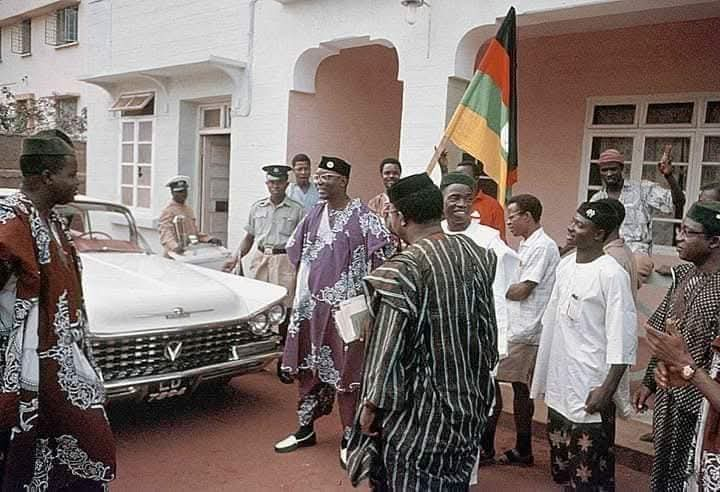
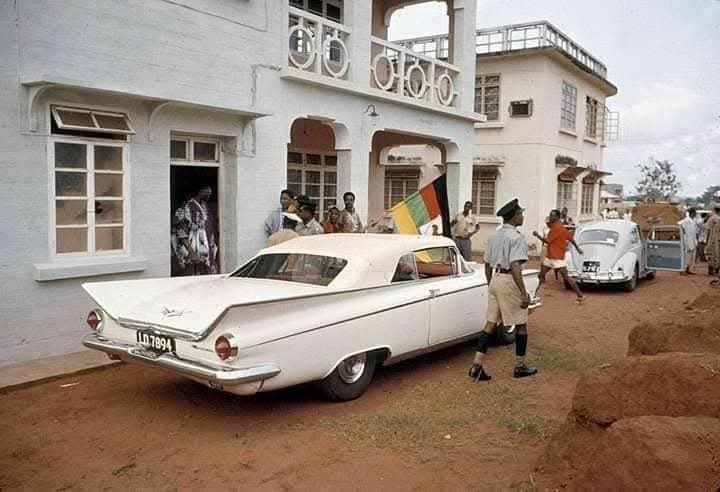
Look closely at this photograph. The car. The traditional attire. The people gathered around it. The political flag. The excitement of a community welcoming one of its most famous sons.
This is Onitsha in 1959, during the period when Nigeria was preparing for independence.
The man at the centre of the moment was Dr. Nnamdi Azikiwe, popularly known as Zik of Africa.
By this time, Zik was already one of the most influential figures in Nigeria’s nationalist movement. Through his political activities and leadership of the National Council of Nigeria and the Cameroons (NCNC), he had become a major voice in the struggle for self-government.
But there is something particularly interesting about seeing him in Onitsha.
This was not simply another political campaign stop. This was his hometown, a place connected to his identity and the story of his rise.
Imagine being among the people gathered there.
Nigeria was approaching a defining moment. The colonial era was drawing towards its end. Political leaders were campaigning, negotiating and preparing for the responsibility of governing an independent country.
And here was Zik, returning home at a time when the future of the country was being shaped.
Look again at the people in the photograph. They are not merely background figures. They are part of the story too. They belonged to a generation that witnessed the final years of colonial rule and the birth of an independent Nigeria.
Sometimes, an old photograph tells us more than we realise. It captures not only the famous person in the frame, but also the people, the atmosphere and the world surrounding that person.
For Onitsha, this is a reminder that our history was never confined to our markets, our festivals and our royal institutions. Our town was also connected to the political ideas and personalities that helped shape modern Nigeria.
And when we look at photographs like this, we are looking at more than a memory.
We are looking at a moment when the history of Onitsha and the history of Nigeria met in the same frame.