WHICH WAY NIGERIA?
66 YEARS AFTER INDEPENDENCE
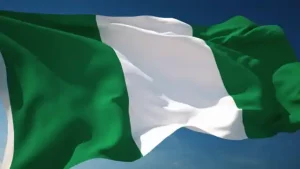
On October 1, 1960, Nigeria inherited a flag, a national anthem, a territory and the legal authority to determine its own affairs. Sixty-six years later, we have something else: a question. It is a question that refuses to grow old.
Which way, Nigeria?
It is not a new question. It has been asked by politicians, intellectuals, activists, writers, musicians, students, workers and ordinary Nigerians sitting in traffic, standing in queues, watching television, scrolling through their phones or counting the money left in their pockets after paying for the necessities of life.
Professor Onye Egwu turned that question into music in “Which Way Nigeria”, released on October 1, 2024. The song is not merely a patriotic soundtrack for Independence Day. It is a lament, a protest and, perhaps most importantly, an interrogation of the Nigerian condition. Its anguish is directed at a nation blessed with enormous human and material possibilities but continually confronted by the consequences of bad choices, failed expectations and a crisis of direction. And perhaps there is no better time to ask that question again than now.
Only a few days ago, African leaders gathered at the United Nations General Assembly in New York and spoke with renewed determination about Africa’s place in the world. The message was unmistakable: Africa wants a voice.
Nigeria argued that the United Nations Security Council cannot continue to reflect the distribution of global power as it existed in 1945 when the realities of 2026 are radically different. Nigeria called for at least two permanent African seats, alongside five non-permanent seats, insisting that a continent that carries so much of the world’s population, resources and security burdens should not remain without permanent representation at the table where some of the world’s most consequential decisions are made.
Ghana made a similar argument. President John Mahama described Security Council reform not as a favour to Africa but as necessary for the legitimacy and credibility of the United Nations. Across the continent, the demand is increasingly clear: Africa does not want to remain merely a subject of international decisions; it wants to participate in making them. And I agree with the underlying principle.
But as a Nigerian, I cannot listen to Africa’s demand for a greater voice in the world without asking another question: What have we done with the voice we already have?
This is where “Which Way Nigeria” becomes more than a song. It becomes a mirror.
We want Africa to have a permanent seat at the United Nations Security Council. Fair enough. But do Nigerians have a permanent seat at the table of their own democracy? We demand that the world respect our sovereignty. But do we respect the institutions through which that sovereignty is exercised?
We complain that foreigners take advantage of our natural resources. Yet, after sixty-six years of independence, have we sufficiently transformed our enormous resources into industries, jobs, technology, knowledge and prosperity for our people?
We complain about the world’s perception of Africa. But what perception do we create of ourselves when corruption becomes normalised, mediocrity is celebrated, public property is treated as nobody’s property, and political loyalty is sometimes valued above competence, character and accountability?
These are uncomfortable questions because Independence Day should not merely be a day for comfortable questions. It should be a day for uncomfortable reflection.
For decades, we have spoken of Nigeria’s enormous potential. We have oil. We have gas. We have solid minerals. We have fertile land. We have a huge market. We have a young population. We have scientists, academics, entrepreneurs, artists, engineers, writers, doctors, inventors and technology developers scattered across the world. We have produced Nigerians who have excelled wherever opportunity has allowed them to breathe.
So why does a country with so much talent still struggle to provide many of its citizens with the basic conditions necessary for a dignified life?
Which way, Nigeria? Professor Onye Egwu’s question therefore deserves to be heard beyond the melody. It speaks to the price of living in a country where the ordinary citizen is often forced to become extraordinarily resilient.
The trader, teacher, civil servant, student, artisan, small business owner, young graduate, Nigerian family struggle to survive. Simply put that we have become a nation of survivors when independence should mean more than becoming exceptionally good at surviving difficult circumstances.
A nation should also make it possible for its people to live, plan, dream, build, prosper, raise children without permanent anxiety about tomorrow, believe that hard work can lead somewhere and to trust that institutions will function even when nobody is watching. This is why the speeches from the recent United Nations General Assembly deserve to be listened to carefully.
African leaders are not merely asking the world for sympathy. They are asking for recognition, representation and a restructuring of systems that they argue no longer correspond to contemporary realities. Africa is increasingly insisting that its population, resources, markets and strategic importance must translate into meaningful influence.
Nigeria’s own statement went beyond the Security Council. It spoke about technological development, artificial intelligence, industrialisation, energy, security, climate action, debt, infrastructure and the need for Africa to move from exporting raw materials towards value addition, manufacturing and knowledge-driven growth.
That is the Africa we should want. An Africa that does not merely complain about being exploited but develops the capacity to negotiate from strength. An Africa that does not merely export crude oil, cocoa, gold, lithium and other raw materials but develops the industries that transform them. An Africa that does not merely send its brightest young people abroad but creates reasons for them to stay. An Africa that does not merely ask for a seat at the table but builds something so valuable that the table cannot afford to exclude it. But Nigeria must begin this transformation at home because there is an irony we must confront. We cannot convincingly demand that the world reform its institutions while refusing to reform the habits that weaken ours. We cannot complain about exclusion while practising exclusion. We cannot condemn corruption abroad and excuse it when it happens around us. We cannot demand accountability from leaders while celebrating leaders according to what they give our ethnic, religious or political camps. We cannot ask politicians to build a better country while citizens themselves participate in the destruction of the common good.
Leadership matters enormously. Government matters. Institutions matter. Policies matter. But citizenship matters too. A country is not only what its presidents do. It is also what its citizens tolerate. It is what they celebrate. It is what they excuse. It is what they reward. It is what they teach their children.
“
Perhaps this is one of the deepest concerns embedded in “Which Way” Nigeria: not simply what are our leaders doing to Nigeria? but what kind of country are all of us collectively creating?
That question cannot be answered at Aso Rock alone. It must be answered in the classroom, in the office. in the market, in the church, in the mosque, in the university, in the civil service, in the business community, in the voting booth, in our homes and even on social media, where we have increasingly acquired the power to amplify either truth or falsehood with the touch of a button.
Nigeria at 66 therefore needs something more profound than another Independence Day celebration filled with flags, anthems, speeches and photographs. We need a national conversation about direction.
Where are we going? What kind of country are we building? What kind of institutions are we leaving behind? What kind of citizenship are we teaching the next generation? And what exactly does independence mean to a child born in 2026?
Does independence mean that a foreign flag was lowered sixty-six years ago? Or does it mean that the Nigerian child can grow up in a country where his or her dreams are not determined by the accident of birth?
Perhaps this is where the meaning of independence must be renewed. Independence is not simply freedom from colonial rule. It is also the freedom to build. The freedom to think. The freedom to innovate. The freedom to prosper. The freedom to participate. The freedom to demand accountability. The freedom to disagree without becoming enemies. The freedom to imagine a country better than the one we inherited. And perhaps, most importantly, the responsibility to build that country.
As Africa demands a greater voice in global affairs, Nigeria must ask itself whether it is prepared for the responsibilities that come with that voice. A permanent seat at the United Nations Security Council would be significant. But a permanent culture of accountability at home would be even more consequential to the ordinary Nigerian. A louder African voice at the United Nations would matter. But a louder voice for the Nigerian citizen in the affairs of his or her own country would matter too. Global recognition is important. But national renewal is indispensable.
And this is why Professor Onye Egwu’s “Which Way Nigeria” should not be treated merely as entertainment on Independence Day. It should be listened to as a question. A question from an artist to his country. A question from one generation to another. A question from the street to the political class. A question from the Nigerian present to the Nigerian future.
Which way, Nigeria? Sixty-six years after independence, perhaps the answer cannot simply be this way or that way. Perhaps the answer depends on us. On the quality of our leadership. On the strength of our institutions. On the courage of our citizens. On what we are willing to tolerate. On what we are willing to reject. On what we are willing to build.
The world is changing. Africa is demanding its place. The United Nations is being challenged to reflect a changing world. And Nigeria is standing before that changing world, asking to be heard. But before we ask the world to listen to us, perhaps we should listen to ourselves. Listen to the frustration in the streets. Listen to the young person wondering whether there is a future here. Listen to the farmer. Listen to the teacher. Listen to the entrepreneur. Listen to the worker. Listen to the unemployed graduate. Listen to the elderly Nigerian who has watched one government after another come and go. And listen to the musician who put the country’s anxiety into a simple but devastating question: “Which way Nigeria?”
On this October 1, let us celebrate Nigeria. But let us not merely celebrate the Nigeria that is. Let us interrogate the Nigeria that could be. Because independence is not a finished achievement. It is an unfinished responsibility. And 66 years after the Union Jack came down, the greatest tribute we can pay to those who inherited independence before us and to those who will inherit Nigeria after us is not to pretend that everything is well. It is to ask the difficult question honestly and then, together, begin to build an answer that will matter to all Nigerians.
Happy Independence Day, Nigeria.
May the next chapter be better than the ones we have already written.
Stephen Tochukwu Anekwe
October 1, 2026