
Sacramental Baptism and Baptism in the Spirit: Toward an Understanding of the Born-Again Experience
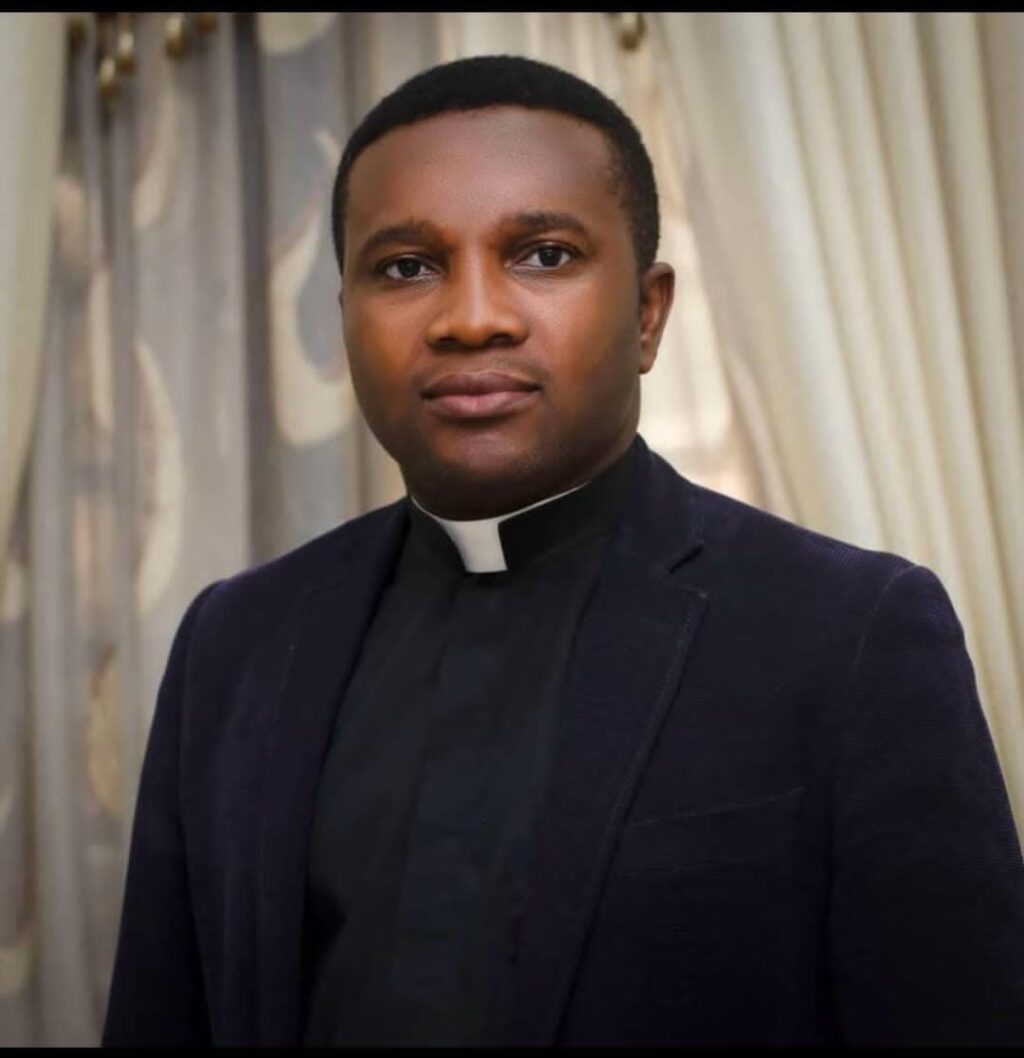
Fr George Adimike
It is beyond contestation that Pentecost heightens the Christian awareness of the presence, power, and indispensable role of the Holy Spirit, whose vitality sustains, animates, and empowers the Church in her mission. The birth of the Church owes its agency to the combined action of Christ and the Holy Spirit―Christological and Pneumatological elements―working as the two hands of the Father, as Irenaeus. To appreciate the unfolding of God’s action in history, the divine economy, and its Trinitarian dynamic, three great epochs are discernible: from Creation to the Incarnation, the age of the Father; from the Incarnation to Pentecost, the age of the Son; and from Pentecost to the Parousia, the age of the Holy Spirit. Hence the Church’s growing awareness of the essential role of the Holy Spirit brings necessary correction and balance in reception of the truth of the ecclesial mystery. Accordingly, Scripture makes clear that entry into authentic Christian life—a radical, filial relationship with God—requires both faith and the mediation of the Church, which administers this new birth through both material and spiritual elements, Water and the Spirit, inexactly representing the Christological and Pneumatological dimensions.
Yet, in practice, some Christians focus almost exclusively on the institutional element of water, neglecting its pneumatic character and impact – the spiritual dimension. In contrast, others emphasise the co-institutional element, Spirit, to the exclusion of its sacramental, material rootedness. True Christian rebirth—being born again—requires both Water and the Spirit: integrating materiality and spirituality, while avoiding material reductionism and disembodied spiritualism. This synthesis is at the core of sacramentality, where visible signs mediate God’s invisible grace.
Baptism, then, as the sacrament that fulfils the mandate of Christ: “Go you, therefore… baptising them in the name of the Father, and of the Son, and of the Holy Spirit” (Matt. 28:19-20), is essentially Trinitarian-ecclesial. This sacrament enables us to ponder the profound mystery of entering into Christ by Water and Spirit, who is the Father’s overture to humanity in the Spirit. From the dawn of creation, water has been intimately connected to life, death, and the divine, serving as the medium through which countless sacramental, cultic, and spiritual realities are expressed. Its role is so central that it continually draws our theological attention.
During the course of history, two broad approaches to water in its relationship with the divine have emerged: pneumatisation and spiritualisation. In pneumatisation, the power of God is invoked upon the water through a quasi-formal causality, preserving the distinction between matter and spirit and between water and the divine. At the same time, the spiritualisation of water blurs this distinction and verges on pantheism. Such spiritualisation, where water is deified or conceived as a habitat of spiritual forces and mermaid beings, finds parallels in ancient Near East Asian beliefs. Understanding these nuances helps us appreciate the richness and complexity of sacramental theology.
Appreciating the Pneumatological constitution of the Church, Baptism in the Spirit can be described as a subjective awakening to sacramental grace—a heightened consciousness of one’s Christian identity, dignity, privileges, and responsibilities. It is an experience that stirs the heart and diminishes distractions, allowing a deeper focus on God to emerge. Through this process, the believer is introduced to the spiritual riches made available through the sacraments, enabling a more faithful path of discipleship and a more intimate friendship with the Lord. In Church tradition, it is never seen as a substitute for, or as superior to, Sacramental Baptism. Instead, Baptism in the Spirit enables it, deepening and making personal the born-again reality conferred by the Sacrament of Baptism. Worthy of note, Baptism in the Spirit is not a sacrament but serves the Christian in recognising the overwheming importance of the Sacraments of Baptism and Confirmation.
Although sometimes obscure, misunderstood, and often contested, Baptism in the Spirit plays within the context of Christian discipleship. The Church in each age and clime appreciates and expresses this mystery according to its spiritual temperament and context. For some, it is at the core of authentic Christian witness; for others, it is regarded as a superfluous enthusiasm or distraction. Properly understood, Baptism in the Spirit serves as a handmaiden to Sacramental Baptism and Confirmation. It enables the disposition for the subjective reception of the good delivered by Baptism and ultimately by Confirmation. It corrects integralism and institutionalism, tendencies that downplay the explicit role of the Spirit in the Church. At the same time, it regulates the charismatic excesses that neglect the sacramental dignity of material creation, especially the principle of sacramentality and the Sacraments in particular. Appreciating this Catholic balance of ‘both/and’ allows the Church to maintain both her sacramental integrity and her openness to the renewing action of the Holy Spirit.
In conclusion, relative to born-again experience, Sacramental Baptism interplays with Baptism in the Spirit and reveals a vital dynamic at the heart of Christian initiation and maturity. Objective grace a Christian receives in the sacraments is made fruitful in the recipient through personal awakening in the Spirit. The point has to be underscored that the Sacramental grace is conferred ‘ex opera operato’, by the fact of the sacramental action. The awakening is, therefore, for the cooperation and fruitfulness of the grace conferred. This integrated approach ensures that Christian life is neither reduced to mere ritual nor to unanchored enthusiasm, but is lived as a journey of deepening communion with God and the Church. A person is born again when they pass through the process of baptism with Water and the Holy Spirit. Still, this reality becomes manifest when one consciously interiorises it and immerses himself in God through the transforming action of the Spirit. Ultimately, by embracing both the visible and invisible dimensions of rebirth, Christians are drawn ever more deeply into the fullness of life in Christ—a life that is sacramental and spiritual, communal and personal.
Fr George Adimike
[email protected]