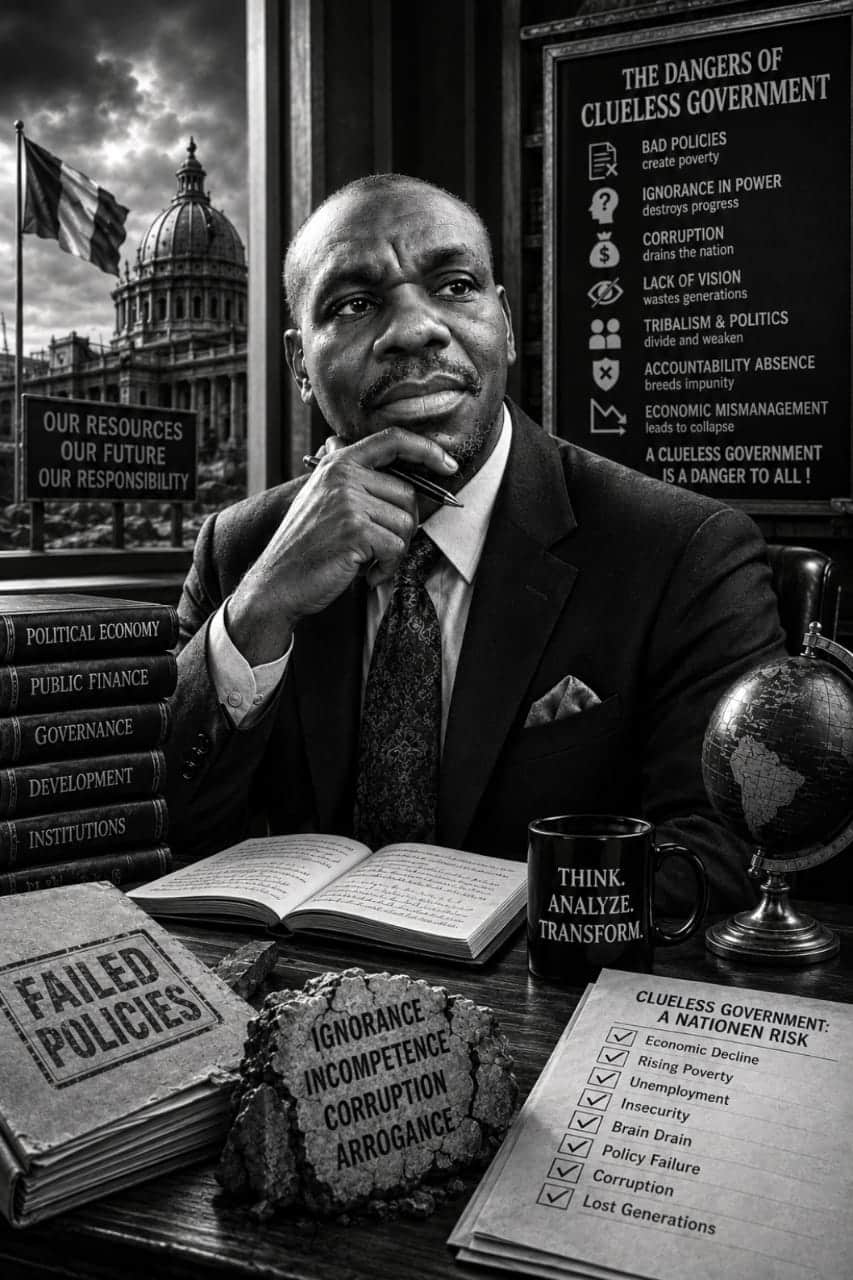
THE BALLOT IS NOT FOR SALE
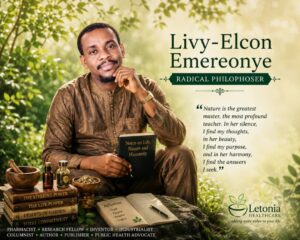
By Livy-Elcon Emereonye
There are moments in the life of a nation when citizens must pause, look beyond the noise of political campaigns, and ask themselves one fundamental question:
What exactly are we voting for?
Are we voting for personalities or principles?
For slogans or solutions?
For temporary gifts or permanent prosperity?
For political drama or responsible governance?
For those who merely desire power, or for those who understand that power is a trust?
These questions become particularly important in an environment where elections are increasingly threatened by the poisonous combination of campaigns of calumny, political intimidation, misinformation, vote buying and the monetisation of the electorate’s conscience.
Democracy is supposed to be government by the people, for the people and, ultimately, accountable to the people. But when the ballot is converted into a marketplace where political aspirants purchase the conscience of citizens with money and inducements, democracy begins to lose its soul.
The ballot becomes a commodity.
The voter becomes a customer.
The politician becomes an investor.
And government becomes the business through which the investment is recovered.
That is the tragedy we must confront.
GOVERNANCE IS A CONTRACT WITH THE PEOPLE
Government is not an ornamental institution created to decorate the political landscape. It exists because society requires an organised authority capable of protecting life, securing property, administering justice, developing infrastructure, regulating public affairs and creating the conditions necessary for citizens to prosper.
The most fundamental responsibility of government is therefore the protection of life and property.
A government that cannot adequately protect its citizens from violence, criminality and insecurity must answer to the people.
A government that cannot create an environment in which citizens can work, trade, invest, farm, travel and sleep without unreasonable fear must answer to the people.
A government that presides over the destruction of public institutions while public resources are dissipated through waste, corruption and impunity must answer to the people.
This is not hatred.
It is not political persecution.
It is democracy.
The citizen who asks questions about governance is not an enemy of government. The citizen is fulfilling one of the most important responsibilities of citizenship.
Indeed, anyone who cannot provide good governance with security of life and property should be subjected to the full scrutiny of the electorate and, where the constitutional process permits, voted out through a free, fair and credible election.
Political office is not hereditary property.
It is not a private estate.
It is a temporary trust.
THE POLITICIAN MUST BE JUDGED BY PERFORMANCE
One of the greatest weaknesses of contemporary politics is the tendency to judge political actors by everything except performance.
We sometimes celebrate eloquence where competence is required, personality where character is required, propaganda where evidence is required, and loyalty where accountability is required.
But governance is ultimately measured by outcomes.
Can people live safely?
Can businesses survive?
Can young people find meaningful opportunities?
Can families access quality healthcare?
Can children receive decent education?
Can farmers produce without fear?
Can citizens travel without anxiety?
Can public infrastructure function?
Are public resources being managed responsibly?
These are the questions that matter.
A politician should not be evaluated merely by the number of posters bearing his or her photograph, the size of a campaign rally, the volume of political music or the number of social-media influencers singing praises.
The true campaign document is the record.
The true manifesto is performance.
The true political credential is competence demonstrated under responsibility.
THE POLITICS OF CALUMNY
When politicians cannot persuade citizens with ideas, some resort to destroying the reputations of their opponents.
Thus begins the campaign of calumny.
A political opponent is transformed into an enemy. A disagreement becomes a conspiracy. A criticism becomes treason. A question becomes an insult. A rumour becomes “breaking news.” A fabricated story is repeated until repetition is mistaken for truth.
This is dangerous.
Democracy cannot survive where political competition becomes a contest in character assassination.
There is nothing wrong with robust political criticism. Indeed, democracy requires it.
But criticism must be anchored in truth.
If a candidate has failed, tell the people how and where the candidate failed.
If there is evidence of misconduct, present the evidence.
If a policy is defective, demonstrate its defects.
If a promise has been abandoned, remind the electorate.
But do not manufacture lies merely because the truth is insufficient to win an argument.
The ballot box should be an arena where ideas fight—not where lies assassinate reputations.
INTIMIDATION IS THE LANGUAGE OF POLITICAL COWARDICE
There is another monster that stalks democracy: intimidation.
When citizens are threatened because of their political opinions, democracy is wounded.
When political thugs are unleashed against opponents, democracy is wounded.
When people are prevented from attending political meetings, expressing opinions or freely exercising their civic rights, democracy is wounded.
When citizens are made to believe that voting against a powerful politician will bring punishment, violence or economic retaliation, the election may still look like an election—but its spirit has already been violated.
Political power acquired through fear is not a triumph of leadership.
It is a confession of insecurity.
The politician who genuinely believes in his or her record should not need intimidation.
The politician with convincing ideas should not need thugs.
The politician with demonstrable achievements should not need threats.
Persuasion is the weapon of the confident. Intimidation is the refuge of the insecure.
THE MOST DANGEROUS BRIBE MAY BE THE SMALLEST
Perhaps the most insidious weapon in electoral politics is vote buying.
It is easy to understand why someone struggling economically may be tempted by cash offered during an election.
The politician arrives with money.
The citizen has immediate needs.
The transaction appears simple.
But democracy has a long memory.
The money disappears.
The politician remains in office.
And the citizen may spend years paying for the consequences of the transaction.
A few thousand naira cannot compensate for a government that fails to protect lives.
A bag of rice cannot compensate for a collapsed healthcare system.
A campaign gift cannot repair years of unemployment.
A temporary transport allowance cannot rebuild a destroyed road.
A plate of food cannot substitute for sound economic policy.
The tragedy of vote buying is therefore not merely that money changes hands.
The tragedy is that the future is being exchanged for the present.
THE POLITICAL CONTRACTOR AND THE RECOVERY OF INVESTMENT
There is an even deeper dimension to this phenomenon.
Some political actors and contractors do not regard campaign expenditure as charity. They regard it as investment.
They spend heavily to obtain political power, expecting to recover their investment when access to public resources becomes available.
That is how the political marketplace can gradually transform public office into a commercial enterprise.
The politician spends money to acquire office.
The office then becomes the mechanism for recovering the money.
Contracts become instruments of repayment.
Appointments become instruments of patronage.
Public resources become instruments of private enrichment.
And the Commonwealth becomes the unfortunate collateral.
The citizen who accepts a small inducement may unknowingly participate in a system that eventually costs the entire society billions.
That is why citizens must understand the economic mathematics of vote buying.
What looks like generosity before the election may become extraction after the election.
DO NOT SELL A PERMANENT RIGHT FOR A TEMPORARY GIFT
The vote is not merely your opinion.
It is your constitutional instrument of participation.
Through it, you participate in determining who receives the authority to make decisions on your behalf.
Your vote influences who will control public resources.
Your vote influences who will make policies.
Your vote influences who will appoint officials.
Your vote influences the direction of your community, state and nation.
Why then should such power be exchanged cheaply?
A citizen may need ₦10,000 today.
But the consequences of four years of bad governance may be worth millions in lost opportunities.
The citizen may need food today.
But the consequences of unemployment tomorrow may consume an entire household.
The citizen may accept a transport fare today.
But the insecurity that follows incompetent governance may prevent that citizen from travelling tomorrow.
The arithmetic is devastating.
The inducement is temporary. Governance is consequential.
CITIZENS MUST BECOME POLITICALLY SOPHISTICATED
We cannot build a strong democracy with an electorate that is permanently treated as a crowd to be mobilised rather than a citizenry to be respected.
Citizens must become politically sophisticated.
They must ask questions.
They must demand evidence.
They must compare records.
They must examine policies.
They must distinguish promises from programmes.
They must distinguish propaganda from facts.
They must distinguish political loyalty from blind allegiance.
The question should never simply be:
“Who is my candidate?”
The deeper question should be:
“Who is capable of serving the public interest?”
Politics should not be a family inheritance.
It should not be a tribal reflex.
It should not be a religious transaction.
It should not be an emotional cult.
It should be a competition of ideas, competence, character and capacity.
COLLECTIVE WEALTH MUST NOT BECOME PRIVATE RANSOM
The word Commonwealth carries profound meaning.
It represents the collective wealth and resources belonging to the people.
The roads belong to the people.
The schools belong to the people.
The hospitals belong to the people.
The public lands belong to the people.
The taxes belong to the people.
The natural resources belong to the people.
The public treasury belongs to the people.
Political office does not convert these resources into private property.
The politician is a custodian, not an owner.
The public servant is a trustee, not a beneficiary of unlimited entitlement.
When politicians use public office to enrich themselves and their networks, they are not merely committing an economic offence. They are violating the trust placed in them by the people.
THE ELECTORATE HAS POWER
Perhaps the most important message citizens must hear is this:
You are not powerless.
The politician needs your vote more than you need his campaign gift.
The candidate needs your consent.
The political contractor needs your cooperation.
But you possess the final instrument of democratic judgment.
Do not surrender that power psychologically simply because someone gives you money.
Do not become emotionally indebted to someone because he distributed gifts during an election.
Do not confuse campaign generosity with governmental competence.
And do not allow anyone to make you believe that accepting an inducement means you owe them your political allegiance.
Your democratic conscience is yours.
Your vote is yours.
Your constitutional rights are yours.
THE ELECTION SHOULD BE THE PEOPLE’S AUDIT
Every election should be regarded as an audit.
It is the moment when citizens examine the accounts of leadership—not merely financial accounts, but the broader account of governance.
What did the government inherit?
What did it promise?
What did it accomplish?
What failed?
What improved?
What deteriorated?
How secure are citizens?
How healthy is the economy?
How functional are public institutions?
How responsibly were public resources managed?
What lessons should be learned?
An election should therefore not be a festival of noise.
It should be a solemn civic examination.
The citizen should enter the voting booth with the seriousness of an auditor examining the books of a company.
Because, in reality, that is what the citizen is doing.
The politician is seeking another mandate to manage the people’s affairs.
The electorate is deciding whether that mandate should continue.
THE FUTURE CANNOT BE PURCHASED
Nigeria’s democratic future cannot be built on the foundation of purchased votes.
We must graduate from the politics of inducement to the politics of accountability.
From slogans to substance.
From personalities to institutions.
From intimidation to persuasion.
From calumny to evidence.
From political contractors to public-interest leadership.
From transactional politics to transformational governance.
And from citizens who merely receive political gifts to citizens who demand political accountability.
The ultimate question is not who gave the most money.
It is who can give the people the most responsible governance.
Not who shouted the loudest.
Not who insulted opponents most effectively.
Not who brought the largest crowd.
Not who distributed the most gifts.
But who can protect lives, secure property, strengthen institutions, manage public resources responsibly and create opportunities for citizens to prosper.
CONCLUSION: THE BALLOT IS YOURS
Democracy gives the citizen something extraordinarily powerful: the ability to determine who receives the temporary authority of government.
Guard that power.
Protect it from intimidation.
Protect it from misinformation.
Protect it from tribal manipulation.
Protect it from religious exploitation.
Protect it from emotional blackmail.
And, above all, protect it from being permanently exchanged for a temporary inducement.
Let every politician understand that the citizen is not a commodity.
Let every political contractor understand that the Commonwealth is not a repayment fund.
Let every aspiring leader understand that public office is not an investment vehicle.
And let every citizen understand that governance has consequences.
If a government cannot provide good governance, protect life and property, uphold the rule of law and responsibly manage the Commonwealth, citizens have every democratic right to demand accountability and make a different choice at the appropriate election.
The ballot is not a thank-you note.
It is not an IOU.
It is not a receipt for a campaign gift.
It is a solemn instrument of democratic judgment.
And the citizen must never forget the enduring wisdom behind the transaction:
Anyone who buys your vote may ultimately sell your rights and your Commonwealth when, upon getting to office, the person seeks to recover the money spent buying votes.
Therefore, do not allow the inducement to purchase your conscience.
Collect whatever lawful campaign gift or inducement is offered to you if you choose to accept it, but do not sell your democratic judgment for it. Then enter the voting booth and exercise your constitutional right freely, independently and according to your conscience.
Because the money is temporary.
The vote is consequential.
The office is temporary.
The consequences of governance can endure for generations.
And your Commonwealth is far too precious to be sold at the price of a campaign handout.
The ballot is yours. Guard it. Use it wisely. And hold whoever wins accountable.