JONAPWD pledges disability-inclusive approach to GBV prevention in Anambra
Lawrence Nwimo, Awka
The Joint National Association of Persons with Disabilities (JONAPWD) Anambra State Chapter, has declared its resolve to lead the campaign against gender-based violence in the state.
The group, at a dialogue held Friday at the Prof. Dora Akunyili Women Development Centre, Awka, said it would no longer wait for survivors to complain before taking action.
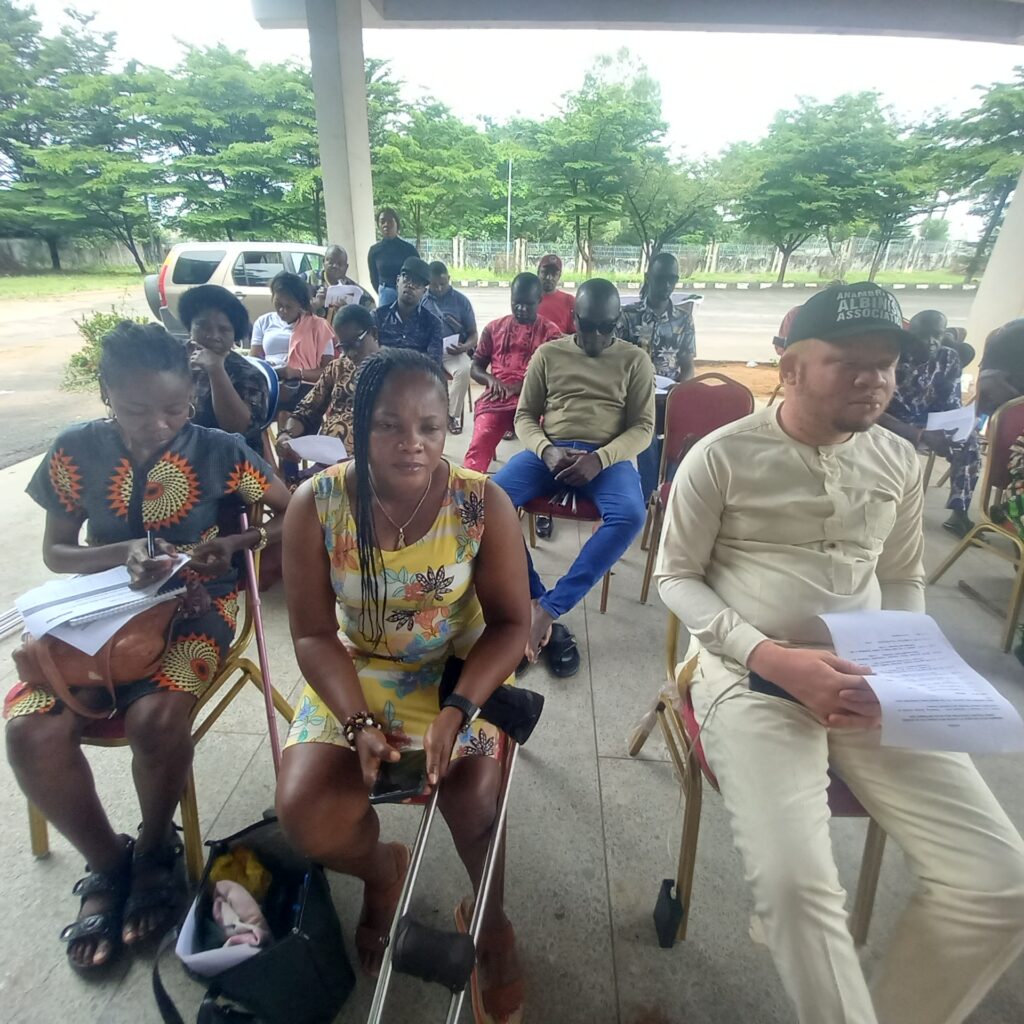
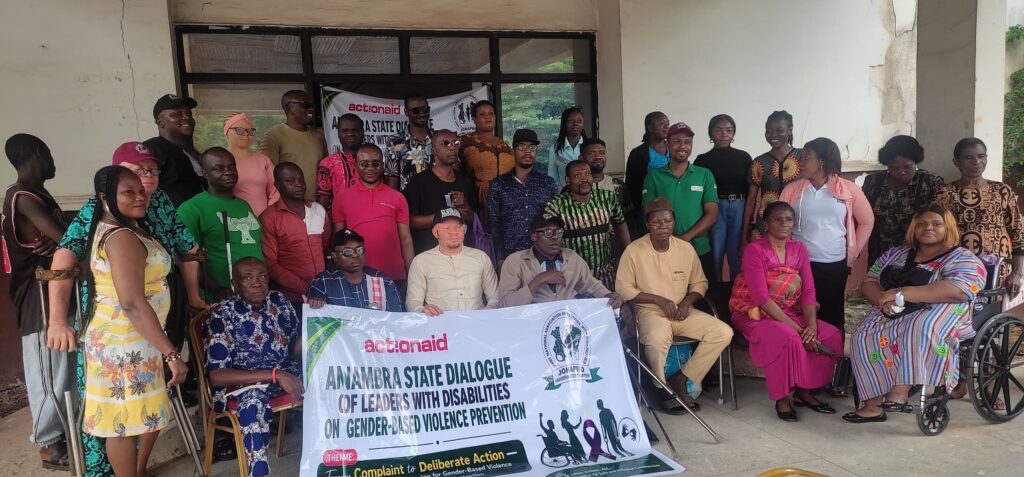
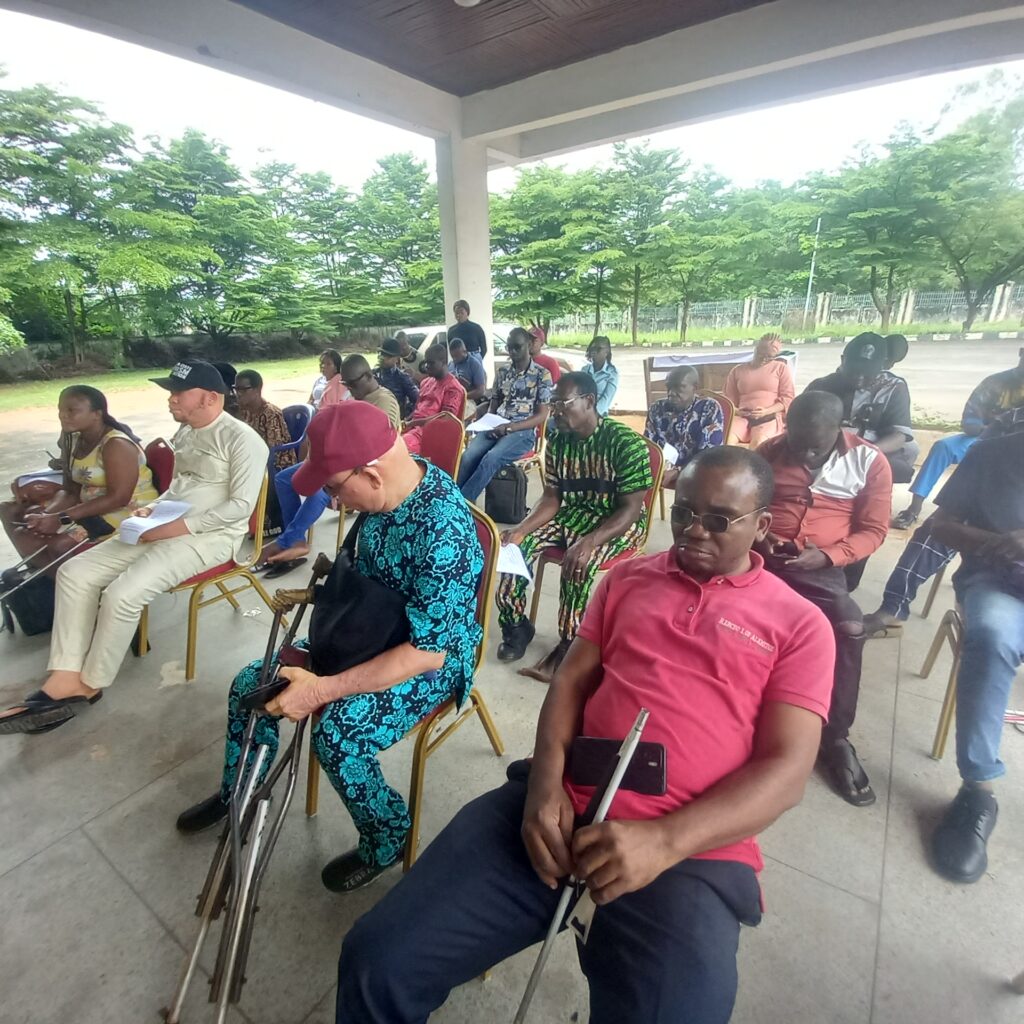
The event themed: “From Complaint to Deliberate Action — Redefining Disability Inclusion for Gender-Based Violence Prevention and Community Protection,” was supported by ActionAid. It had in attendance government officials, the Disability Rights Commission, CSOs, religious leaders, leaders of disability clusters and JONAPWD coordinators in LGAs of the state.
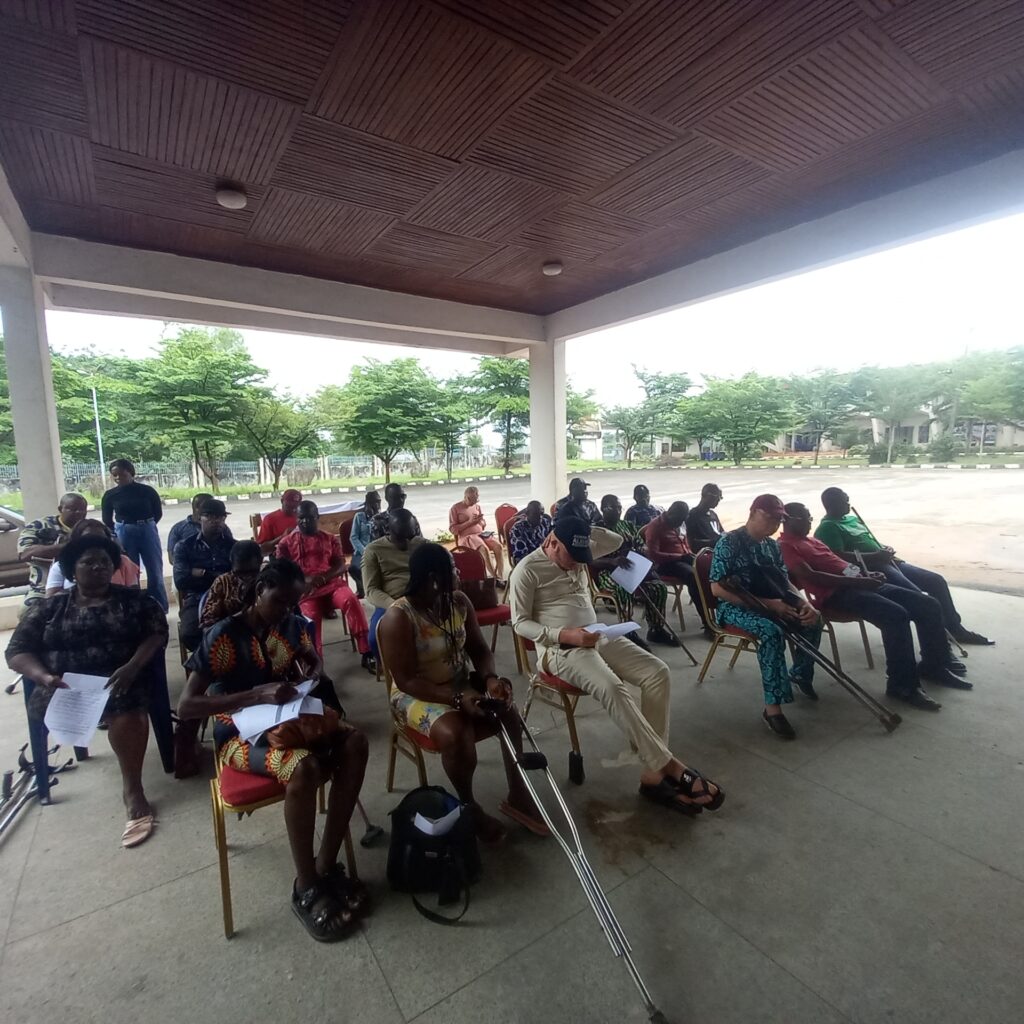
Speaking at the event, JONAPWD State Chairman, Comrade Ugochukwu Okeke, said the time had come for disability leaders to take a more proactive role in tackling gender-based violence. He declared that leaders must now move beyond simply receiving complaints and forwarding them to authorities, and instead become “agents of prevention and protection.”
“For too long, our response to gender-based violence has often begun after violence has already occurred. But must we always wait for violence to happen before we act? My answer is No.”
According to him, this means identifying vulnerable members early, understanding the barriers that prevent persons with disabilities from reporting abuse, and ensuring that survivors have access to medical care, legal aid and psychosocial support.
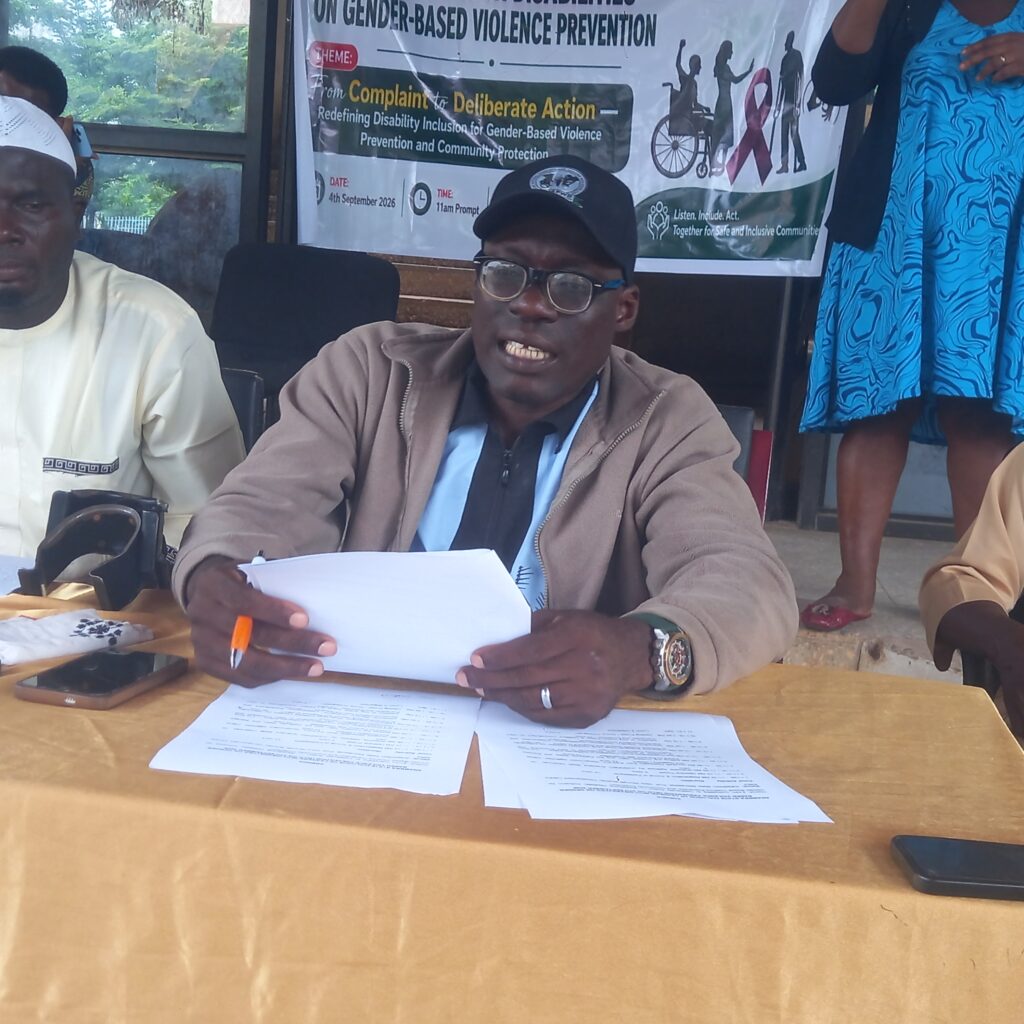
He stressed that the new approach must begin with awareness, education and building accessible reporting structures at the LGA and community levels, so that no person with a disability is left to suffer in silence.
“We must know who among our members is vulnerable. We must understand why they cannot report abuse. A disability leader should not only receive complaints and forward them,” he added.
Okeke urged leaders of various disability clusters and coordinators to take GBV sensitisation to LGAs, markets, churches, schools and families. He called for confidentiality in handling cases to avoid exposing survivors to further danger. He further called for collaboration with government, the Disability Rights Commission, police, health institutions and civil society groups to build a disability-inclusive response system.
The Chairman expressed appreciation to ActionAid for sponsoring the programme and for ensuring that JONAPWD Anambra is carried along in the drive to prevent gender-based violence and protect persons with disabilities from abuse.
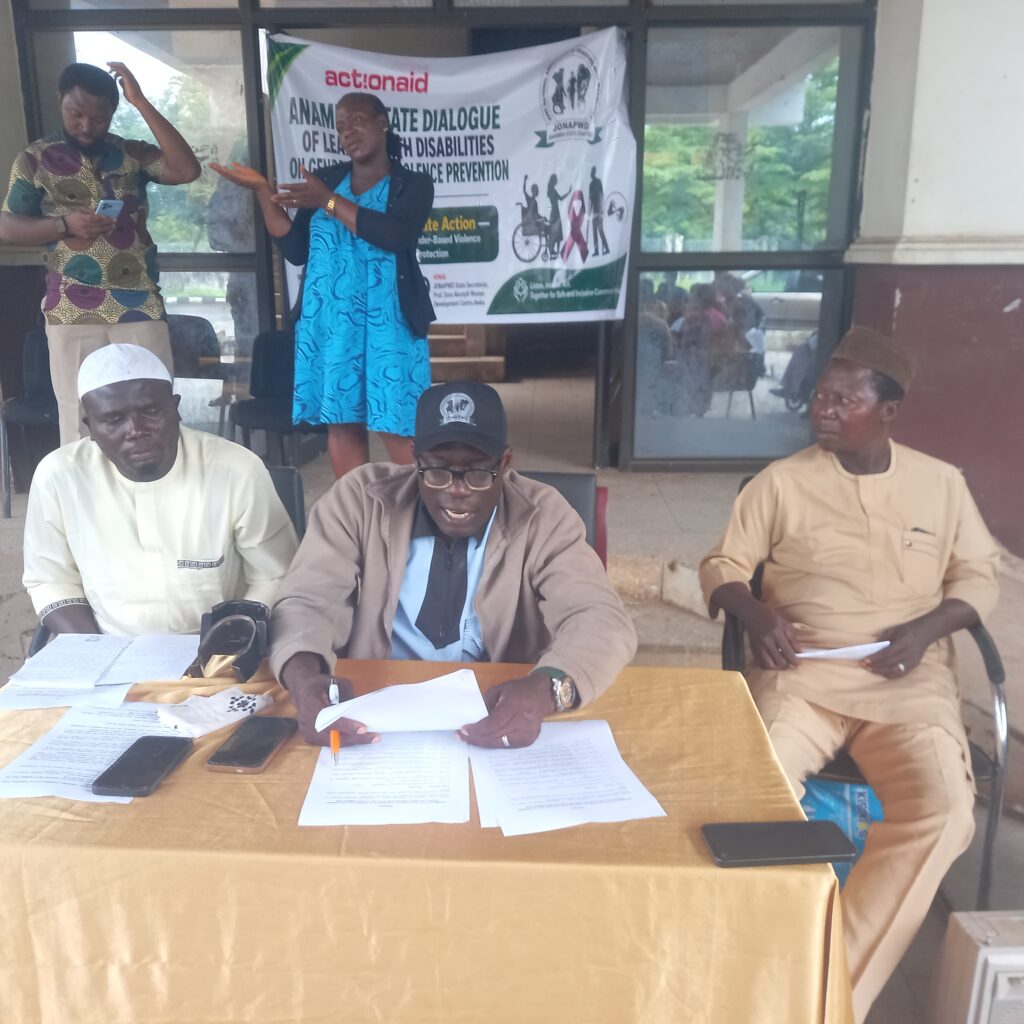
During her session, Comrade Chidimma Ajemba said women and girls with disabilities face double the risk of gender-based violence compared to their non-disabled peers, yet they remain the least likely to access help. She noted that GBV and disability issues have for too long been treated separately, stressing that violence against persons with disabilities must be addressed as a disability rights issue.
To bridge the gap, she called for all prevention materials to be made available in Braille, sign language, plain language and visual formats from the start. She also urged government and stakeholders to audit shelters to ensure they have ramps, accessible bathrooms and trained personnel, so that survivors with disabilities are not excluded from safe spaces.
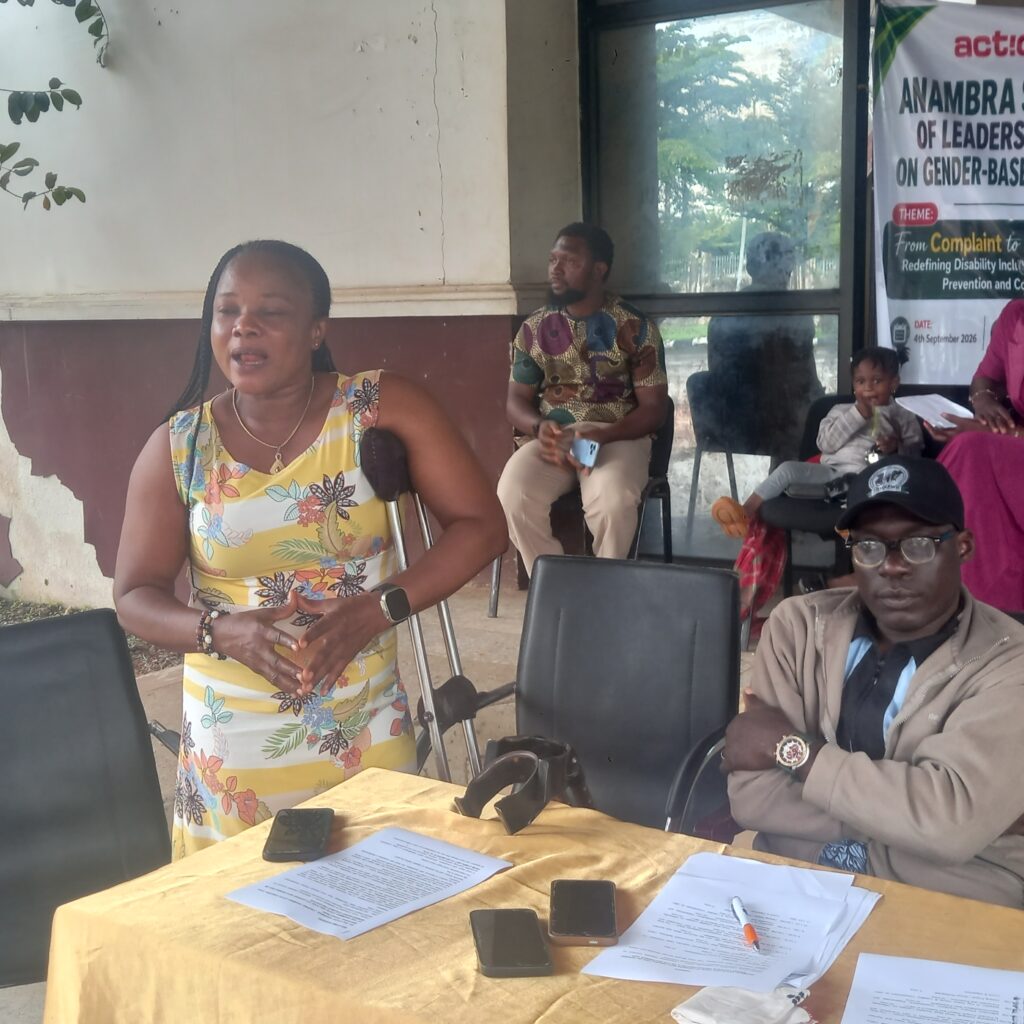
Also speaking, Comrade Nwanokwara Ncheta said leaders of Organisations of Persons with Disabilities have a critical role to play in GBV prevention. She said they must educate communities on the different forms of abuse and warning signs, encourage safe and confidential reporting, and link survivors to health facilities, police, legal aid and psychosocial support.
According to her, economic empowerment programmes are also essential to reducing the vulnerability and dependence that often trap women and girls with disabilities in abusive situations. She added that cluster leaders must challenge stigma, advocate for inclusion in decision-making, and work closely with government agencies, traditional rulers and NGOs to ensure GBV services are accessible to all.
On his part, Alhaji Sheriff Olanrewaju, Muslim Co-Chairman on GBV in Anambra State, said women and girls with disabilities face “ten times” the risk of gender-based violence due to the peculiar challenges they encounter daily. He identified high dependence on caregivers, mobility challenges, and communication barriers as major factors that expose them to abuse and make it difficult for them to seek help.
Olanrewaju also raised concerns over the role of some traditional practitioners in perpetuating abuse, alleging that certain herbalists have been linked to cases of rape and exploitation of women and girls with disabilities. He urged the state government to investigate and regulate the activities of such individuals to protect vulnerable persons.
The Acting Head of the Anambra State Disability Rights Commission, Mrs. Jane Ajaegbu, and ActionAid Focal Person, Mrs. Perpetual Nwakelundu, promised stronger collaboration with JONAPWD to strengthen prevention efforts in the state.
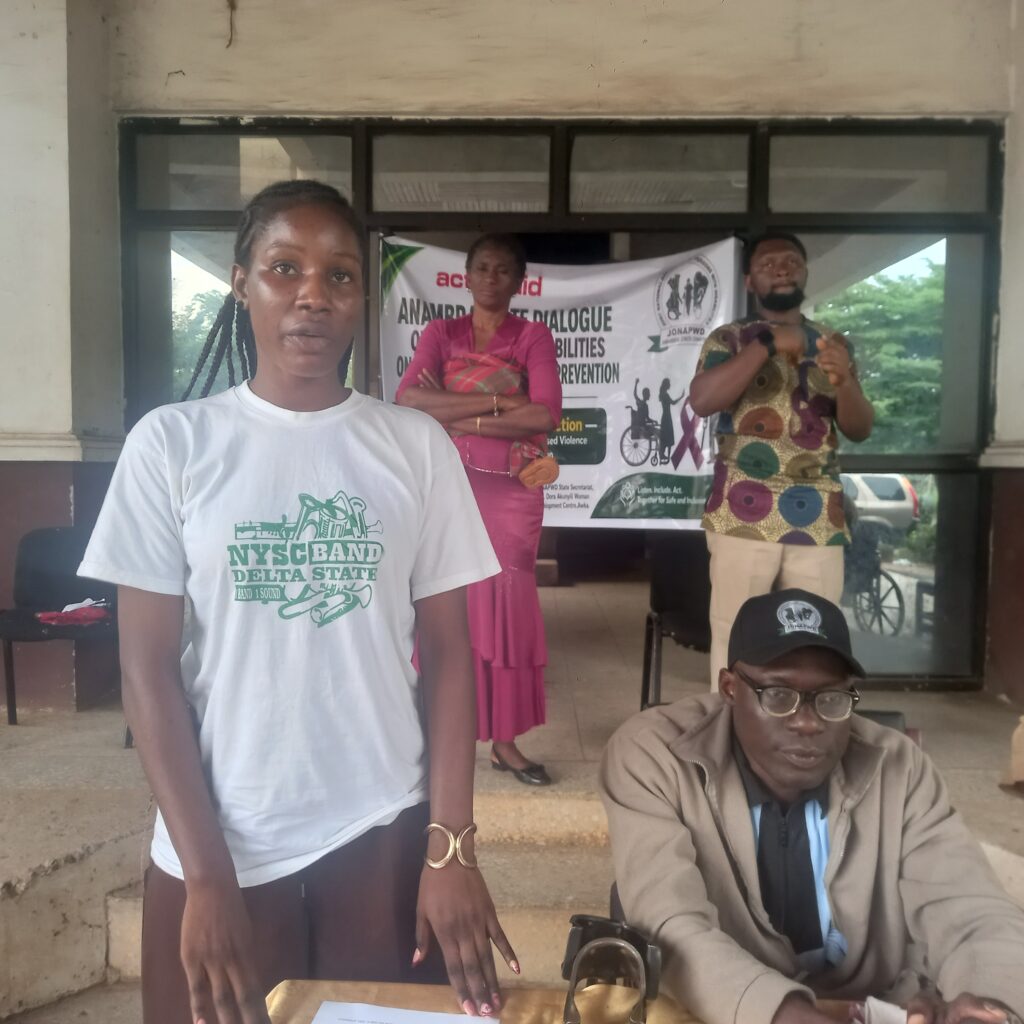
Participants agreed that advocacy, open communication and community engagement must be prioritised to protect persons with disabilities from GBV across Anambra.
High point of the dialogue was the adoption of action plans. Leaders cluster leaders and LGA Coordinators pledged to prevent, protect, report, refer, follow up and demand accountability at all levels. They also assured to never allow disability to become a reason for violence, exploitation or exclusion in the state.