Nigeria’s borders not closed, Tunji-Ojo replies Atiku
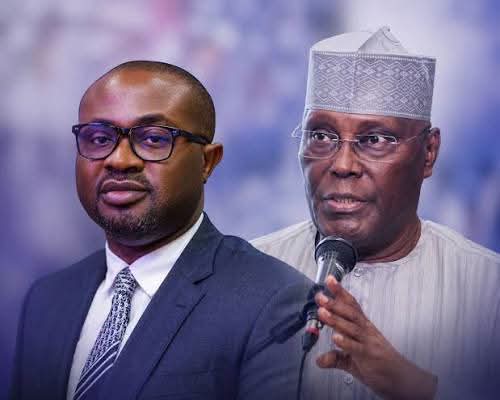
The Minister of Interior, Olubunmi Tunji-Ojo, has dismissed former Vice President Atiku Abubakar’s promise to reopen Nigeria’s land borders if elected president in 2027, saying the country’s borders are already open and therefore cannot be “reopened”. Atiku, during recent political engagements with stakeholders, had pledged to reopen all closed land borders, including those linking Nigeria with Benin Republic, Cameroon, Chad and Niger.
The African Democratic Congress presidential candidate argued that prolonged restrictions hurt cross-border trade, contributed to rising food prices and pushed traders into financial difficulties. However, Tunji-Ojo, who supervises the Nigeria Immigration Service (NIS), the agency responsible for border control and migration management, said Atiku’s position was based on an inaccurate account of the country’s current border status.
“As the Minister of Interior who supervises the Nigeria Immigration Service, an agency of government in charge of border control and migration management, it is expedient to state that Nigerian borders are not closed and so cannot be reopened,” Tunji-Ojo said in a statement issued in Abuja on Saturday. The minister traced the reopening of several major land borders to previous administrations, saying Seme, Illela, Maigatari and Mfum were reopened on December 16, 2020.
He added that Idiroko and Ikom were reopened for goods and services on April 20, 2022, while Kamba and Tsamiya border posts in Kebbi State, linking Nigeria with Niger Republic and Benin Republic respectively, were reopened under the current administration in February 2026. Tunji-Ojo also disputed Atiku’s reference to the Cameroon border, particularly the Banki and Amchidé crossings, saying their prolonged closure was not connected to the 2019 trade policy.
“The prolonged closures on the Cameroon border, at Banki and Amchidé, did not arise from the 2019 trade policy at all. They date to 2014, when Boko Haram forced their closure for security reasons, and reopened in 2019, with Fotokol and Gambaru following in 2021, after joint military and stabilisation efforts by Nigeria, Cameroon, Niger and Chad,” he said.